
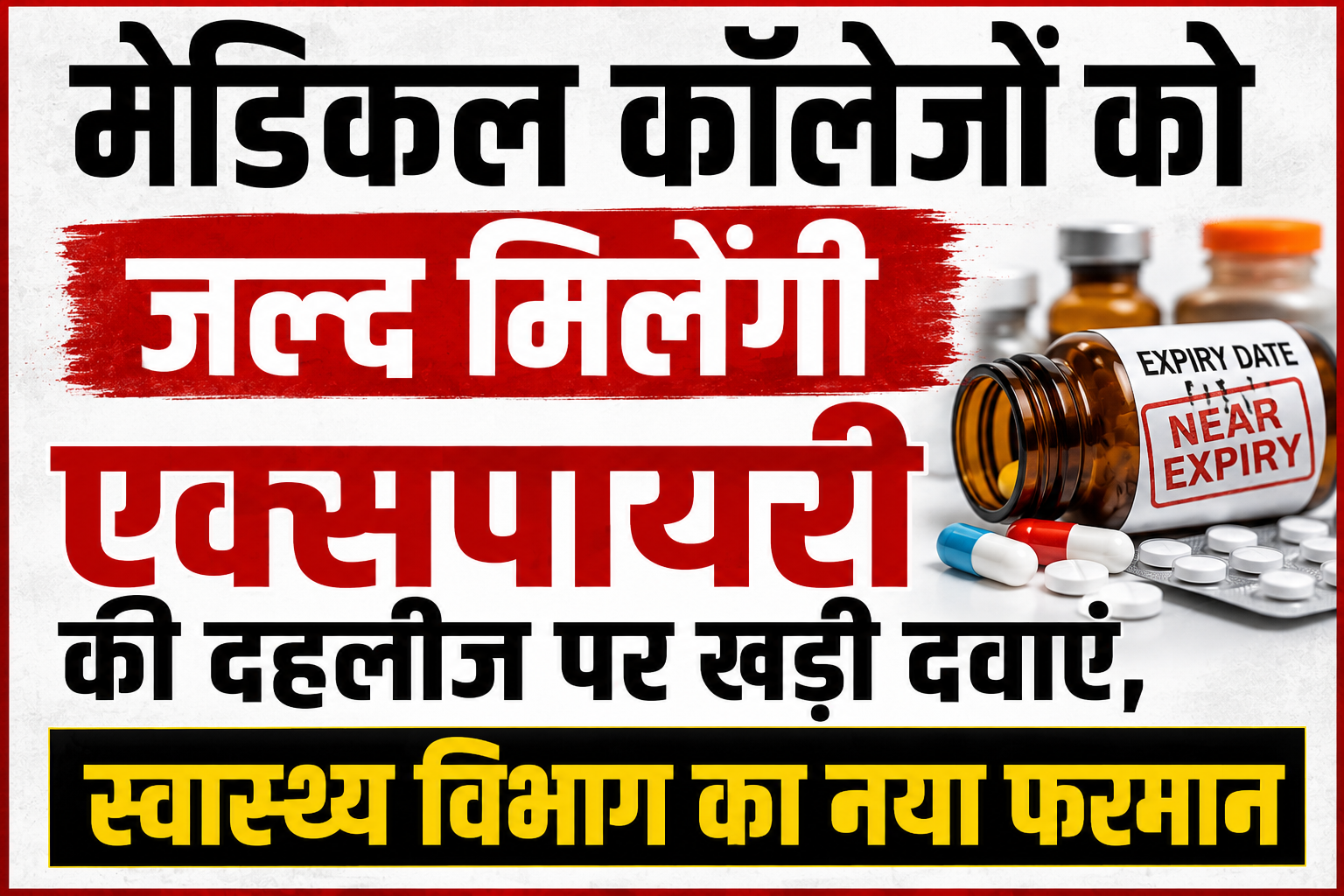
Health Department Directs Medical Colleges to Prioritize Near-Expiry Medicines; New Directive Issued
Muzaffarpur/Patna: The Bihar Health Department has issued a significant new directive to all medical colleges and hospitals across the state. The department has ordered that medicines nearing their expiry dates should be supplied to medical colleges on a priority basis. The health department's rationale is that medical colleges see a higher influx of patients, ensuring that these medicines are consumed quickly, thereby preventing wastage.
The Department's Strategy: Curbing Wastage and Improving Utility
Typically, hospitals maintain large stocks of medicines. Due to a lack of proper coordination, these medicines often remain unused until their expiration dates pass, resulting in massive financial losses to the state exchequer. The primary objective behind this new move by the health department is better resource management.
Officials state that the "turnover rate" (speed of consumption) of medicines in medical colleges is significantly higher compared to district hospitals and Primary Health Centers (PHCs). If medicines with 3 to 6 months of shelf life remaining are diverted to medical colleges, the likelihood of them being fully utilized before expiry increases substantially.
Special Arrangements for Districts Without Medical Colleges
The health department has also paid special attention to districts where medical colleges are not yet operational. According to the directive:
Distribution to Other Hospitals: In districts without medical colleges, Civil Surgeons and health officers are instructed to transfer these stocks to major referral hospitals or district hospitals.
Strict Monitoring: The department has mandated that the expiry dates must be verified before the medicines are dispatched.
Transparency in Records: It is now mandatory to upload complete data regarding the distribution and consumption of these medicines onto the 'e-Aushadhi' portal, allowing headquarters to monitor stock availability and usage in real-time.
Challenges to Implementation
While the government's move is aimed at preventing the wastage of public funds, health experts believe that strict vigilance is required during implementation:
Quality Assurance: There is often skepticism among patients regarding medicines that are near their expiry. The department must ensure that all distributed medicines meet quality standards.
Logistics: Maintaining a proper "cold chain" and efficient transportation to move medicines safely between facilities is essential.
Stock Management: If patient inflow unexpectedly drops at a medical college, the risk of these medicines being wasted remains there as well.
Role of Local Health Officials
Health officials in Muzaffarpur stated that they have been instructed to be prepared to follow this directive. A new chart tracking the demand and consumption of medicines from various districts will now be prepared. Hospital managements have been ordered to review their existing stocks and prioritize the dispensing of near-expiry medicines to patients.


