
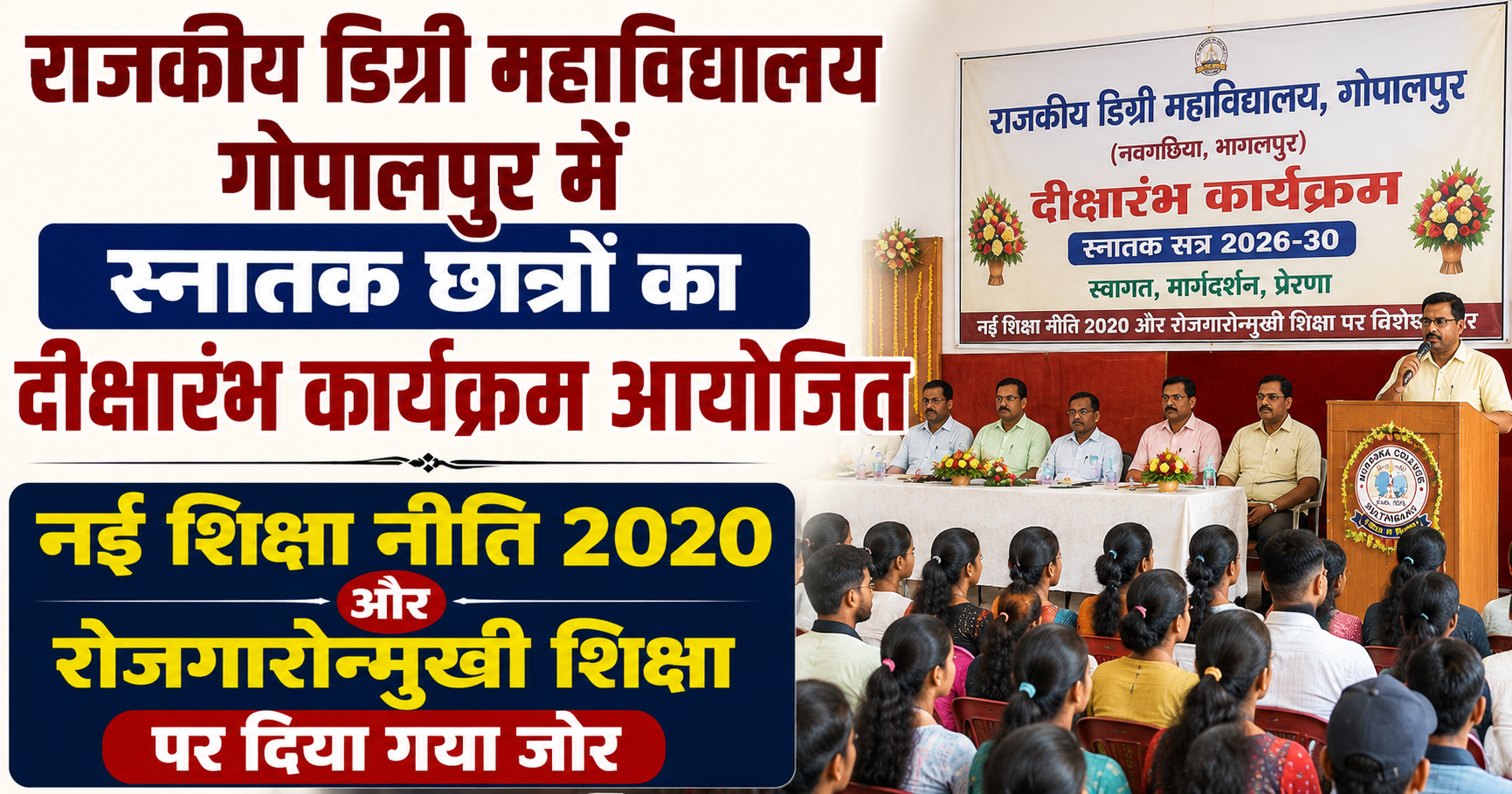
Government Degree College Gopalpur Organizes Induction Programme for Undergraduate Students, Emphasizes NEP 2020 and Career-Oriented Education
Bhagalpur/Naugachia: Government Degree College, Gopalpur, located in the Naugachia subdivision of Bhagalpur district, organized an Induction Programme for newly admitted undergraduate (UG) students. The event aimed to introduce students to the college's academic environment, the National Education Policy (NEP) 2020, career-oriented education, institutional functioning, and the facilities available on campus.
The programme was attended by Principal Dr. Raj Kumar Prasad, faculty members, administrative staff, and a large number of newly enrolled students. Throughout the event, students were informed about the importance of higher education, discipline, personality development, and skill-based learning.
Programme Begins with a Welcome Song
The induction programme commenced with a welcome song, creating an enthusiastic and positive atmosphere. Faculty members then formally welcomed the new students into the college community and wished them success in their academic journey.
The college administration encouraged students to view college life as the foundation for building a successful future and developing into responsible citizens.
Principal Highlights the Features of NEP 2020
Addressing the gathering, Principal Dr. Raj Kumar Prasad explained the major provisions of the National Education Policy (NEP) 2020. He said that the policy aims not only to provide degrees but also to equip students with practical knowledge, innovation, and the skills required for employment and entrepreneurship.
He explained that the policy offers flexibility in subject selection, multidisciplinary education, internships, research opportunities, and skill-based courses designed to meet the evolving demands of the modern workforce.
Strong Emphasis on Career-Oriented Education
Dr. Prasad stressed that traditional education alone is no longer sufficient in today's competitive world. He encouraged students to pursue career-oriented education that prepares them for employment, self-employment, and entrepreneurship.
He advised students to actively participate in skill development programmes, digital learning initiatives, computer training, communication skills workshops, and vocational courses. According to him, NEP 2020 is a significant step toward making students more employable and industry-ready.
Message on Discipline and Regular Study
The Principal highlighted the importance of discipline, regular attendance, and effective time management as the keys to academic success.
He urged students to follow college rules, respect their teachers, and contribute to maintaining a positive academic environment. According to him, discipline is essential for achieving long-term educational and professional goals.
Introduction to the College's Academic System
During the programme, students were introduced to the college's academic structure, various departments, classroom teaching methods, semester system, examination procedures, and internal assessment process.
Faculty members advised students to attend classes regularly and complete assignments, projects, and other academic responsibilities on time.
Information on Library and Digital Learning Resources
The college administration also familiarized students with the library and its academic resources. Students were informed about the availability of textbooks, reference books, research materials, journals, and other educational resources.
Faculty members encouraged students to make effective use of digital learning platforms and online educational materials to enhance their knowledge beyond classroom instruction.
Focus on Skill Development and Personality Building
Speakers emphasized that academic knowledge alone is not enough in today's competitive environment. Students should also develop communication skills, leadership qualities, teamwork, problem-solving abilities, and technical competence.
The college informed students that seminars, workshops, training programmes, and personality development sessions would be organized regularly to support their overall growth.
Encouragement to Participate in Co-Curricular Activities
Faculty members encouraged students to actively participate in sports, cultural programmes, debates, public speaking competitions, the National Service Scheme (NSS), environmental awareness campaigns, and other co-curricular activities.
They explained that such activities help build confidence, leadership skills, teamwork, and a sense of social responsibility.
Interactive Question-and-Answer Session
The induction programme concluded with an interactive session during which students asked questions related to the National Education Policy, subject selection, examination patterns, scholarships, career opportunities, and campus facilities.
Faculty members answered each query in detail and assured students of continuous guidance and support throughout their academic journey.
Students Express Enthusiasm
The newly admitted students described the induction programme as informative and inspiring. They said it gave them a better understanding of the college's academic system, the National Education Policy, and the opportunities available for learning and career development.
Many students expressed their commitment to attending classes regularly and participating actively in academic and extracurricular activities.
Building a Strong Foundation for Higher Education and Careers
Speakers emphasized that the college is not merely an institution for awarding degrees but a platform for preparing students for successful careers and responsible citizenship.
They encouraged students to develop a lifelong habit of learning, embrace new technologies, and contribute positively to society.
The Induction Programme at Government Degree College, Gopalpur successfully introduced newly admitted undergraduate students to the National Education Policy 2020, the college's academic system, career-oriented education, and the importance of discipline. Principal Dr. Raj Kumar Prasad encouraged students to pursue skill-based learning, maintain academic discipline, and cultivate a positive outlook toward their education and future careers. The programme provided a strong beginning to the students' higher education journey while laying the foundation for their academic success, personal growth, and professional development.


