

"Doing New Experiments for Decades, Yet Conditions Remain the Same," Cluster Artisans Express Their Tale
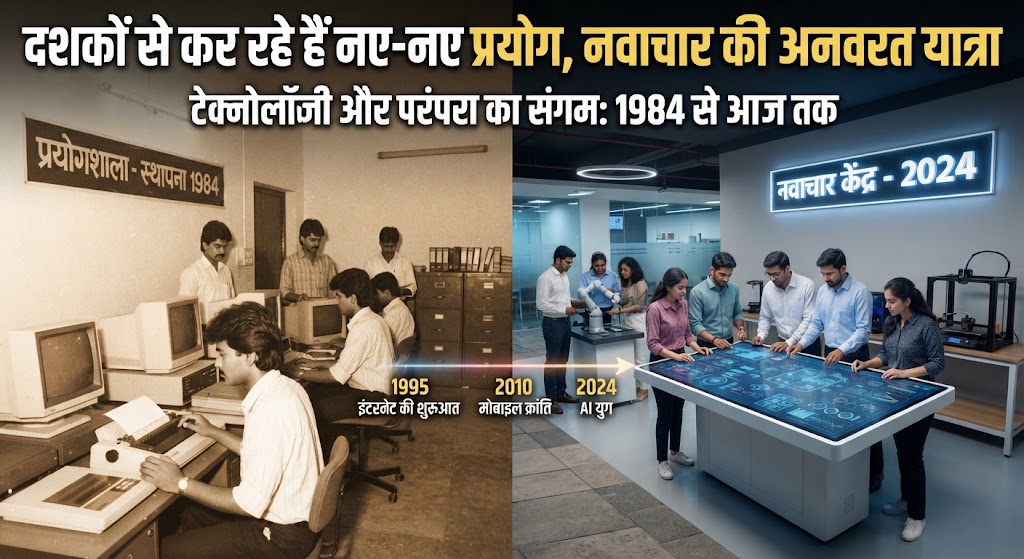
Bhagalpur/Special Correspondent: Whenever the brilliant sheen of silk garments from the historic city of handlooms and the silk industry spreads across markets in the country and abroad, generations of hard work by skilled weavers lies hidden behind it. Recently, local weavers working in various weaver clusters openly expressed their views. They stated that for the past several decades, to keep pace with changing times, they have continuously experimented with new designs, color combinations, and modern techniques to adapt traditional handlooms to the preferences of the modern fashion world. However, despite this, their economic condition has not seen the expected improvement.
A Continuous Legacy of Innovation
Endowed with skill and artistry, these weavers shared that the handloom industry is not merely a business, but a heritage handed down by their ancestors, which they continue to preserve. With changing times, market demand has also shifted rapidly. Alongside traditional designs in sarees, suits, and Tussar silk garments, the demand for modern and contemporary patterns is on the rise.
Cluster artisans stated that over the past two to three decades, they have introduced several important experiments in their craft:
Changes in Design and Pattern: Beyond heavy traditional pallus and motifs, lightweight, minimalist designs and ethnic-modern fusion garments are now being crafted.
New Color Combinations: Attractive shades are being created through a blend of chemical and natural dyes to appeal to the younger generation and modern consumers.
Diversity in Materials: Experiments are underway not just with pure silk, but also with silk-cotton blends and other durable yarns to make clothing more comfortable and affordable.
Immense Toil, Yet Far From Profitable
On one hand, weavers continuously keep their art relevant through new experiments, but on the other hand, their biggest grievance concerns their remuneration and direct market access. The pain of artisans working in the clusters is clearly visible when they recount that despite sweating day and night at the looms, they fail to receive fair wages for their hard work.
Rising Costs of Raw Materials: Over the past few years, the prices of silk yarn, zari, and other raw materials have skyrocketed, significantly driving up production costs.
Role of Middlemen: Middlemen operating between the market and the weavers pocket a major share of the real profits, while the actual working weavers are forced to work on low wages.
Lack of Modern Technology and Capital: Financial assistance or benefits from government schemes for adopting modern motif-designing software, automatic looms, or advanced technology at the cluster level fail to reach every artisan in a timely manner.
Questions Raised on Government Schemes and Administrative Claims
Claims are frequently made regarding various welfare schemes implemented by the government and development boards for handloom weavers—such as weaver credit cards, Mudra loans, and national award programs. However, these grassroots weavers point out that due to complicated procedures and red tape, benefits rarely reach those genuinely in need on time.
A senior weaver, speaking on the condition of anonymity, stated, "We have been in this profession for decades. We made every possible change in our art according to the modern era, but hurdles in getting bank loans and the failure to get fair prices for our art in the market crush our spirits. If the younger generation is to be kept attached to this profession, weavers must be connected directly to the market."
Preserving Hand-Crafted Skills and Heritage
This voice of the weavers in the clusters is not merely an individual complaint; it is a plea for the preservation of a dying cultural heritage of the country. If these skilled artisans' experiments are not provided with a proper platform, economic security, and global market recognition in time, this ancient craft of handlooms will slowly wither away.
Today, there is an urgent need to provide weavers at the cluster level with technical training along with digital marketing tools and means to sell their products directly to consumers. The relentless hard work of these quiet artisans, who have been experimenting for decades, will only truly bear fruit when their art receives its rightful value and respect.