
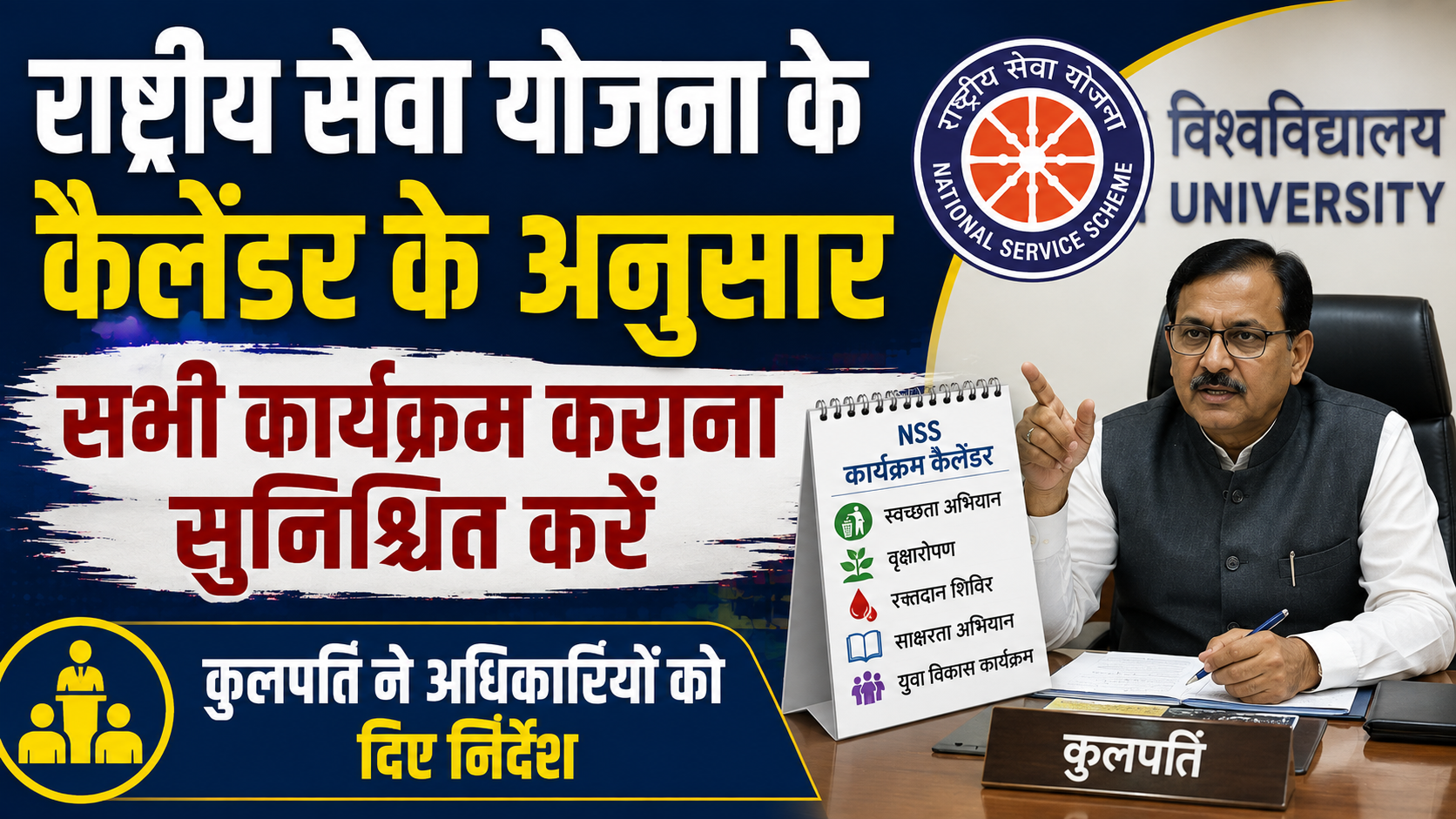
Vice-Chancellor Directs Colleges to Ensure All NSS Programmes Are Organised as per Annual Calendar
Purnia, Hindustan Correspondent: The Vice-Chancellor of Purnia University has issued important directions to make activities under the National Service Scheme (NSS) more effective and systematic. He instructed university officials and affiliated colleges to ensure that all NSS programmes are organised according to the prescribed annual calendar. The Vice-Chancellor said NSS activities should not be limited to formal events but should play a meaningful role in connecting students with society and local communities.
He directed officials and NSS programme officers to complete all scheduled activities on time throughout the academic session. Special emphasis was placed on ensuring maximum participation of students in various programmes. According to the Vice-Chancellor, NSS can play an important role in developing social responsibility, leadership skills, discipline and a spirit of service among students.
Programmes to Be Organised According to the Calendar
The Vice-Chancellor said the annual NSS calendar is prepared in advance and all affiliated colleges and NSS units should plan their activities accordingly. He directed officials to ensure that there is no negligence in conducting the scheduled programmes.
Each NSS unit should prepare an annual activity plan and organise programmes according to the prescribed schedule. Proper reports of the activities should also be prepared and submitted.
The Vice-Chancellor emphasised that merely organising programmes is not enough. It is equally important to ensure that the activities have a meaningful impact on students and the community. Therefore, the quality and effectiveness of each programme should also be monitored.
Emphasis on Increasing Student Participation
The primary objective of NSS is to familiarise students with real-life social issues and develop a spirit of service among them. The Vice-Chancellor said students should participate actively in NSS activities.
Students can be involved in campaigns related to cleanliness, healthcare, education, environmental protection, voter awareness, de-addiction, water conservation and social awareness. Such activities give students an opportunity to move beyond classrooms and textbooks and understand society more closely.
NSS volunteers should be encouraged to identify local problems and contribute to finding solutions. This can help strengthen their leadership abilities and sense of social responsibility.
Youth to Be Connected with Social Service
The Vice-Chancellor said young people are among the country’s greatest strengths. Connecting them with social service can help bring positive changes to society, and NSS can serve as an important platform in this regard.
Students should be given opportunities to understand the problems faced by weaker and disadvantaged sections of society. Awareness campaigns in rural areas, cleanliness drives, health camps and educational initiatives can help students interact directly with communities.
Such activities can make students more sensitive to social issues and help them better understand their responsibilities towards society.
Special Focus on Cleanliness and Environment
Cleanliness and environmental protection can be given special importance under NSS activities. The Vice-Chancellor said students should be encouraged to participate actively in environmental initiatives.
Tree plantation drives, reducing the use of plastic, water conservation and cleanliness campaigns can be made part of regular NSS activities. Students should also be educated about the long-term importance of environmental conservation.
He said environmental protection is not merely the responsibility of government departments. Positive results can be achieved only through the participation of students and the wider community.
Awareness Campaigns in Rural Areas
NSS units can also focus on organising awareness programmes in rural areas. Campaigns related to health, education, sanitation and social issues can provide students with valuable experience of working at the grassroots level.
During such programmes, students can interact with local residents and understand their concerns. This can help improve their communication and problem-solving skills.
The Vice-Chancellor said the purpose of NSS activities should not be limited to obtaining certificates. Students should gain practical experience and a deeper understanding of society through meaningful service activities.
Promotion of Health Awareness Programmes
NSS can also be used to organise health awareness programmes. Students can be encouraged to spread awareness about healthcare, sanitation, nutrition and de-addiction.
Health check-up camps, blood donation awareness programmes and discussions on health-related issues can be organised at the college level. Awareness activities can also be conducted in rural areas in collaboration with local healthcare institutions.
Such initiatives can give students an opportunity to understand social health challenges and contribute to addressing them.
Developing Leadership Skills Among NSS Volunteers
The Vice-Chancellor also emphasised the need to develop leadership qualities among students through NSS activities. Assigning responsibilities to students can help them develop decision-making and teamwork skills.
NSS volunteers should be involved in planning programmes, coordinating with people, managing teams and preparing activity reports.
These skills can benefit students in both their personal and professional lives. Teamwork, discipline, time management and leadership are important qualities for success in almost every field.
Proper Reporting of Activities Essential
The Vice-Chancellor directed officials to maintain proper records of all NSS programmes. Details such as the date, venue, number of participants and nature of activities should be documented.
Preparing reports after programmes can help assess their effectiveness and identify areas where improvements can be made in the future.
NSS units can also be encouraged to document their activities systematically. This will make it easier for the university to assess the overall performance of NSS programmes throughout the academic year.
Colleges Asked to Play Active Role
The Vice-Chancellor urged officials and NSS programme officers of affiliated colleges to play an active role in strengthening NSS activities. He said NSS programmes should be conducted regularly and effectively across the colleges.
He also emphasised that activities should not remain limited only to officially prescribed dates. Additional social initiatives can be organised whenever necessary, keeping local issues and community requirements in mind.
Strengthening the Spirit of Service
The Vice-Chancellor said the fundamental objective of NSS is to develop a spirit of service among students. When young people work directly with communities, they gain practical exposure to real-life challenges.
He said the purpose of education is not merely to obtain a degree. Preparing students to become responsible citizens is also an important responsibility of the education system. NSS can play a significant role in achieving this objective.
Need for Regular Monitoring at University Level
The importance of regular monitoring at the university level was also highlighted. Reviewing the progress of NSS activities can help ensure that all units are conducting programmes according to the prescribed calendar.
If any college faces difficulties in organising activities, efforts should be made to resolve the problems in time. This will help ensure that NSS programmes are implemented effectively across the university.


