
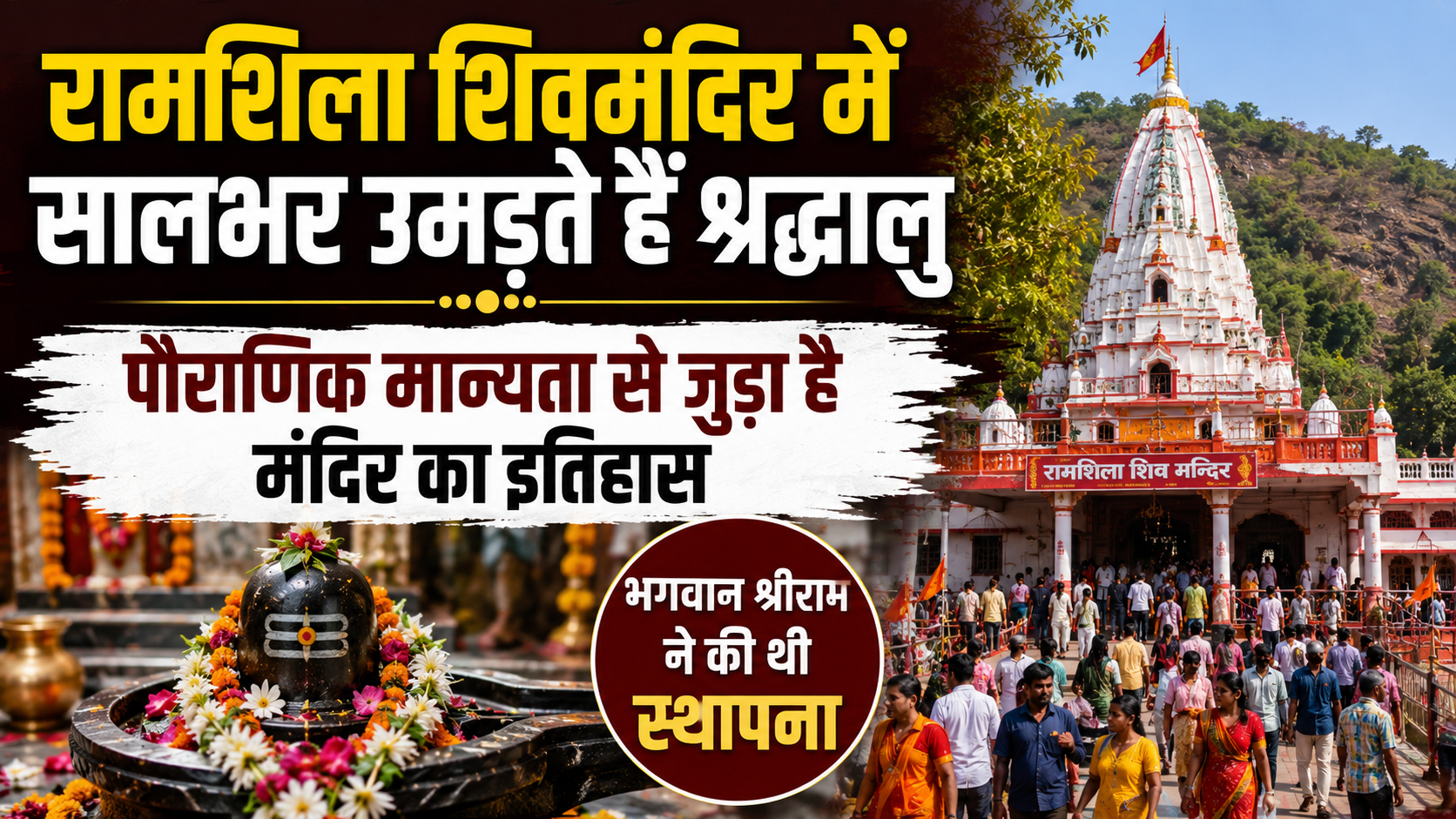
Devotees Flock to Ramshila Shiva Temple Throughout the Year, Temple Holds a Deep-Rooted Mythological Legacy
Gaya: Located along the Gaya-Patna main road in the northern part of the city, the Ramshila Shiva Temple, situated at the foothills of Ramshila Hill, is regarded as an important centre of religious faith. Due to its mythological traditions and ancient religious significance, devotees visit the temple throughout the year. The number of visitors increases significantly during the holy month of Shravan, when devotees from distant areas arrive to offer prayers and worship Lord Shiva.
Ramshila Hill and the religious sites associated with it hold a special place in Gaya’s spiritual identity. Gaya is widely known as a major destination for Pind Daan and other religious rituals. The Ramshila area is also closely associated with these traditions. Several mythological beliefs are connected with the Shiva Lingam installed inside the temple. Devotees believe that worshipping Lord Shiva here can fulfil their wishes.
Temple Located at the Foothills of Ramshila Hill
The Ramshila Shiva Temple is located at the foothills of Ramshila Hill. The temple is said to be around 100 feet high. It was constructed using lime, mortar and stone. Its traditional architecture continues to attract both devotees and visitors.
Apart from Lord Shiva, idols of several other Hindu deities are installed inside the temple complex. The crystal-stone Shiva Lingam is one of the temple’s major attractions and is regarded with special reverence by devotees.
A Ganesha idol made of coral stone is also among the distinctive features of the temple. Idols of Lord Kartikeya, Surya Dev, Goddess Gauri, Lord Vishnu and Lord Hanuman are also installed here. It is said that more than 50 idols of different deities are present within the temple complex.
Mythological Belief Associated with Lord Rama
One of the most prominent features of the Ramshila Shiva Temple is its association with a popular mythological belief. According to local tradition and the faith of devotees, Lord Rama installed the Shiva Lingam at this site. This is part of religious belief and local tradition, while its historical authenticity is a separate matter.
According to the belief, Lord Rama came to Gaya to perform Pind Daan for his father, King Dasharatha. The Ramshila area is considered significant in the religious traditions associated with Pind Daan in Gaya. Local belief holds that Lord Rama took a bath at Ram Kund and subsequently installed the Shiva Lingam here.
Ram Kund, located near the temple, is also associated with this religious tradition. As a result, both Ram Kund and the Ramshila Shiva Temple hold special significance for devotees.
Temple Constructed Around Two Centuries Ago
According to local tradition and available information, the present temple was constructed around two hundred years ago. It is believed that Raja Gopal Sharan Singh of Tikari commissioned the construction of the temple.
Lime, mortar and stone were used in its construction. The traditional construction techniques of that period can still be seen in the structure. Over the years, religious activities at the temple expanded, and it gradually became an important centre of faith for local residents as well as devotees from distant areas.
Like many ancient religious sites, several local traditions and beliefs have become associated with the temple. These traditions have been passed down through generations and have strengthened people’s connection with the shrine.
Devotee Footfall Rises During Shravan
Although devotees visit the temple throughout the year, the number of visitors rises considerably during Shravan. The holy month is considered especially important for worshipping Lord Shiva. Large numbers of devotees visit the temple during this period to perform Jalabhishek and offer prayers.
Devotees begin arriving at the temple from the early morning. They seek the blessings of Lord Shiva and pray for happiness, prosperity and well-being for their families. Many also perform special religious rituals and prayers.
During Shravan, the atmosphere around the temple becomes particularly vibrant. The sound of temple bells, devotional chants and religious ceremonies creates a deeply spiritual environment.
Devotees Arrive from Distant Areas
The popularity of the Ramshila Shiva Temple is not limited to the local area. Devotees from Gaya and neighbouring districts, as well as from other regions, visit the temple. Many pilgrims and religious tourists visiting Gaya also include the Ramshila area in their itinerary.
Gaya’s religious circuit includes Pind Daan, the Vishnupad Temple and several other important sites, with the Ramshila area also holding a significant place. This makes the Ramshila Shiva Temple an important destination from the perspective of religious tourism.
Its location near the main road also makes the temple relatively accessible. The combination of the religious significance and natural surroundings of Ramshila Hill adds to the experience of visiting the shrine.
More Than 50 Idols of Deities
One of the distinctive features of the temple complex is the large number of idols installed here. Along with Lord Shiva, devotees worship Lord Ganesha, Lord Kartikeya, Surya Dev, Goddess Gauri, Lord Vishnu and Lord Hanuman, among others.
For devotees, the temple complex offers an opportunity to worship several deities at one location. The presence of numerous idols also adds to the religious and cultural character of the temple.
The crystal-stone Shiva Lingam is particularly revered by devotees. Worshippers perform Jalabhishek and offer prayers to Lord Shiva, seeking his blessings and fulfilment of their wishes.
Belief That Prayers Fulfil Wishes
A popular belief among local devotees is that offering prayers and worshipping Lord Shiva at the Ramshila Shiva Temple can fulfil one’s wishes. This faith draws people to the temple when they seek blessings for personal and family matters.
Many devotees visit the temple for special prayers not only during Shravan but also on occasions such as Mahashivratri and other religious festivals. The number of visitors increases significantly during major festivals compared with ordinary days.
This belief is part of the religious faith of devotees, who regard the temple as a sacred place for prayer and worship.
Important Destination for Religious Tourism
The Ramshila Shiva Temple is one of the sites that contribute to Gaya’s religious tourism landscape. Its association with Ramshila Hill, Ram Kund and related mythological traditions gives it a distinctive identity.
For pilgrims and tourists visiting Gaya, the temple offers an opportunity to experience religious traditions, local beliefs and elements of ancient architecture. Its traditional structure and numerous idols of Hindu deities further enhance its importance.
Better facilities in and around the temple could further strengthen religious tourism in the area. Cleanliness, drinking water, seating arrangements, lighting, security and traffic management are among the facilities that can make the pilgrimage experience more convenient for visitors.
A Confluence of Faith and History
The Ramshila Shiva Temple represents a blend of faith and historical tradition in Gaya’s religious landscape. On one hand, the temple attracts devotees because of its mythological associations with Lord Rama and Lord Shiva. On the other, its traditional architecture and the religious importance of the Ramshila area contribute to its cultural significance.
For local residents, the temple is more than a place of worship. It forms an important part of the area’s religious identity. Generations of traditions and beliefs have strengthened its connection with the local community.


