
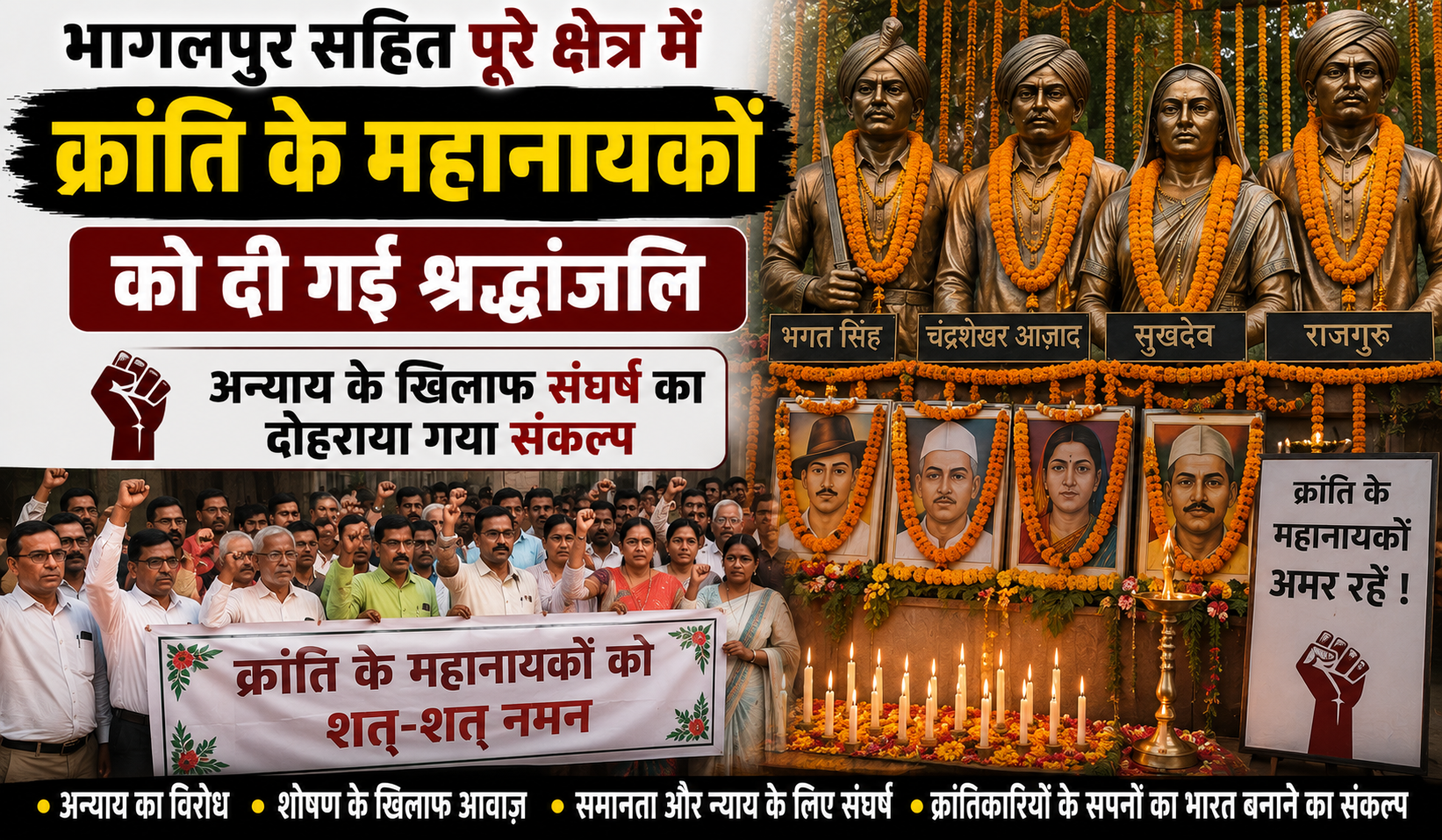
Tributes Paid to the Great Heroes of the Revolution Across the Region; Vow to Struggle Against Injustice Renewed
Bhagalpur/Correspondent: On the occasion of 'Hul Diwas' (Revolution Day) on June 30, the historic Santhal Rebellion of 1855, which shook the foundations of British rule, was commemorated with deep reverence across the region. During various events organized by social organizations, political parties, and educational institutions, tributes were paid to the sacrifices of the pioneers of the Santhal Revolution—Sidhu-Kanhu, Chand-Bhairav, and the bravehearts Phulo-Jhano—alongside 'Dharti Aaba' Birsa Munda and Tilka Manjhi.
From the Pages of History: The 'Hul' of 1855
On June 30, 1855, at Bhognadih, thousands of indigenous people, led by Sidhu and Kanhu Murmu, raised the slogan of "Do or Die" against the exploitation by the British regime, landlords, and moneylenders. This rebellion was not merely a fight for water, forest, and land; it was a vital chapter in India's first war of independence. Speakers at today’s events emphasized that this revolution inspired generations to sound the bugle against injustice.
The Valor and Contribution of the Martyrs
At various platforms across Bhagalpur, speakers shared detailed accounts of the legends of these great heroes:
Sidhu-Kanhu and Chand-Bhairav: They were described as synonymous with revolution, having sacrificed their lives willingly for their motherland.
Heroic Sisters Phulo and Jhano: Remembered today as symbols of women's empowerment, speakers noted how, even in that difficult era, they took up arms and challenged the British forces.
Tilka Manjhi: The sacrifice of Tilka Manjhi, the first rebel to challenge British authority directly from the soil of Bhagalpur, was particularly remembered. Floral tributes were offered to him as the 'Adi Vidrohi' (The First Rebel).
Birsa Munda: While recalling the 'Ulgulan' (revolution) of 'Dharti Aaba' Birsa Munda, speakers stated that his ideas continue to provide a path for the tribal community and the entire nation to remain united.
A Source of Inspiration for the New Generation
Youth were specifically invited to the seminars organized on this occasion. Speakers emphasized that in today’s modern era, we are forgetting the ideals of these great heroes. Hul Diwas is not just a government program but a day for introspection. Students were told how these heroes challenged a vast empire despite a severe lack of resources.
"We Will Not Tolerate Oppression, We Will Revolt"
The slogans of "Julum nahi sahenge, Hul karenge" (We will not tolerate oppression, we will revolt) echoed at the venues. Attendees pledged to continue the struggle for the protection of tribal culture, the spread of education, and social justice. At many places, traditional tribal dances accompanied by folk instruments were performed, narrating the vibrant tale of their rich culture and struggling history.
Cultural and Educational Significance
Concluding the events, speakers expressed concern that the history of these great heroes has not received its due place in textbooks. They demanded that the government make the life accounts of leaders from Tilka Manjhi to Sidhu-Kanhu a mandatory part of the curriculum so that future generations can understand their glorious past.
Thus, the observation of Hul Diwas was not only a tribute to the martyrs but also a powerful medium to make the exploited and marginalized sections of society aware of their rights.


