


Tributes Paid to Sidhu-Kanhu, Phulo-Jhano, Birsa Munda, and Tilka Manjhi
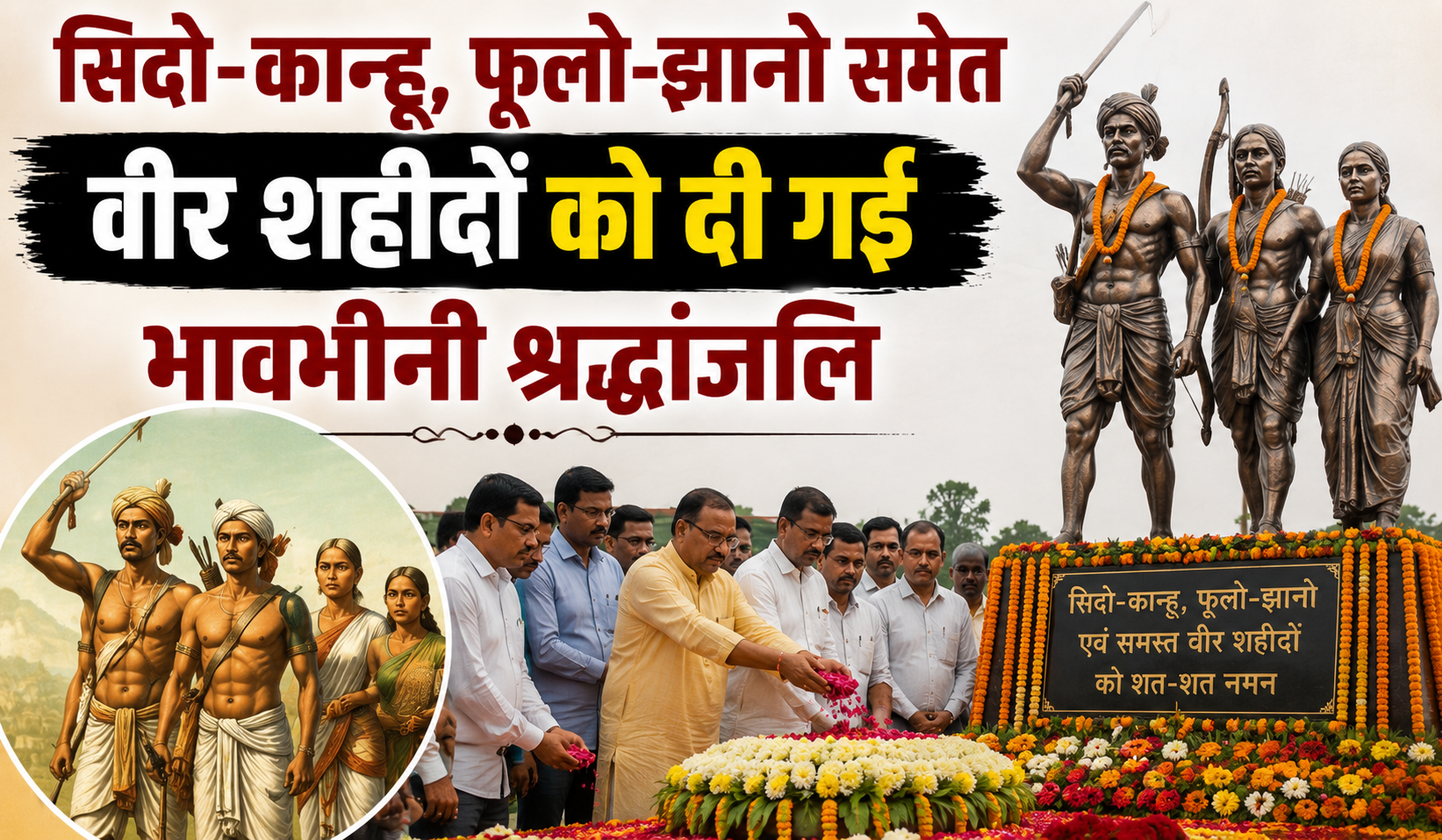
Bhagalpur/Correspondent: On the occasion of 'Hul Diwas' (Revolution Day), the entire region today paid homage to the history rooted in the fire of revolution. Programs were organized across various social organizations and educational institutions to commemorate the historic 'Santhal Hul' (Santhal Rebellion) of 1855. During these events, heartfelt tributes were paid to the sacrifices of Sidhu-Kanhu, Chand-Bhairav, and the bravehearts Phulo-Jhano, alongside 'Dharti Aaba' Birsa Munda and the great warrior Tilka Manjhi.
Hul Kranti: The First Bugle Against Injustice
On June 30, 1855, at Bhognadih, thousands of indigenous people, led by Sidhu and Kanhu Murmu, roared against the exploitation by the British regime, landlords, and moneylenders. This was not merely a rebellion; it was a grand struggle fought to protect their water, forests, land, and dignity. Hul Diwas reminds us how these brave heroes shook the foundations of British rule by raising the slogan "Do or Die."
Honoring the Sacrifices of Martyrs
In today's programs, speakers remarked that the torch lit by Sidhu-Kanhu and Chand-Bhairav through their ultimate sacrifice paved the way for the nation’s independence. Special mention was made of the valor of the heroic sisters Phulo and Jhano, who not only played an active role in the revolution but also redefined the strength of Indian women.
Furthermore, tributes were paid to Tilka Manjhi, the pioneer of the first war of independence who challenged British authority directly from the soil of Bhagalpur, and 'Dharti Aaba' Birsa Munda, under whose leadership the 'Ulgulan' (rebellion) took a massive form. People garlanded their statues and pledged to follow the path they illuminated.
Lessons for the Youth
Addressing students during seminars held at various educational institutions, speakers said that today’s young generation needs to draw inspiration from the lives of these legendary figures. Remembering them for just one day is not enough; we must walk the path of truth, struggle, and unity shown by them to build a prosperous society.
Many speakers emphasized that the history of tribal heroes from Jharkhand and Bihar is an integral part of our glorious past. This history should be deeply incorporated into school and university curricula so that future generations remain aware of the struggles of their ancestors.
A Day of Cultural Programs and Pledges
In several places, traditional tribal dances were performed, showcasing the vibrancy of the Hul Revolution. At the end of the events, those present took a pledge to continue the struggle for the protection of tribal culture and their rights over water, forest, and land.
This celebration of Hul Diwas is not just an effort to revive our history, but it also amplifies the voices of the exploited and marginalized sections who are still struggling to join the mainstream of society. The atmosphere today resonated with slogans of "Julum nahi sahenge, Hul karenge" (We will not tolerate oppression, we will revolt), symbolizing a true tribute to the martyrs.