

Students Submit 20-Point Memorandum to Purnia University Syndicate Members, Demand Action on Academic and Administrative Issues
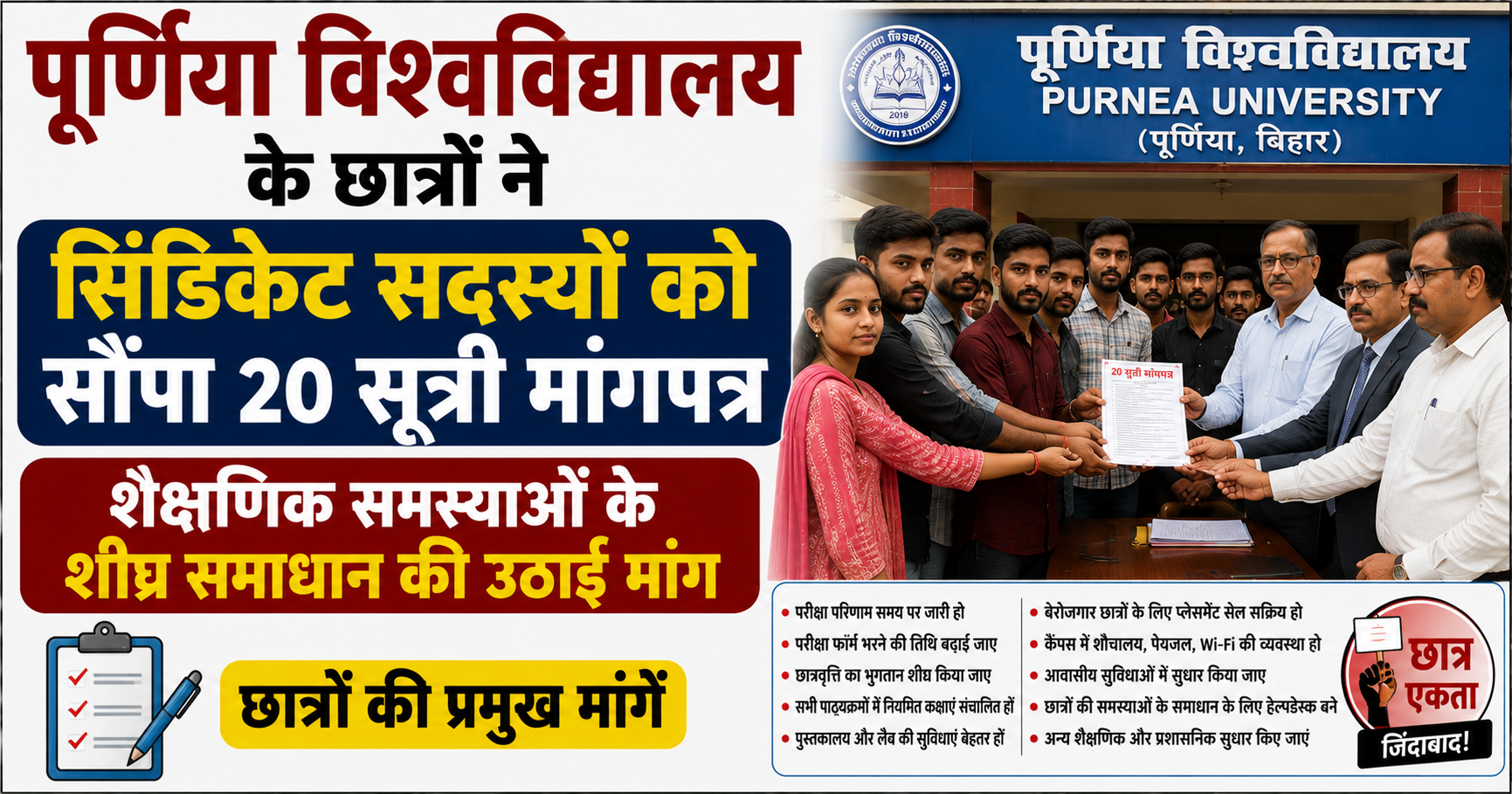
Purnia: Students of Purnia University have raised their concerns over several academic and administrative issues by submitting a 20-point memorandum to the university's Syndicate members. The memorandum calls for immediate action on a wide range of issues, including improvements in the examination system, a transparent and timely admission process, the conduct of PhD entrance examinations, publication of results, resolution of technical glitches, and the disposal of long-pending student-related matters.
Student leaders said that many academic issues have remained unresolved for a long time, adversely affecting the future of thousands of students. They warned that if the university administration fails to address the pending demands promptly, students would be compelled to intensify their protest through democratic means.
Memorandum Highlights Academic Concerns
In the memorandum submitted to the Syndicate members, students pointed out that several academic processes at the university are not being completed on schedule. They said delays in conducting examinations, publishing results, processing admissions, and issuing academic certificates have created significant difficulties for students seeking higher education and employment opportunities.
The student representatives urged the university administration to prepare a time-bound action plan to resolve these issues efficiently.
Demand for Improvement in the Examination System
A major focus of the memorandum was the need to reform the university's examination system. Students demanded that examinations be conducted according to the academic calendar and that answer sheets be evaluated within a stipulated time frame.
They also requested the timely declaration of examination results so that students do not face difficulties in seeking admission to higher courses, appearing for competitive examinations, or applying for jobs.
Call for a Simplified Admission Process
The memorandum also highlighted technical difficulties encountered during both online and offline admission procedures. Students complained that server failures, slow online portals, and delays in document verification often cause unnecessary inconvenience during the admission process.
They urged the university to strengthen its digital infrastructure and establish effective help desks to ensure smooth and hassle-free admissions.
Focus on PhD Examinations and Research
Research scholars' concerns were also prominently included in the memorandum. Student leaders demanded that PhD entrance examinations, research registrations, and other academic procedures be conducted regularly and within prescribed timelines.
They argued that unnecessary delays in research-related activities negatively impact scholars' academic careers and called on the university to take immediate corrective measures.
Resolution of Technical Problems
Students expressed concern over recurring technical issues affecting the university's online portal. They reported frequent problems while submitting online applications, filling examination forms, paying fees, and accessing examination results.
To address these issues, they demanded modernization of the university's information technology infrastructure and the establishment of a dedicated technical support team to assist students.
Disposal of Pending Student-Related Matters
The student leaders also pointed out that several important student services have remained pending for extended periods. These include the issuance of mark sheets, degree certificates, migration certificates, provisional certificates, and other administrative documents.
They urged the university to launch a special drive to clear all pending cases at the earliest so that students are not forced to face unnecessary delays and inconvenience.
Syndicate Members Listen to Students' Concerns
After receiving the memorandum, the Syndicate members listened carefully to the students' grievances. They assured the delegation that all the issues mentioned in the memorandum would be discussed with the university administration and that appropriate action would be taken in accordance with university regulations.
The members emphasized that student welfare remains a top priority and assured them that sincere efforts would be made to address their concerns.
Student Leaders Warn of Agitation
Student leaders stated that they have repeatedly brought these issues to the attention of the university administration but have not received satisfactory responses.
They warned that if the demands are not addressed within a reasonable time, students would launch a phased democratic protest, including sit-ins, demonstrations, and other peaceful forms of agitation.
Need for Reforms in Higher Education
Education experts observed that the quality of any university largely depends on efficient academic administration, timely examinations, and transparent governance. They noted that when examinations, admissions, and result declarations are conducted on schedule, students are better positioned to pursue higher education and employment opportunities.
Experts also recommended that the university strengthen its digital infrastructure, improve administrative transparency, and maintain regular communication with students to ensure smooth academic functioning.
Students Hope for Positive Action
After submitting the memorandum, students expressed hope that the university administration would seriously consider their demands and initiate prompt corrective measures. They clarified that their objective is not confrontation but the improvement of the university's academic system and the protection of students' interests.
The submission of the 20-point memorandum by students of Purnia University reflects their desire for better academic standards, transparent administration, and a time-bound educational system. Attention is now focused on the university administration and the Syndicate to see how quickly and effectively they respond to these demands. Timely action would not only strengthen students' confidence in the institution but also enhance the university's academic reputation and overall functioning.