


Case of Assault on Pawan Kumar at Police Station; State Human Rights Commission Takes Cognizance
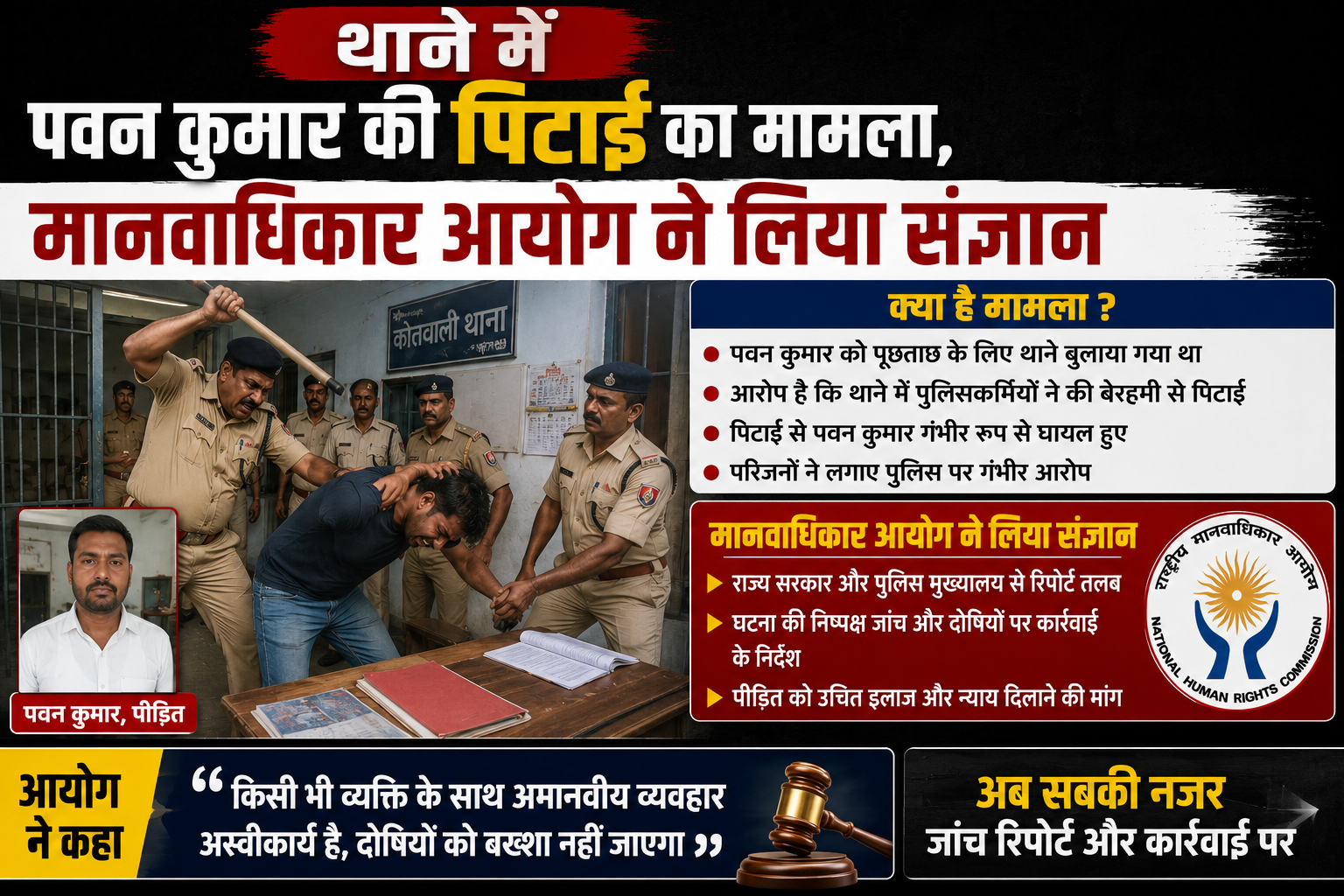
Muzaffarpur: A case has emerged from Muzaffarpur district in Bihar that raises serious questions about the working style of the police. Sumanji Jha, a Sub-Inspector (SI) at the Siwaipatti Police Station, has been accused of summoning a complainant, Pawan Kumar, to the police station and beating him mercilessly. This matter has reached not only the local level but also the State Human Rights Commission (SHRC), where CCTV footage has exposed the hollowness of the police's claims. This incident has once again brought to the fore the questions regarding the 'human face' of the police force and legal boundaries.
Details of the Incident
In his complaint, the victim, Pawan Kumar, alleged that SI Sumanji Jha of the Siwaipatti Police Station had called him to the station in connection with a case. Pawan stated that upon arriving, he was locked in a room without any clear explanation and was subjected to inhuman treatment. The victim alleges that, under the instructions of the Sub-Inspector, he was severely beaten, resulting in serious injuries. Terming this a direct violation of his human rights, Pawan Kumar sought justice from the State Human Rights Commission.
The 'Dark Truth' Revealed by CCTV Footage
Considering the gravity of the matter, the Human Rights Commission had demanded the CCTV footage of the police station from the time of the incident. When the commission's team conducted a forensic analysis of the footage, shocking facts came to light:
Involvement of the Watchman: The CCTV footage clearly shows the station's watchman, Arjun Kumar, mercilessly beating Pawan Kumar.
Presence of the Sub-Inspector: The video evidence also shows that all of this was happening in the presence and under the supervision of SI Sumanji Jha, who made no attempt to stop it.
Police Negligence: The police had initially tried to deny the incident in their report, but the CCTV footage exposed all their lies.
Strict Remarks and Action by the Human Rights Commission
The State Human Rights Commission has termed this a serious case of 'Torture in Police Custody.' In its order, the Commission stated:
"Treating a complainant in such a manner inside a police station is not only legally wrong, but it is also a violation of constitutional rights. The job of the police is to provide protection, not to take the law into their own hands and torture anyone."
Summoning the Senior Superintendent of Police (SSP) of Muzaffarpur, the Commission has issued strict instructions to ensure immediate departmental and legal action against the accused SI Sumanji Jha and watchman Arjun Kumar.
Administrative Stir and Pressure on the Police
Following the exposure of the incident, there is a stir within the Muzaffarpur police department. While senior district officials are refraining from commenting officially, sources suggest that the accused SI might be sent to the police lines (suspended/removed from duty). The victim, Pawan Kumar, still holds onto hope for justice and compensation.
Legal and Social Aspects: Why is this investigation necessary?
This incident shows how much public trust in the police is eroding. If the police themselves adopt the role of criminals within the very station that is meant to be a center of justice, where should the victim go? This matter has highlighted the following points:
Custodial Torture: Custodial torture is a serious crime in India, for which there are provisions for strict punishment.
Importance of CCTV: This case serves as a major example of the Supreme Court's directives regarding the mandatory installation of CCTV cameras in police stations. If the footage did not exist, Pawan Kumar might never have received justice.
Accountability: The collusion between the watchman and the Sub-Inspector shows how urgently reforms in policing are needed at the lower levels.
This Muzaffarpur case is a 'wake-up call' for the police. The stance of the Commission is clear—the protectors of the law cannot become the violators of the law. Pawan Kumar's fight is no longer just his own; it is a precedent for all those who are afraid to raise their voices against police oppression. It is hoped that action will be taken in this case that serves as a lesson for other police personnel.