
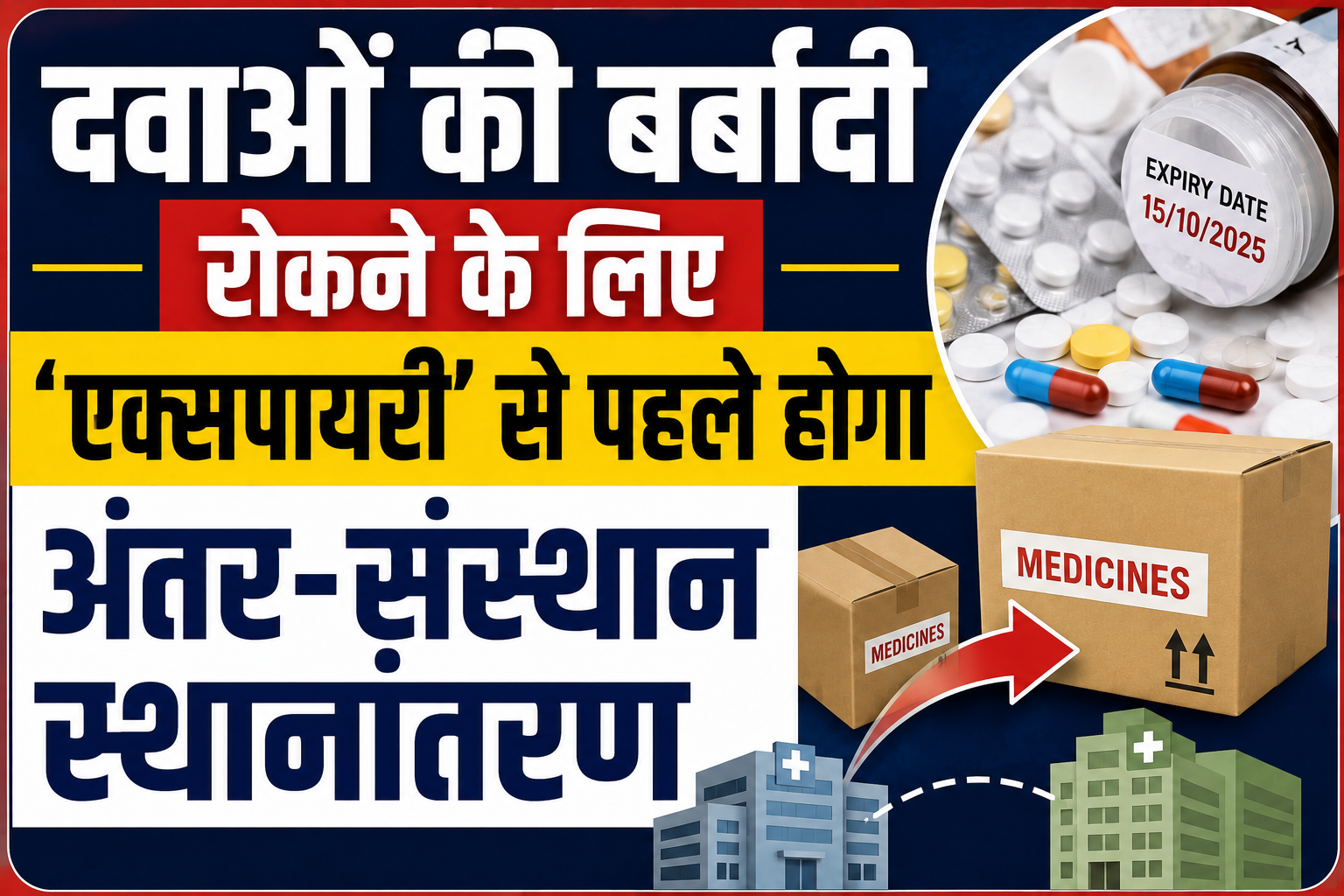
Inter-Institutional Transfer to Prevent Wastage of Medicines Approaching 'Expiry'
Muzaffarpur: To prevent the expiration of medicines in government hospitals and the resulting waste of crores of rupees of public funds, the Health Department has taken a firm and practical decision. According to the latest directives from the Bihar Health Department, medicines that are within three months of their expiry date will be prioritized and sent to medical colleges and high-consumption health centers to ensure they are utilized in time.
The Department's New Strategy: 'Quick Consumption, Zero Wastage'
Reports of large quantities of medicines expiring in the warehouses of various districts across the state had surfaced in the past, prompting the Health Department to tighten its monitoring mechanism. The key points of the department's new policy are as follows:
Priority to Medical Colleges: Since medical colleges see a very high volume of patients, the turnover of medicines there is extremely rapid. Medicines approaching their expiry date will be immediately transferred to these institutions to prevent them from going to waste.
Inter-District and Inter-Institutional Transfer: If a district or hospital has low consumption of certain medicines, the Civil Surgeon must ensure these are transferred to areas where there is a higher demand. If there is no demand within the district, they will be sent to other districts through an "inter-district" transfer process.
Mandatory Entry on DVDMS Portal: The management of medicine stock will now be entirely transparent. Every district is required to provide updated details regarding medicine availability, expiry dates, and distribution on the DVDMS (Drug and Vaccine Distribution Management System) portal. Any negligence or inaccurate data entry in this regard will make the concerned Civil Surgeon and District Program Manager accountable.
Regular Review: Civil Surgeons have been instructed to conduct a review of their stock between the 1st and 5th of every month and submit a report to BMSICL (Bihar Medical Services and Infrastructure Corporation Limited) by the 10th.
Why Was This Step Necessary?
Looking at the data, the rate of medicine expiration has been highest in Primary Health Centers (PHCs) and Community Health Centers (CHCs). Often, due to incorrect requisition forms or a lack of coordination between supply and consumption, medicines would remain sitting in warehouses. Over the past few years, cases of medicines worth crores of rupees expiring at various health centers in Bihar had come to light, raising questions about the department's operational efficiency.
Accountability and Monitoring
The Health Department has made it clear that ensuring the proper utilization of medicines is now the top priority for local medical officers. The department has warned that if medicines are not transferred in time and subsequently expire, disciplinary action will be taken against the concerned Medical Officer in Charge and the Civil Surgeon.
The objective of this new system is to ensure that the medicines purchased from the state exchequer reach the patients in need, rather than being destroyed as waste in warehouses. This policy is being implemented strictly across the state, including Muzaffarpur.


