


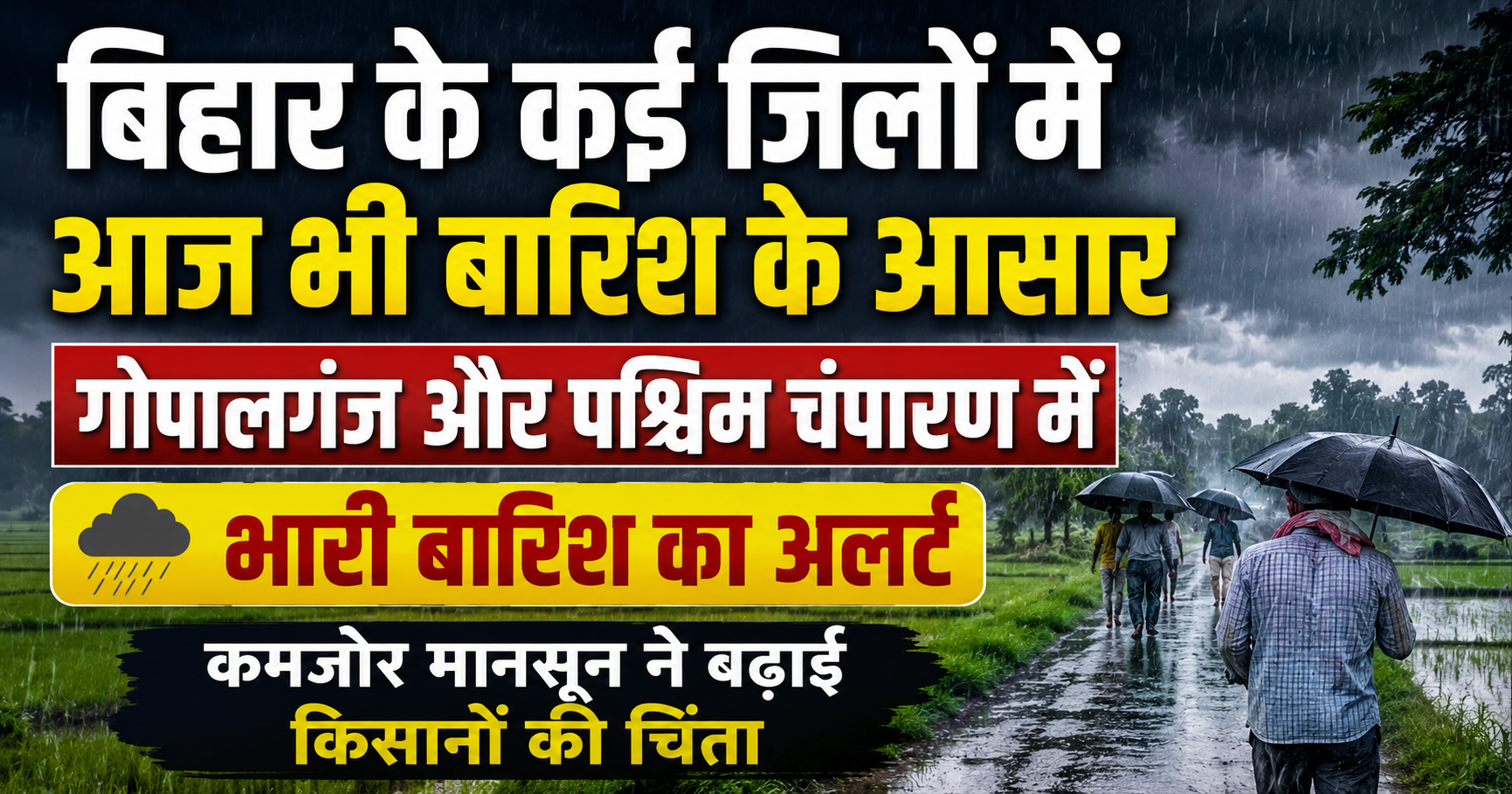
Heavy Rain Alert for Gopalganj and West Champaran, Rain Forecast Continues Across Several Districts Despite Weak Monsoon
Patna: The India Meteorological Department (IMD) has predicted rainfall in several districts of Bihar on Thursday, while issuing a heavy rain alert for Gopalganj and West Champaran. The forecast comes at a time when the state has been witnessing an uneven monsoon season, with many districts still recording below-normal rainfall even weeks after the official arrival of the southwest monsoon. Farmers, who have been anxiously waiting for consistent showers to begin paddy transplantation, are hoping that the latest spell of rain will improve the agricultural situation.
According to the IMD, moisture-laden winds and a favorable weather system over eastern India are expected to trigger light to moderate rainfall in many parts of Bihar during the next 24 hours. Some districts, particularly in northwestern Bihar, may experience heavy downpours accompanied by thunderstorms, lightning, and gusty winds. The weather department has advised residents in vulnerable areas to remain cautious, especially during periods of intense rainfall and thunderstorms.
The districts of Gopalganj and West Champaran have been placed under a heavy rainfall alert due to the possibility of localized intense showers. Low-lying areas in these districts may witness temporary waterlogging, while rivers and streams could experience a rise in water levels if heavy rainfall continues for several hours. Local administrations have been asked to remain alert and monitor the situation closely.
Apart from these two districts, rainfall is also expected in East Champaran, Sitamarhi, Sheohar, Muzaffarpur, Darbhanga, Madhubani, Supaul, Araria, Kishanganj, Purnia, Katihar, Saharsa, Madhepura, Bhagalpur, Banka, Jamui, and several neighboring regions. While widespread heavy rain is not expected everywhere, intermittent showers are likely to provide much-needed relief from the prevailing humid conditions.
Despite the forecast, meteorologists point out that Bihar's monsoon performance has remained weaker than expected this season. Several districts have recorded rainfall significantly below the long-term average. The uneven distribution of rainfall has emerged as a major concern, with some regions receiving adequate precipitation while others continue to experience prolonged dry spells.
The impact of deficient rainfall is becoming increasingly visible in the agriculture sector. Paddy transplantation, which usually gains momentum soon after the onset of the monsoon, has been delayed in many districts due to insufficient water in fields. Farmers dependent on rain-fed agriculture are facing uncertainty, as continuous rainfall is essential for successful sowing and crop establishment.
Agricultural experts believe that if the current weather system remains active for the next few days, it could substantially improve soil moisture levels and accelerate farming activities across the state. Adequate rainfall during this period would also help replenish ponds, canals, reservoirs, and groundwater resources, which are crucial for irrigation during the later stages of the cropping season.
The IMD has also warned of thunderstorms and lightning in isolated places. Residents have been advised to avoid taking shelter under trees during thunderstorms, stay away from open fields, and postpone unnecessary travel during periods of severe weather. Fishermen and people living near rivers have also been urged to remain vigilant, particularly in areas where heavy rainfall has been forecast.
Urban areas could face temporary traffic disruptions due to waterlogging on roads, especially if heavy rain occurs within a short period. Municipal authorities have been instructed to ensure proper drainage arrangements and remain prepared to respond to emergency situations. Power distribution companies have also been advised to monitor electricity infrastructure, as thunderstorms and strong winds may damage overhead power lines in some locations.
Health experts have urged people to take precautions during the rainy season by consuming clean drinking water, avoiding stagnant water, and maintaining proper sanitation. Increased humidity and waterlogging often lead to a rise in waterborne and vector-borne diseases, making preventive measures particularly important during the monsoon months.
Disaster management officials are also monitoring the situation closely. District administrations have been asked to stay prepared with emergency response teams and equipment in case of localized flooding or severe weather conditions. Authorities are expected to issue timely advisories if rainfall intensity increases further.
Weather experts say the current rainfall activity is associated with favorable atmospheric conditions developing over eastern India. If these systems continue to strengthen, Bihar could witness more widespread rainfall over the coming days, gradually reducing the state's rainfall deficit. However, they also caution that monsoon activity may continue to fluctuate, and rainfall distribution is likely to remain uneven across districts.
For farmers, the coming week will be crucial. Timely rainfall could help revive agricultural operations, improve crop prospects, and ease concerns over delayed transplantation. At the same time, excessive rainfall in isolated areas may create localized flooding, requiring careful monitoring by authorities.
The India Meteorological Department has advised citizens to keep track of official weather bulletins and follow instructions issued by local administrations. While the latest forecast brings hope for improved monsoon conditions across Bihar, weather officials emphasize that the overall progress of the monsoon will depend on how the current weather systems evolve during the coming days.