
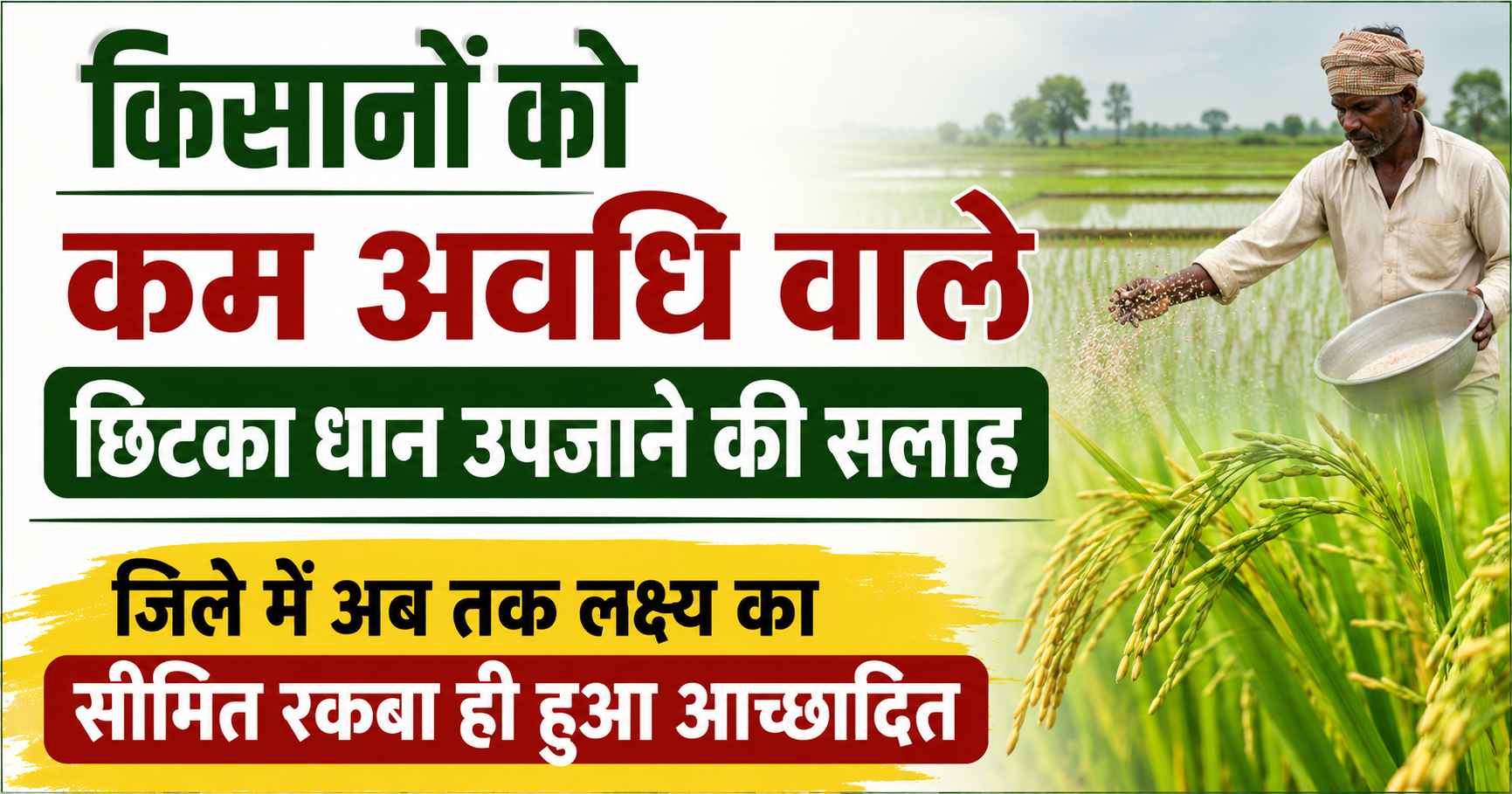
Farmers Advised to Cultivate Short-Duration Broadcast Paddy as District Achieves Only Limited Acreage Target So Far
District Correspondent: Due to irregular monsoon activity and inadequate rainfall, paddy cultivation has been adversely affected across the district. In view of the prevailing situation, the Agriculture Department has advised farmers to cultivate short-duration paddy varieties using the broadcast sowing method (locally known as Chhitka Dhan). Officials believe that this approach will help farmers secure better yields despite the delayed monsoon and limited water availability. Farmers have also been urged to maintain soil moisture, adopt proper water management practices, and use only department-recommended certified seeds.
According to the Agriculture Department, only a small portion of the district's paddy cultivation target has been achieved so far this season. The delay in monsoon rains and the lack of sufficient water in agricultural fields have prevented many farmers from completing transplantation. Considering the seriousness of the situation, the department has instructed Block Agriculture Officers and Agricultural Coordinators to visit villages and educate farmers about suitable alternatives.
Focus on Short-Duration Paddy Varieties
Agricultural experts say that prolonged delays in paddy transplantation can significantly reduce yields from long-duration varieties. Therefore, farmers are being encouraged to cultivate short-duration paddy varieties that mature within 90 to 120 days. In areas where transplantation is no longer feasible, broadcast sowing has been recommended as an effective alternative.
Experts explain that these short-duration varieties require comparatively less water and can still provide satisfactory yields if proper fertilizer application, irrigation, and weed management practices are followed.
Agriculture Department Issues Advisory
The District Agriculture Officer stated that a special advisory has been issued across all blocks. Farmers have been advised to use certified seeds, apply balanced doses of fertilizers, and ensure proper drainage in their fields. Those with access to irrigation facilities have been urged to irrigate their crops on time to prevent moisture stress.
Officials added that the department is continuously monitoring weather forecasts, and paddy transplantation is expected to accelerate once adequate rainfall is received. Until then, farmers are encouraged to prioritize early-maturing varieties.
Limited Coverage Against Cultivation Target
According to departmental data, only a limited area has been brought under paddy cultivation compared to the district's overall target. While some blocks have reported relatively better progress, several areas continue to lag behind due to insufficient rainfall. The Agriculture Department is reviewing block-wise progress daily and has directed officials to closely monitor field conditions.
Agricultural experts believe that if the district receives good rainfall over the next few days, paddy cultivation could gain momentum. However, if the delay continues, farmers may have to shift to alternative cropping options.
Technical Assistance Being Provided to Farmers
The Agriculture Department is providing technical guidance through Farmer Advisory Centers, Krishi Vigyan Kendras (KVKs), and Block Agriculture Offices. Farmers are receiving assistance on land preparation, seed treatment, fertilizer management, pest and disease control, and irrigation practices.
They are also being advised to treat seeds before sowing to minimize the risk of seed-borne diseases during the early stages of crop growth. Proper plant spacing and effective weed management have also been emphasized.
Weather to Play a Crucial Role
Agricultural scientists point out that the success of the Kharif season largely depends on the monsoon. Although the monsoon arrived on time, rainfall weakened significantly afterward, affecting nursery preparation, transplantation, and field operations.
However, the Meteorological Department has predicted the possibility of good rainfall in several parts of the district over the coming days. If the forecast materializes, farmers are expected to receive much-needed relief, allowing paddy cultivation to progress more rapidly.
Farmers Encouraged to Consider Alternative Crops
Experts have also advised farmers that if the delay becomes too severe for successful paddy cultivation, they should consider growing alternative short-duration crops such as maize, pulses, or oilseeds. This strategy can help reduce financial losses while ensuring productive use of agricultural land.
Appeal to Avail Government Schemes
The Agriculture Department has urged farmers to take advantage of various government agricultural schemes. Farmers can approach their respective Block Agriculture Offices for certified seeds, farm machinery support, irrigation assistance, and other agricultural benefits. Officials assured that all possible technical and administrative support would be provided.
Farmers Urged to Follow Scientific Practices
Authorities have appealed to farmers not to rely on rumors or unofficial information and instead follow only the advisories issued by the Agriculture Department and agricultural experts. Timely field preparation, adoption of scientific farming practices, and weather-based crop management can significantly improve productivity.
The Agriculture Department remains optimistic that if sufficient rainfall is received in the coming days and farmers adopt short-duration paddy varieties along with the broadcast sowing method, the district will be able to achieve a substantial portion of its paddy cultivation target. Officials have been instructed to remain in constant contact with farmers and provide all necessary technical assistance throughout the cropping season.


