
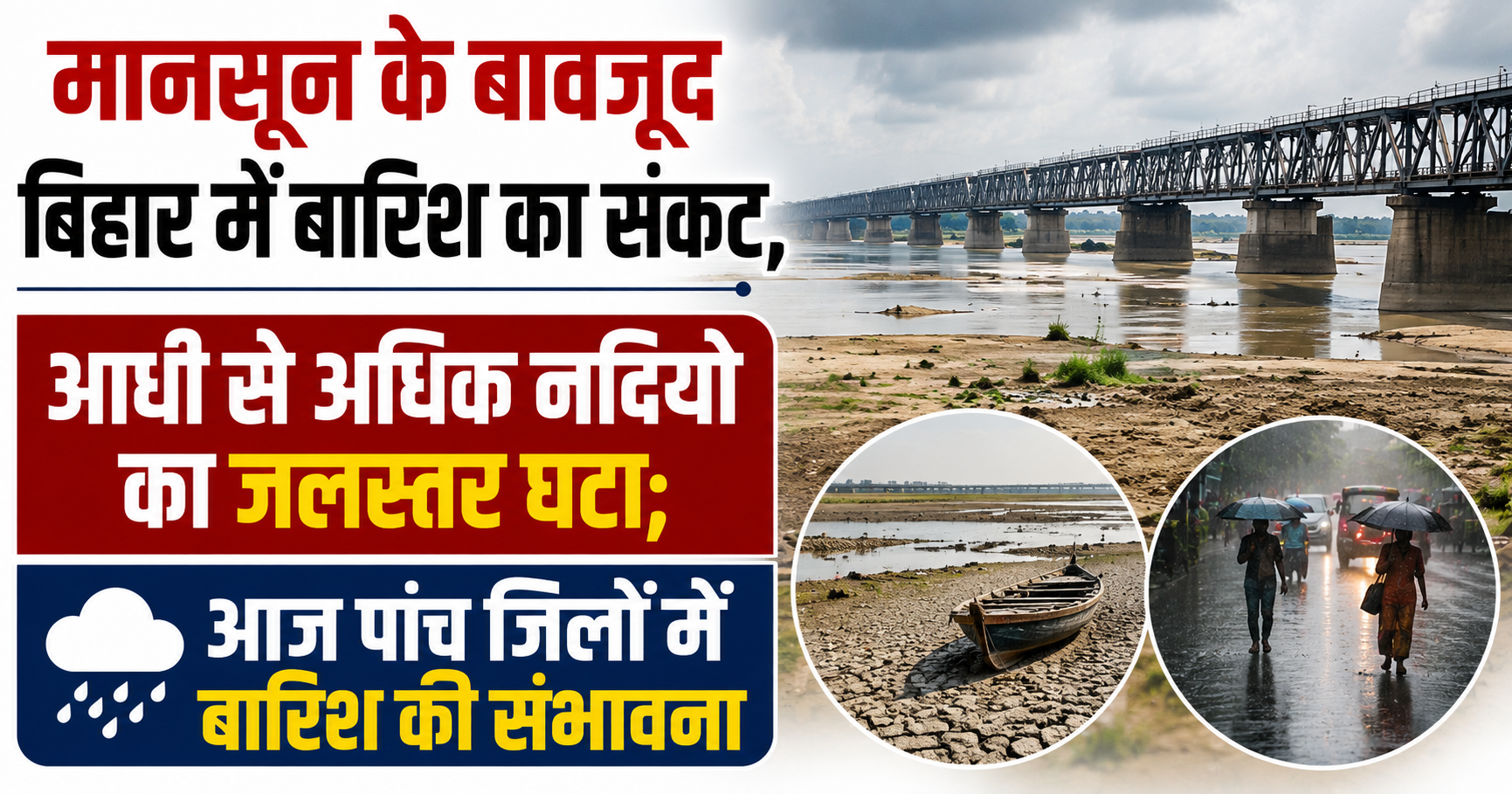
Despite Monsoon, Bihar Faces Severe Rainfall Deficit; More Than Half of the State's Rivers Running Low, Rain Likely in Five Districts Today
Patna: Despite the arrival of the southwest monsoon, Bihar is witnessing a significant rainfall deficit, raising concerns across the state. Even as the first week of July has passed, many districts have received far less rainfall than normal. The impact is no longer limited to agriculture—more than half of Bihar's rivers are now experiencing declining water levels due to inadequate rainfall. Several small and medium-sized rivers are shrinking, affecting irrigation, drinking water availability, and the overall ecological balance.
The India Meteorological Department (IMD) has offered some hope by forecasting light to moderate rainfall, accompanied by thunderstorms, in five districts of Bihar today. However, weather experts caution that isolated showers will not be enough to ease the emerging drought-like conditions unless widespread and sustained rainfall occurs over the coming days.
Rainfall Far Below Normal
According to the Meteorological Department, although the monsoon arrived in Bihar on schedule, rainfall activity weakened considerably afterward. Several districts have recorded 30 to 50 percent less rainfall than the seasonal average. Cities and districts including Patna, Gaya, Nalanda, Nawada, Sheikhpura, Jehanabad, Aurangabad, Bhojpur, Buxar, and Rohtas have experienced prolonged dry spells despite the monsoon season.
Meteorologists attribute the weak rainfall to the northward shift of the monsoon trough and the absence of a strong low-pressure system over the Bay of Bengal. As a result, moisture-bearing clouds are not reaching Bihar in sufficient numbers, leading to scattered cloud cover but very little rainfall.
Water Levels Falling in More Than Half of Bihar's Rivers
The shortage of rainfall has had a direct impact on the state's river system. Water levels in more than half of Bihar's rivers have fallen below normal. Several smaller rivers are witnessing drastically reduced flow, while riverbeds have become visible at some locations.
Rivers such as the Gandak, Punpun, Falgu, Sakri, Kiul, Badua, Chanan, and several tributaries have reported declining water levels. Larger rivers including the Ganga, Kosi, and Bagmati are currently flowing within the normal range, but experts warn that prolonged rainfall deficiency could eventually affect them as well.
Officials from the Water Resources Department said there is currently no flood threat in the state, but if rainfall remains below normal for an extended period, irrigation projects and drinking water supplies may face increasing pressure.
Farmers Worried as Paddy Transplantation Suffers
The rainfall shortage has become a major concern for farmers, especially since this is the peak season for paddy transplantation. Insufficient rainfall has left fields dry, making cultivation difficult in many districts.
Farmers are increasingly relying on private borewells and diesel-powered irrigation pumps to save their crops. While this allows farming to continue, it also raises cultivation costs and places an additional financial burden on small and marginal farmers. Agricultural experts warn that if substantial rainfall does not occur within the next week, kharif crop production could be adversely affected.
Groundwater Recharge Also Declining
The rainfall deficit is also affecting groundwater levels. With limited rainfall, natural groundwater recharge has slowed considerably. In many rural areas, the water level in hand pumps and traditional wells has begun to decline.
Experts caution that if the remaining monsoon months also witness below-normal rainfall, Bihar could face a serious drinking water crisis in the months ahead.
IMD Forecasts Rain in Five Districts
The India Meteorological Department has forecast light to moderate rainfall in five districts of Bihar today, along with thunderstorms and gusty winds at isolated places. Residents have been advised to remain cautious during adverse weather conditions and avoid standing under trees or near electric poles during thunderstorms.
However, weather conditions are expected to remain largely dry across most parts of the state, with no significant drop in daytime temperatures.
Rising Humidity and Heat Add to Public Discomfort
The lack of rainfall has also intensified heat and humidity across Bihar. Strong sunshine during the day, followed by high humidity in the evening, has made weather conditions uncomfortable for residents.
Cities including Patna are experiencing above-normal daytime temperatures. The hot and humid weather has also increased electricity demand, with power consumption reaching high levels in several districts.
Agriculture Department Issues Advisory
The Agriculture Department has advised farmers to closely monitor weather forecasts and continue paddy transplantation wherever irrigation facilities are available. Farmers have also been encouraged to maintain soil moisture through timely irrigation and adopt scientific farming practices to minimize the impact of rainfall deficiency.
Officials have further recommended cultivating crops that require less water in areas where rainfall remains inadequate.
Environmental Experts Raise Climate Concerns
Environmental experts believe that changing weather patterns linked to climate change are increasingly affecting the monsoon. Periods of excessive rainfall followed by prolonged dry spells are becoming more frequent.
They stress the importance of rainwater harvesting, restoring ponds and reservoirs, conserving groundwater, and improving water management systems to reduce the impact of future weather extremes.
Government Closely Monitoring the Situation
The Bihar government is keeping a close watch on the evolving weather conditions. Departments including Water Resources, Agriculture, and Disaster Management have been instructed to remain prepared for any eventuality. If rainfall continues to remain below normal, the government may consider special relief measures to support affected farmers.
What Lies Ahead?
Meteorologists believe that if a fresh low-pressure system develops over the Bay of Bengal in the coming days, monsoon activity could revive across Bihar. Such a development would likely bring widespread rainfall, improve river water levels, and provide much-needed relief to farmers.
For now, Bihar's biggest challenge remains the lack of adequate rainfall despite the arrival of the monsoon. The deficiency is already affecting agriculture, water resources, and daily life across the state. Residents, farmers, and officials alike are now looking toward the next phase of the monsoon, hoping for widespread rains before the situation worsens into a full-fledged drought-like scenario.


