
Online Discussion on Maithili Novel Prithviputra and Its English Translation Highlights the Importance of Promoting Regional Literature Globally
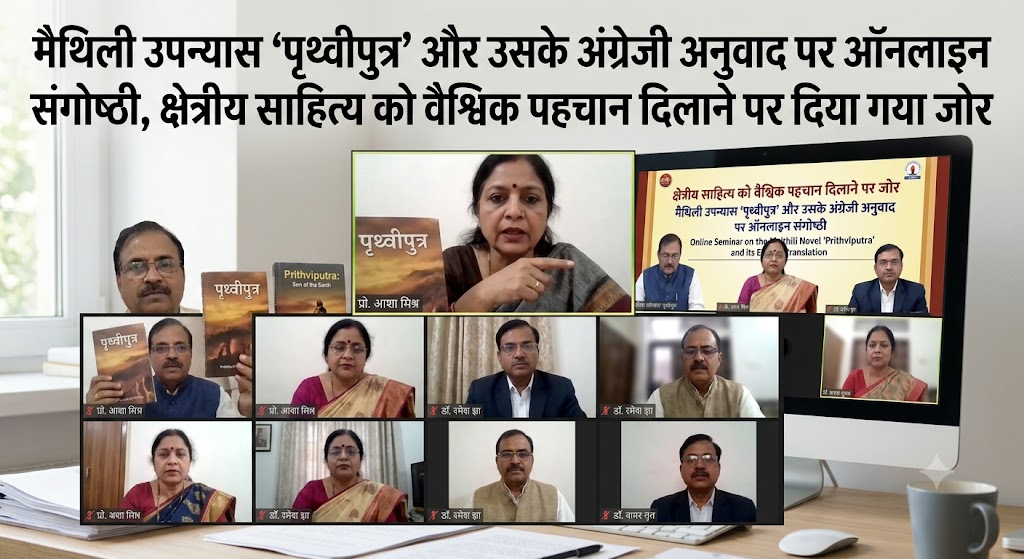
Darbhanga: The Darbhanga Chapter of the World Association of Authors and Researchers (WAAR) organized an online literary discussion on the acclaimed Maithili novel Prithviputra and its English translation. The event brought together authors, researchers, academicians, and literature enthusiasts from across India and abroad to discuss the role of translation in taking regional literature to a global audience.
Speaking as the keynote speaker, Prof. Punita Jha emphasized that high-quality translation plays a vital role in giving regional literature national and international recognition. She described translation not merely as the conversion of words from one language to another, but as a powerful medium for conveying culture, emotions, traditions, and social values to readers across linguistic boundaries.
Translation as a Bridge to Global Recognition
In her address, Prof. Punita Jha stated that India is home to immense linguistic diversity, with every regional language reflecting its own unique history, culture, and literary heritage.
She explained that translating outstanding literary works into English and other international languages enables them to reach readers worldwide, thereby enhancing the visibility and appreciation of regional literature.
In-Depth Discussion on Prithviputra
The seminar featured an extensive discussion on the Maithili novel Prithviputra, focusing on its themes, storyline, literary style, social relevance, and contribution to Maithili literature.
Speakers noted that the novel effectively portrays human relationships, social struggles, cultural values, and the realities of life, making it one of the significant works in contemporary Maithili literature.
Appreciation for the English Translation
Participants praised the English translation of the novel, stating that it would introduce Prithviputra to readers who are unfamiliar with the Maithili language but are interested in Indian literature and culture.
The speakers observed that a successful translation faithfully preserves the emotions, cultural nuances, literary style, and artistic essence of the original work while making it accessible to a wider audience.
New Opportunities for Literary Research
Researchers participating in the programme highlighted that translations of regional literary works create fresh opportunities for academic research and comparative literary studies.
They noted that universities and research institutions across the world are increasingly interested in studying Indian regional literature, and quality translations help facilitate such scholarly work.
Encouragement for Young Writers
The speakers encouraged young writers and research scholars to continue writing in their mother tongue while also supporting translation initiatives.
They stressed that language is not merely a means of communication but also a carrier of cultural identity and heritage. Active participation by the younger generation is therefore essential for preserving and promoting regional languages.
Digital Platforms Expanding Literary Reach
Since the event was conducted online, participants from different states of India and several other countries were able to join the discussion.
Speakers remarked that digital platforms have transformed literary engagement by enabling regional literature to reach readers beyond geographical boundaries and connect with a global audience.
Experts Share Their Perspectives
Prominent scholars and literary experts shared their views on the development of Maithili literature, the challenges involved in literary translation, and the future of Indian regional languages.
They emphasized the need for greater collaboration among writers, translators, publishers, and educational institutions to promote regional literature more effectively.
Importance of Quality Translation
Experts pointed out that literary translation requires much more than changing words from one language to another. It demands a deep understanding of the original author's style, cultural references, idiomatic expressions, and emotional depth.
Only high-quality translations, they said, can ensure that literary works receive international recognition without losing their original essence.
Rich Heritage of Maithili Literature
The speakers also highlighted the rich literary tradition of the Maithili language, which has produced numerous classic and influential works over the centuries.
They expressed confidence that systematic translation of these works into major world languages would significantly enhance the global recognition of Maithili literature.
Need for Continued Literary Dialogue
At the conclusion of the programme, participants stressed the importance of organizing similar literary discussions on a regular basis.
They observed that such events strengthen interaction among writers, researchers, students, and readers while creating new opportunities for literary collaboration and cultural exchange.
Vote of Thanks
The organizers thanked all speakers, participants, and literature enthusiasts for making the programme successful. They reaffirmed their commitment to organizing more initiatives aimed at promoting regional languages and Indian literature at national and international levels.
The online discussion organized by the World Association of Authors and Researchers (WAAR), Darbhanga Chapter, on the Maithili novel Prithviputra and its English translation underscored the crucial role of translation in bringing regional literature to the global stage.
The speakers unanimously agreed that quality translation, academic research, and continuous literary dialogue are essential for preserving India's rich linguistic heritage and ensuring that regional literary masterpieces receive the international recognition they deserve. Such initiatives not only promote Maithili literature but also celebrate the cultural and literary diversity of India on a global platform.