

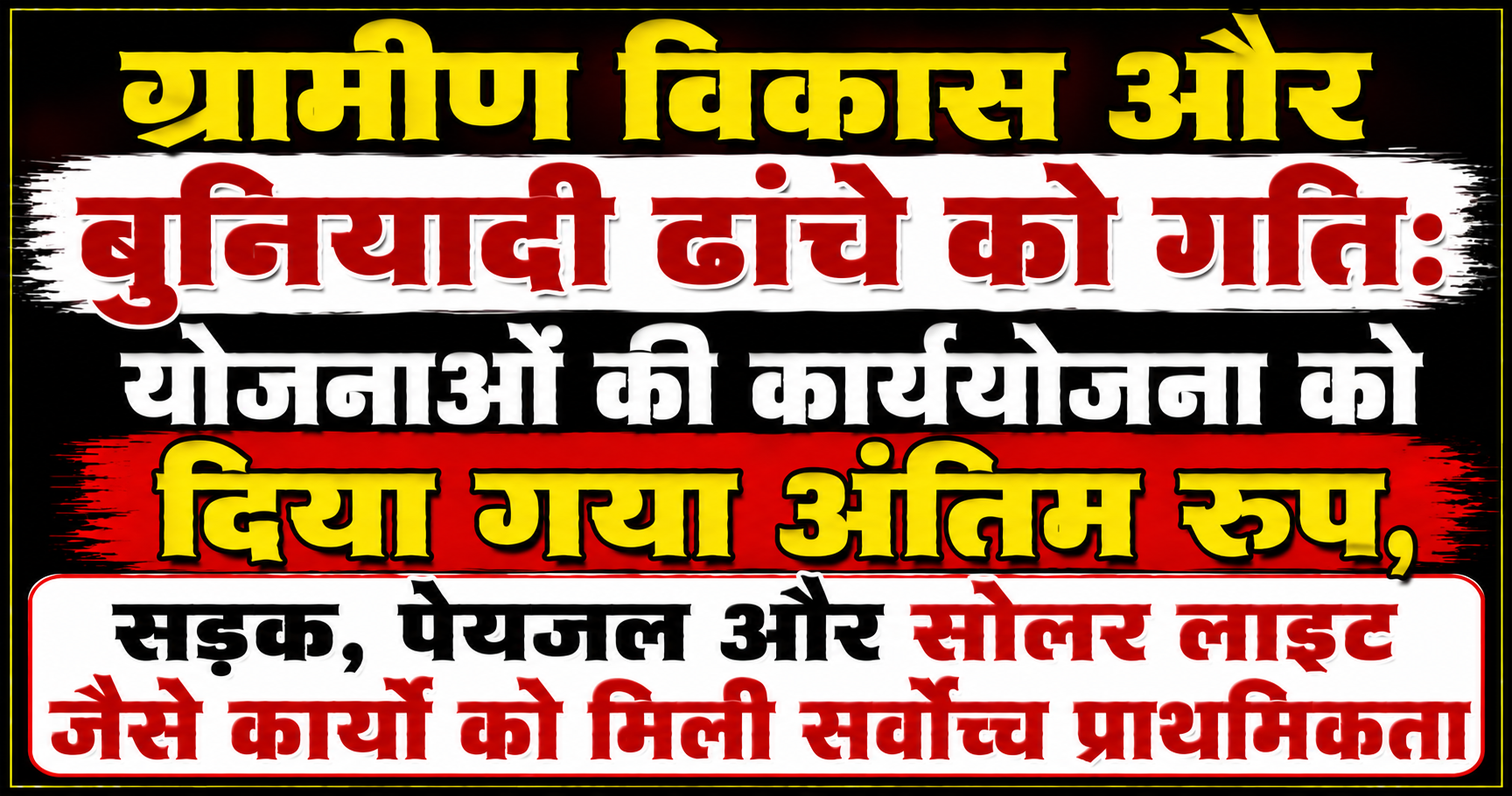
Accelerating Rural Development and Infrastructure: Action Plan Finalized; Top Priority Accorded to Works Like Roads, Drinking Water, and Solar Lights
Bihar: The comprehensive development of rural areas and transforming the visage of villages has always remained at the center of administrative and governmental priorities. Along these lines, a significant step has been taken toward expanding basic amenities and translating development schemes onto the ground in rural regions. During a recently convened high-level meeting, the action plan for various rural development schemes has been finalized.
Special care was taken during this meeting to ensure that ordinary citizens residing in villages can easily access modern amenities and basic necessities comparable to urban areas. To achieve this, top priority has been accorded to vital works such as road construction, drainage construction, pure drinking water supply, community buildings, strengthening of health sub-centres, and the installation of solar street lights. The materialization of these development works is expected to usher in an unprecedented improvement in the rural standard of living. Let us examine the complete and detailed account of this comprehensive action plan, prioritized works, and its far-reaching impacts.
Framework of the Meeting and Vision of Development Works
This action plan has been formulated keeping the ground realities and primary requirements of rural areas in mind. Administrative officials, public representatives, and heads of relevant departments participated in the meeting.
Resolving Core Village Problems: During discussions, special emphasis was laid on the fact that numerous fundamental problems persist in rural areas which require prompt resolution. These include transportation bottlenecks, lack of drainage, scarcity of pure drinking water, and darkness on roads during nighttime.
Transparency and Punctuality: While finalizing the action plan, it was also ensured that all development works are executed with complete transparency and within stipulated timeframes so that public tax funds are appropriately utilized.
Key Priorities and Works Included in the Action Plan
Under the proposed action plan, the six primary sectors accorded highest priority in rural regions are detailed as follows:
Roads and Connectivity
Web of Paved Roads: Construction of new paved roads and repair of old, dilapidated roads to connect villages with main thoroughfares and markets has been placed at the top of the priority list.
Ease of Transportation: The construction of roads will facilitate farmers in transporting their produce to markets while ensuring smooth commutes for school children and working individuals.
Drainage System
Freedom from Waterlogging: Wastewater from households often spills onto village lanes, creating a risk of disease outbreaks. The construction of paved drains has been prioritized to eradicate this issue and ensure proper wastewater disposal.
Sanitation and Health: Establishing an appropriate drainage system will elevate cleanliness levels in villages and curb waterborne diseases such as malaria and dengue.
Clean Drinking Water Supply
Tap Water to Every Household: Pure drinking water is the most fundamental necessity of human life. The action plan places special focus on hamlets and settlements facing drinking water shortages. Pipeline expansion and maintenance under the 'Har Ghar Nal Ka Jal' (Tap Water to Every Household) scheme will be reinforced.
Health Protection: Access to pure drinking water will safeguard villagers from waterborne infectious diseases, improving health standards particularly for children and women.
Construction of Community Buildings
Hubs for Social and Cultural Events: Villages consistently experience a lack of shared venues for hosting weddings, social gatherings, village assemblies, and cultural events. This action plan includes proposals for constructing community buildings equipped with modern amenities.
Utility During Disasters: During emergencies or natural disasters like floods, these community buildings will also prove useful as relief shelters and safe havens.
Strengthening of Health Sub-Centres
Access to Primary Healthcare Services: To ensure that pregnant women, newborns, and general patients in rural areas receive immediate medical assistance, emphasis has been placed on improving the condition of health sub-centres.
Availability of Medicines and Doctors: Plans have been formulated to ensure basic medical equipment, essential medicines, and regular attendance of health personnel at these sub-centres so villagers do not need to travel to distant towns for minor ailments.
Installation of Solar Street Lights
Illuminating Rural Lanes at Night: Promoting energy conservation and environmentally sustainable development, solar street lights will be installed along major village lanes and intersections.
Safety and Mobility: Illumination during nighttime will ensure safe movement for women, elderly citizens, and children while keeping anti-social elements in check.
Transparent Execution and Local Participation
The success of any scheme relies heavily on how effectively it is executed on the ground. The administration has issued clear directives regarding this action plan:
Rural Oversight: No compromises will be tolerated regarding the quality of development works. Committees will be constituted at the rural level to monitor construction activities.
Public Participation: Villagers will be apprised of these schemes through Gram Sabhas so they can actively voice their opinions and become part of the development process.
The soul of rural India resides in its villages, and until villages undergo holistic development, the progress of the state or country remains incomplete. Formulated by prioritizing essential works such as roads, drainage, drinking water, community buildings, health sub-centres, and solar street lights, this action plan will prove to be a revolutionary step toward rural development. Implementing these schemes in a time-bound manner will not only transform the physical appearance of villages but also bring about an unprecedented enhancement in the standard of living for their residents. This administrative initiative stands as proof that the government is fully committed to resolving ground-level realities.