
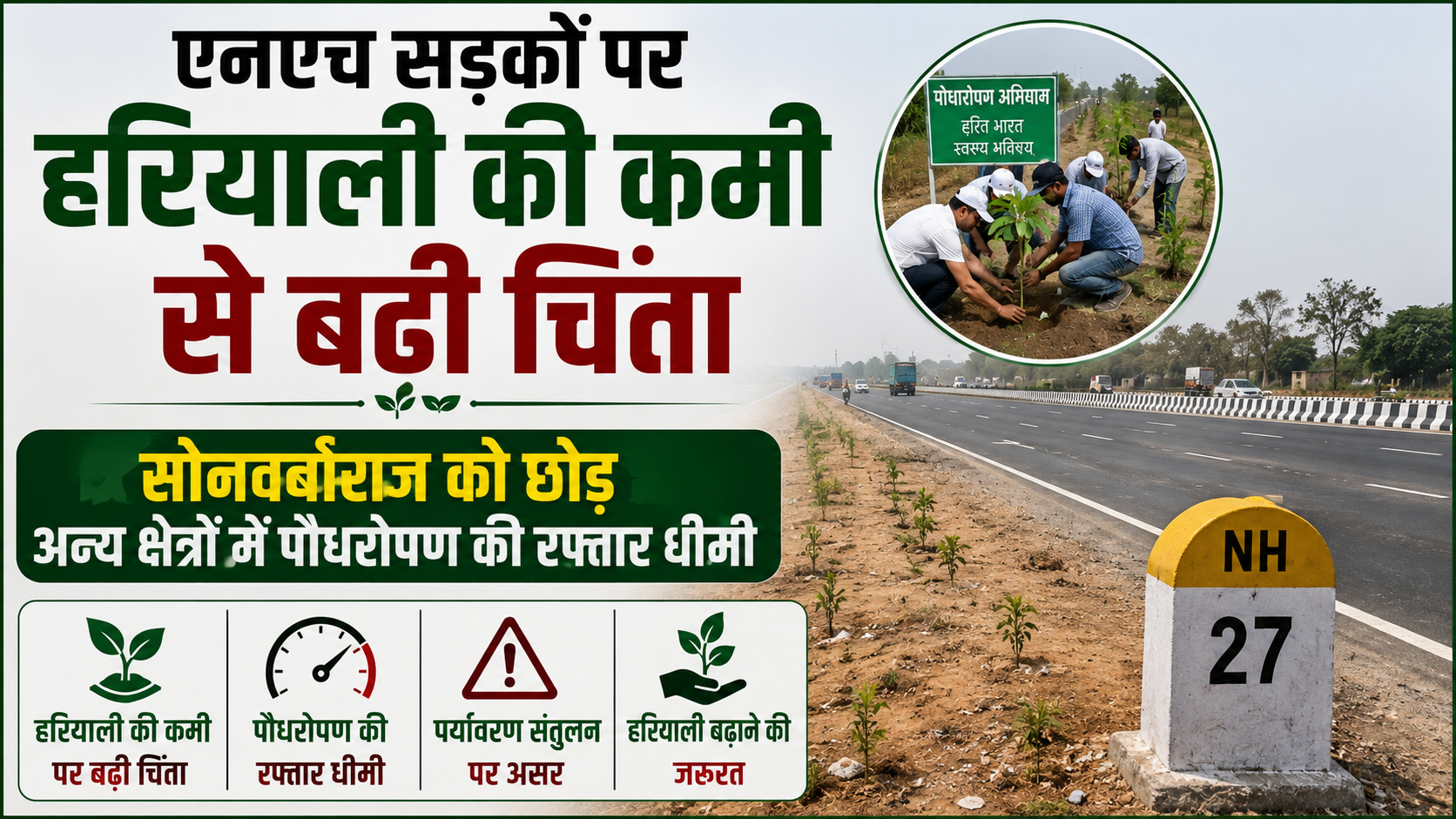
Lack of Greenery Along NH Roads Raises Concern, Tree Plantation Slow Outside Sonbarsa Raj
Saharsa: The lack of greenery along National Highway (NH) roads passing through Saharsa district is becoming a matter of concern for local residents. The shortage of trees along the roadsides means that commuters and pedestrians have little relief from the scorching sun during summer. With the number of vehicles increasing, roadside green belts could also play an important role in helping reduce the impact of dust and vehicular pollution. Local residents are therefore demanding large-scale tree plantation along NH routes across the district.
According to residents, road construction and widening have improved transportation facilities in the district, but adequate attention has not been given to maintaining greenery along the roads. While plantation work is visible in some areas, most NH stretches have very few trees along the roadside.
At present, plantation activity is reportedly taking place in the Sonbarsa Raj area. However, residents say that large-scale plantation is not visible in many other parts of the district, leading to growing concern. They believe that environmental protection should receive equal priority alongside road development.
Lack of Trees Increasing Difficulties for Commuters
The number of vehicles travelling on NH roads has been steadily increasing. Heavy vehicles, buses, trucks, cars and two-wheelers pass through these roads throughout the day. As traffic increases, dust and vehicle emissions also increase.
Trees along roadsides can help trap some dust particles and contribute to improving the surrounding air environment. Green belts can also help reduce the impact of heat around road corridors.
Local residents say that pedestrians and two-wheeler riders face particular difficulties during summer. When trees are available along roads, they provide natural shade, but several stretches of the NH currently lack such shelter.
Plantation in Sonbarsa Raj Raises Hope
The plantation activity in the Sonbarsa Raj area has raised hopes among local residents that similar initiatives will soon be extended to other parts of the district.
Residents believe that once plantation has started in one area, the programme should be expanded across the entire district. Suitable government land, road margins and other available spaces can be used for systematic plantation, subject to road safety requirements.
However, plantation alone will not be sufficient. Newly planted trees require regular watering, protection and maintenance. Without proper care, a large number of saplings may not survive.
Local Residents Demand Large-Scale Plantation
People living around NH routes are demanding extensive tree plantation, saying that it would provide direct benefits to both the environment and the public.
Residents have urged the authorities to plant trees suitable for the local climate along both sides of the highways. Species capable of surviving for a long period and providing adequate shade should be selected.
Trees such as neem, peepal, banyan, arjun and karanj may be considered where technically suitable. However, the selection of species should be based on expert advice and road safety standards.
Relief for Pedestrians During Summer
Saharsa experiences hot and humid weather conditions, making travel during summer particularly difficult. The lack of shade along roads becomes especially noticeable during the afternoon when temperatures rise.
If sufficient trees are developed along both sides of NH roads, pedestrians could receive natural shade in the future. This could provide relief to walkers, cyclists and two-wheeler riders.
Residents believe plantation should not be viewed merely as an environmental campaign but also as a long-term public convenience initiative.
Green Belts Can Help Address Pollution
The growing number of vehicles on NH roads means that air pollution cannot be ignored. Vehicle emissions and dust generated by traffic can affect the surrounding environment.
Green belts along highways can help trap some dust and particulate matter. Trees absorb carbon dioxide and release oxygen, although plantation alone cannot completely solve the problem of air pollution.
Nevertheless, developing roadside greenery can be an important component of broader environmental improvement efforts.
Protecting Saplings Is a Major Challenge
Residents say plantation drives are sometimes conducted, but the number of surviving trees decreases over the years. Poor maintenance and inadequate protection are among the possible reasons for this.
Trees planted along NH roads may need tree guards to protect them from animals and other damage. Regular irrigation and monitoring will also be necessary.
Road construction agencies and concerned departments should ensure that plantation does not affect visibility, road safety or the movement of vehicles.
Water Conservation Must Accompany Plantation
Providing water to saplings during the summer months can be a major challenge. Therefore, plantation programmes should be accompanied by proper irrigation and water-management plans.
Depending on local conditions, rainwater harvesting, water tankers and suitable local water sources could be used to maintain newly planted trees.
If saplings receive regular care during their first two or three years, their chances of surviving and developing into mature trees can increase significantly.
Community Participation Could Make the Campaign Successful
Local participation could play an important role in making the plantation campaign successful. Residents, schools, voluntary organisations and local institutions could be involved in protecting and maintaining trees planted along NH routes.
Students can also be encouraged to participate through environmental awareness programmes. Such initiatives could help develop a stronger sense of environmental responsibility among younger generations.
Community participation in protecting trees could also reduce the burden on government departments responsible for maintenance.
Road Development Must Go Hand in Hand with Environmental Protection
Residents believe road development and environmental conservation do not have to conflict with each other. With proper planning, both objectives can be achieved simultaneously.
If trees have to be removed during highway construction or widening, adequate compensatory plantation should be carried out according to applicable rules. Available roadside space can also be scientifically planned to develop green belts.
This could make highways more attractive, environmentally friendly and potentially more comfortable for commuters.
Hope for Plantation in Other Parts of the District
The plantation work in Sonbarsa Raj has created expectations that similar initiatives will soon begin along other NH stretches in Saharsa. Residents want all major highway sections in the district to be included in the plantation programme rather than focusing on only one area.
People are also demanding regular monitoring of the planted trees and clear responsibility for their maintenance. Authorities could assess the number of saplings planted and the number that survive each year to measure the actual effectiveness of the campaign.


