
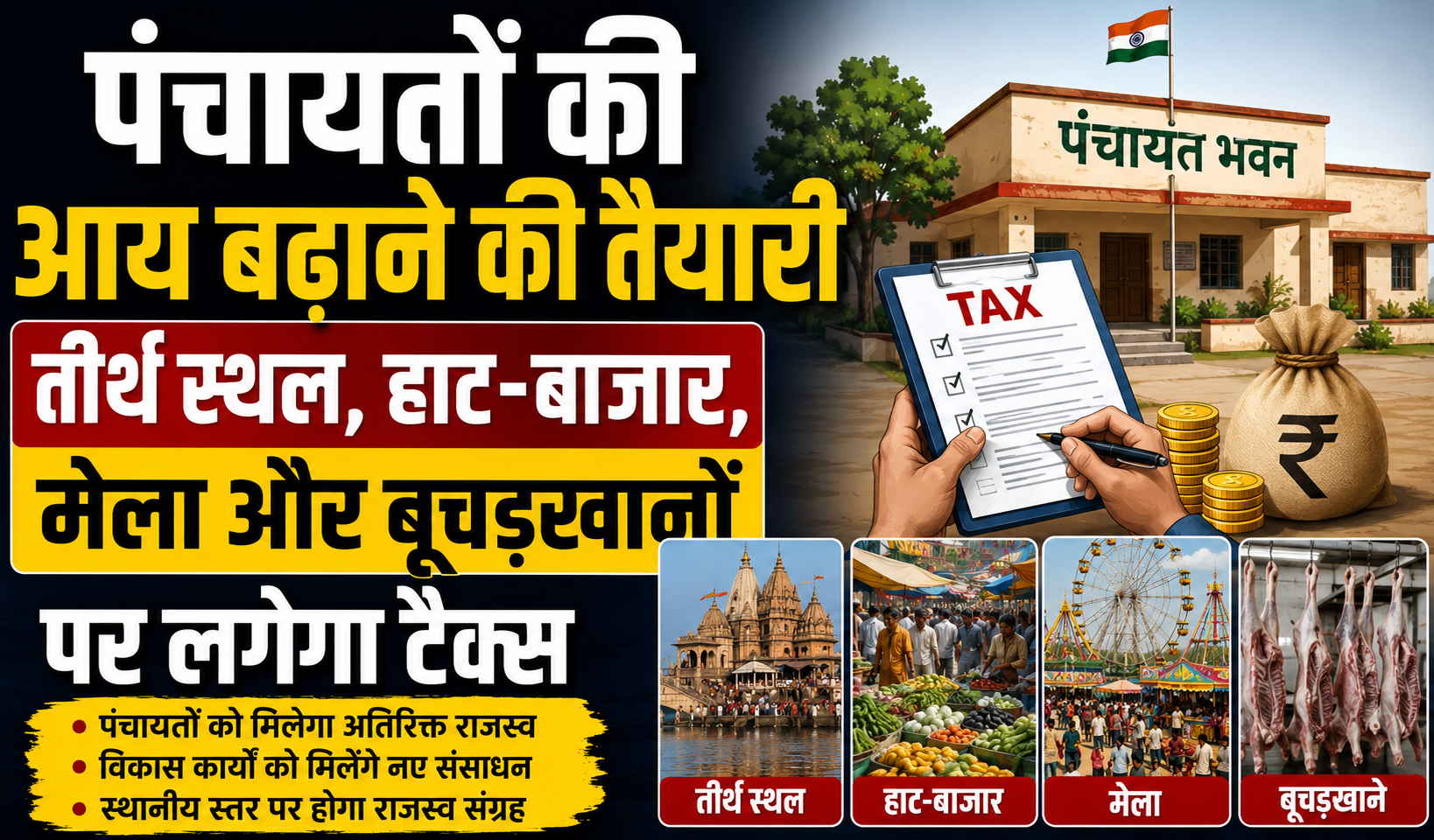
Tax to Be Levied on Pilgrimage Sites, Markets, Fairs, and Slaughterhouses in Panchayats to Increase Rural Revenue
Patna: The Bihar government is preparing to introduce a new revenue-generation mechanism aimed at strengthening the financial position of gram panchayats across the state. Under the proposed system, taxes or user charges will be imposed on pilgrimage sites, village markets (haats), fairs, animal slaughterhouses, and certain other commercial activities located within panchayat areas.
According to the government, the primary objective is to increase the own-source revenue of panchayats, enabling them to undertake more development projects without relying entirely on state grants.
Officials said that if local bodies generate additional income through authorized taxes and fees, they will be better equipped to improve roads, drainage systems, drinking water facilities, sanitation, street lighting, and other basic civic infrastructure in rural areas.
Initiative to Make Panchayats Financially Self-Reliant
The Bihar government has been emphasizing the need to make gram panchayats more financially independent. At present, most panchayats depend heavily on government grants to carry out development works.
The proposed taxation system is intended to diversify local revenue sources so that panchayats can independently finance smaller development projects and reduce dependence on external funding.
Officials believe that stronger local finances will improve the efficiency of rural governance and accelerate development.
Activities Likely to Attract Tax or Fees
Under the proposed framework, taxes or user charges may be collected from several activities conducted within panchayat limits, including:
- Pilgrimage sites and specified religious facilities (where applicable under the rules)
- Rural haats (weekly markets)
- Village fairs
- Livestock markets
- Animal slaughterhouses
- Other commercial activities as permitted under applicable laws and government regulations
Authorities stated that the applicable rates will be determined according to the relevant rules and official notifications.
Main Objective Is to Increase Panchayat Revenue
The government has clarified that the purpose of the proposal is not to impose an unnecessary financial burden on residents but to create sustainable revenue sources for local self-governments.
The additional income generated by panchayats could be utilized for public welfare projects such as road maintenance, sanitation, drainage, drinking water supply, street lighting, and the upkeep of community assets.
Faster Rural Development Expected
Experts believe that increased local revenue would enable panchayats to undertake small and medium-scale development works more quickly without waiting for lengthy administrative approvals.
Funds could be used to repair village roads, clean drains, maintain public toilets, improve water supply systems, and preserve community infrastructure.
Focus on Transparency
Government officials have indicated that tax collection and expenditure will be carried out in a transparent manner.
Panchayats will be required to maintain proper financial records, ensuring accountability in the use of public funds. The accounts may also be reviewed or audited by the concerned authorities whenever necessary.
Mixed Reactions from Villagers and Business Owners
The proposal has received mixed reactions from residents and local traders.
Some people believe the initiative could benefit rural areas if the collected revenue is genuinely invested in local development.
Others, however, argue that tax rates should remain reasonable so that small businesses and local traders are not subjected to excessive financial pressure.
Benefits for Local Self-Governments
Experts say that financially stronger panchayats will be better positioned to identify local priorities and implement development projects independently.
Greater financial autonomy could also improve the efficiency of local governance and help deliver public services more effectively.
Collection to Follow Legal Provisions
Officials emphasized that any taxes or fees will be collected strictly in accordance with the relevant laws, government regulations, and official notifications.
Where necessary, the rates will be prescribed through government notifications, and panchayats will collect charges only as authorized under those rules.
Greater Responsibility for Panchayat Representatives
The proposed system will also increase the responsibilities of elected panchayat representatives, including the Mukhiya, Panchayat Secretary, and other local officials.
They will be expected to ensure transparent tax collection, compliance with legal procedures, and proper utilization of the funds for public welfare.
Strengthening Rural Development
Policy experts believe that if panchayats successfully increase their revenue and use the funds effectively, rural development could receive a significant boost.
With additional financial resources, local bodies would be able to prioritize projects according to community needs and provide better civic amenities to villagers.
Implementation Process
Once the proposal is formally implemented, the concerned departments are expected to issue detailed operational guidelines for panchayats.
Following that, the tax collection process will begin under the prescribed rules, with regular monitoring to ensure compliance and transparency.
The Bihar government believes that strengthening local revenue generation will reinforce the system of rural self-governance. However, the success of the initiative will largely depend on transparent implementation, reasonable tax rates, and the effective use of the collected funds for improving public infrastructure and essential services. If implemented efficiently, the proposal could significantly improve the financial health of panchayats while accelerating rural development across the state.


