
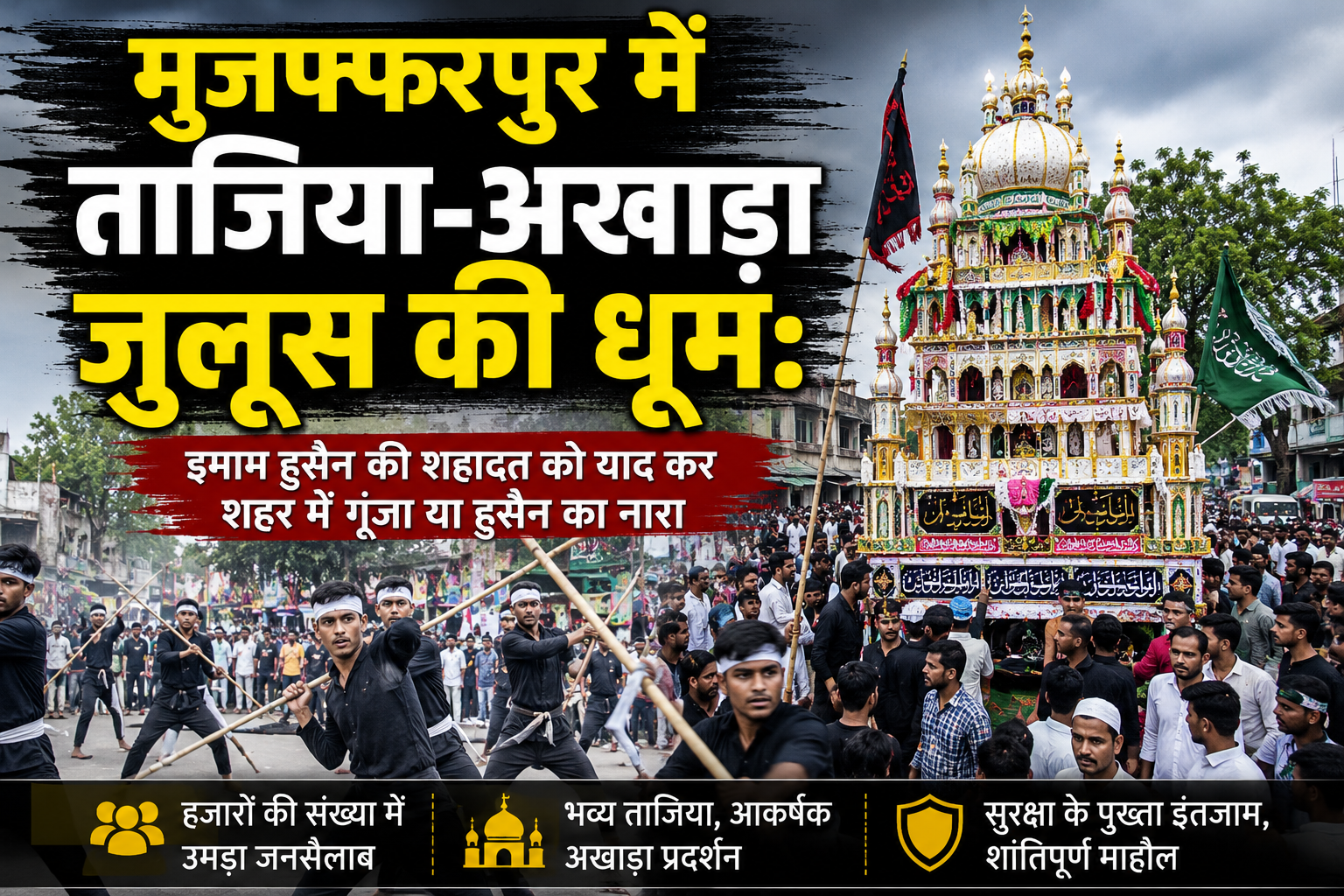
Tajia-Akhara Procession Grandeur in Muzaffarpur: Breathtaking Stunts Halt Breaths, Chests Pierced in Mourning with Blades and Chains
The festival of Youm-e-Ashura (Muharram) was observed in a highly traditional manner across Muzaffarpur city and the entire district amid deep devotion, indomitable courage, and a somber atmosphere. Traditional Tajia and Akhara processions were taken out from various neighborhoods of the city, passing through main routes to reach the Karbala grounds.
During the procession, the youth and masters (Ustads) performed extraordinary and breathtaking stunts, drawing massive crowds of thousands lined up on both sides of the roads. Concurrently, mourning devotees of various Anjumans, remembering the martyrs of Karbala, performed Matam (breast-beating) with blades, knives, and chains, turning the atmosphere deeply emotional and somber.
Display of Valor: Breathtaking Stunts with Lathis, Swords, and Fireballs
The biggest attraction of this historic Muharram procession was the traditional martial arts displayed by various Akharas. As the Akharas reached the city's major intersections—such as Company Bagh, Kalyani, Saraiyaganj, and Sutapatti—the stuntmen mesmerized the audience.
Skillful Lathi and Swordplay: Akhara masters and young children wielded lathis and glittering swords in the air with such rapid speed that it held the onlookers' breath. The skill of blocking simultaneous multiple lathi blows with a single shield drew massive rounds of applause.
Acrobatics Amid Fireballs: As darkness fell, several youths swung burning fireballs (banethi) in the air, creating stunning patterns of fire. These hazardous stunts were executed with extreme precision and safety.
Jaw-Dropping Feats: Some daredevils performed high-risk acts such as slicing coconuts with a sword while blindfolded and breaking tubelights against their bodies, leaving the spectators stunned.
An Ocean of Grief: Chests Pierced in Mourning with Chains and Blades
Parallel to the display of valor, another aspect of the procession was intensely emotional and grief-stricken. Commemorating the martyrdom of Hazrat Imam Hussain and his 72 companions, members of the Shia community and various Anjumans wore black attire to mourn.
Amid thunderous chants of "Hai Hussain, Way Hussain" and "Shah Ast Hussain, Badshah Ast Hussain," men and youth held sharp blades, small knives, and iron chains in their hands.
Engulfed in profound grief, these mourners struck their chests and backs with chains and knives with complete devotion. Within moments, the chests of the mourners were pierced and drenched in blood, staining their kurtas deep red. Witnessing this painful yet faith-driven sight brought tears to the eyes of every bystander on the street. The mourners stated that this blood is a small token of their devotion and grief for the innocent blood shed on the battlefield of Karbala.
Grand Tajias: A Caravan of Devotion
Across both urban and rural pockets of the district, attractive and sky-high Tajias (symbolic replicas of the tomb of Imam Hussain) remained the center of attraction. Beautifully adorned with thermocol, colorful papers, glass, and glittering tinsel, the tall structures were carried on shoulders, causing the entire area to reverberate with slogans of 'Ya Hussain'.
Grand Tajia processions were taken out from urban localities like Sikandarpur, Chandwara, Brahmpura, Mithanpura, and Naya Bazar, as well as rural blocks including Bochaha, Kanti, and Sakra. Citizens whose wishes were fulfilled offered wreaths, ceremonial sheets (chadar), and cream (malai) to the Tajias.
At a Glance: Key Highlights of Muzaffarpur Muharram Procession
| Aspect of Event | Key Details |
|---|---|
| Primary Routes | Passing through Sikandarpur, Kalyani, Saraiyaganj, Town Thana Road to Karbala |
| Types of Stunts | Lathi manipulation, swordplay, fireballs (banethi), blindfolded acts |
| Form of Mourning | Breast-beating (Matam) by the Shia community using blades, knives, and iron chains |
| Administrative Set-up | Heavy police deployment at every corner, drone camera surveillance, peace committees active |
Tight Security Arrangements: Vigil Kept via Drones and CCTV
To ensure the peaceful completion of this sensitive and massive event, the Muzaffarpur district and police administration remained fully alert. The District Magistrate (DM) and Senior Superintendent of Police (SSP) were seen patrolling the streets themselves to maintain law and order.
Surveillance via Drone Cameras: Drone cameras were specifically deployed to monitor sensitive areas, narrow alleys, and rooftops to keep a check on any potential stone-pelting or anti-social elements.
Plainclothes Police: Male and female police personnel in plain clothes were stationed amidst the crowd to prevent any incidents of petty crime or snatching.
Medical Teams on Standby: To provide immediate first-aid to those injured during mourning or while performing stunts, ambulances and mobile teams of doctors moved alongside the processions.
An Exemplary Display of Syncretic Culture (Ganga-Jamuni Tehzeeb)
This procession in Muzaffarpur once again put the city's historic harmonious brotherhood and syncretic culture on display. At various spots, Hindu brothers stepped forward to welcome the Akhara masters and players, arranging sweet drinks (sharbat), cold water, and first-aid kits for them. Political leaders and social activists also honored the leaders (Khalifas) of various Akharas by tying turbans and wrapping shawls around them.
The Tajia and Akhara procession concluded in Muzaffarpur not just as a religious event, but as a living medium of art, absolute faith, remembering historical martyrdom, and strengthening social harmony. Late in the evening, all the Tajias were respectfully buried (cooled) at local Karbala grounds, marking the conclusion of the ten-day festival of Muharram.


