
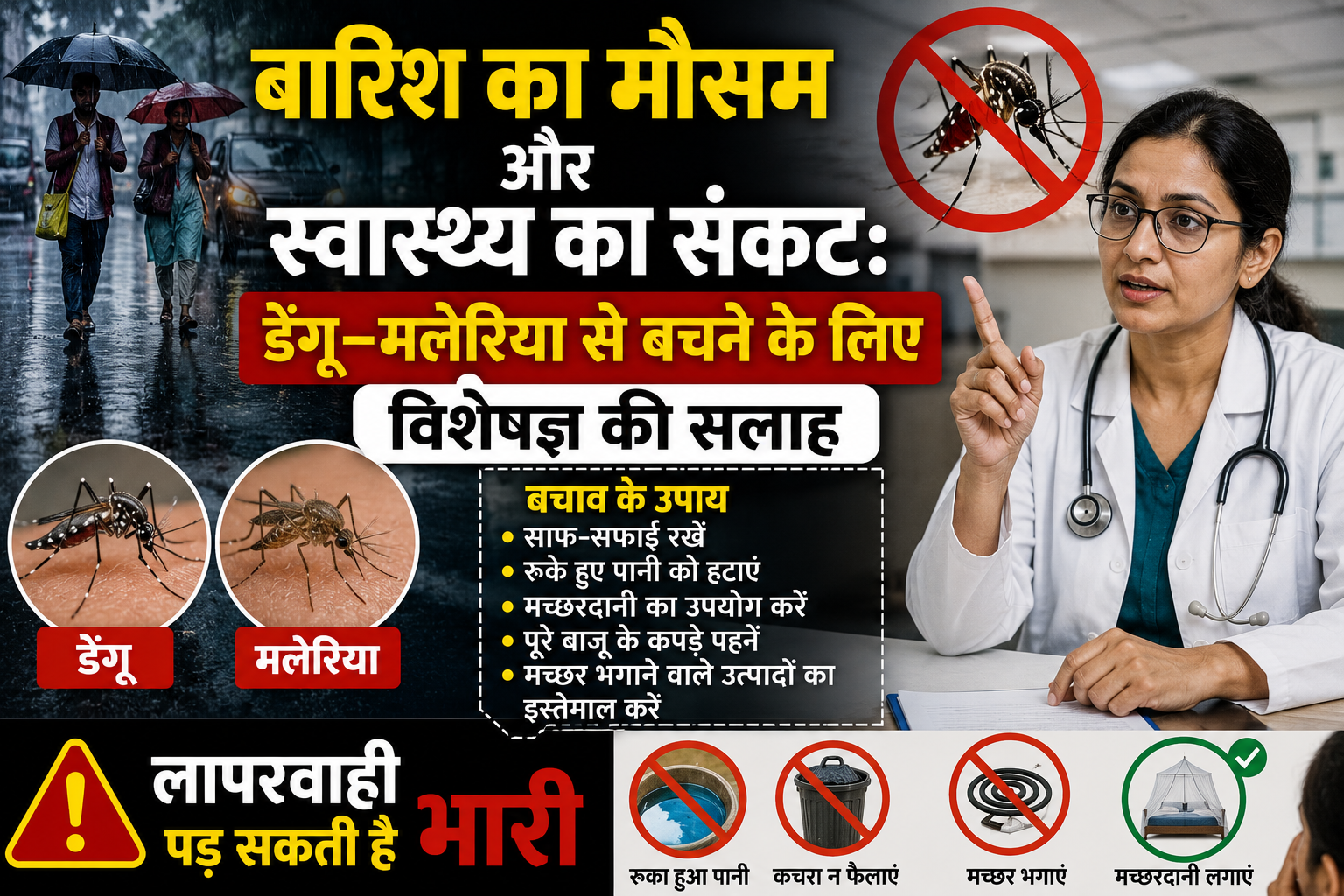
Rainy Season and Health Crisis: Expert Advice on Preventing Dengue and Malaria; Negligence Could Be Costly
Begusarai (Bihar): While the arrival of the monsoon brings relief and greenery, it also brings the threat of various seasonal diseases. Waterlogging due to rainfall creates ideal breeding grounds for mosquitoes, leading to a sudden surge in cases of dengue, malaria, and chikungunya. In such a situation, even a slight negligence regarding health can lead to severe consequences. In this context, renowned physician Dr. Nageshwar Panjiyar has shared vital medical advice for citizens to protect themselves from these life-threatening diseases.
The Threat of Seasonal Diseases and Their Impact
During the rainy season, humidity in the atmosphere increases, which is the most favorable condition for mosquito breeding. Dengue and malaria are not just simple fevers; they strike directly at the body's immune system. Dr. Nageshwar Panjiyar cautions that people often ignore these as ordinary fevers, which later lead to severe complications like falling platelet counts or organ failure.
Key Preventive Measures Suggested by Dr. Nageshwar Panjiyar
Dr. Panjiyar has suggested practical and simple measures to stay healthy and safe:
Focus on Sanitation
Prevent Waterlogging: Do not allow water to stagnate around your home, on rooftops, in old tires, flowerpots, cooler trays, or broken utensils. Dengue mosquitoes (Aedes aegypti) thrive in clean stagnant water.
Maintain Cleanliness: Regularly trim bushes around the house and keep garbage bins covered at all times.
Diet and Purity
Boiled Water: Dr. Panjiyar strongly advises that only 'boiled water' should be consumed during this season. Boiled water not only keeps the digestive system healthy but also provides protection against waterborne diseases.
Fresh and Nutritious Food: Avoid stale food. Consume freshly prepared, nutritious home-cooked meals to keep your immune system strong.
Protection from Mosquitoes
Full-Sleeved Clothing: Use mosquito nets while sleeping. When stepping out, wear clothes that cover your body to reduce the risk of mosquito bites.
Use Repellents: Install nets on windows and doors and use natural mosquito-repellent methods (such as neem smoke or safe repellents) to keep mosquitoes at bay.
Recognize Symptoms and Stay Alert
According to Dr. Nageshwar Panjiyar, early detection is half the battle won. If anyone exhibits the following symptoms, do not take them lightly:
High Fever: A sudden rise in body temperature.
Joint and Muscle Pain: Dengue often causes unbearable pain in the joints.
Fever with Chills: Malaria patients often experience fever accompanied by shivering or chills.
Fatigue and Weakness: Feeling extreme lethargy and exhaustion.
Rashes: Appearance of red spots or rashes on the skin.
"If You Have a Fever, Consult a Doctor Immediately"
Dr. Panjiyar warned, "If anyone experiences the symptoms mentioned above, do not try to become your own doctor. Do not take self-prescribed medicines or antibiotics from medical stores. Immediately visit a qualified physician for a check-up. Timely blood tests and diagnosis can not only save your life but also prevent the spread of the disease."
Community Responsibility
To fight these diseases, community efforts are as important as individual precautions. People should participate actively in neighborhood fumigation, regular cleaning of drains, and awareness campaigns. If there is waterlogging in your neighborhood, local authorities (Municipal Corporation or Panchayat) should be informed immediately.
The joy of the monsoon should not come at the cost of one's health. Dr. Nageshwar Panjiyar's advice is clear: Prevention is better than cure. Drinking boiled water, maintaining cleanliness in your surroundings, and preventing mosquitoes from breeding are small habits that can save us from a major health crisis. Stay alert, stay healthy.


