
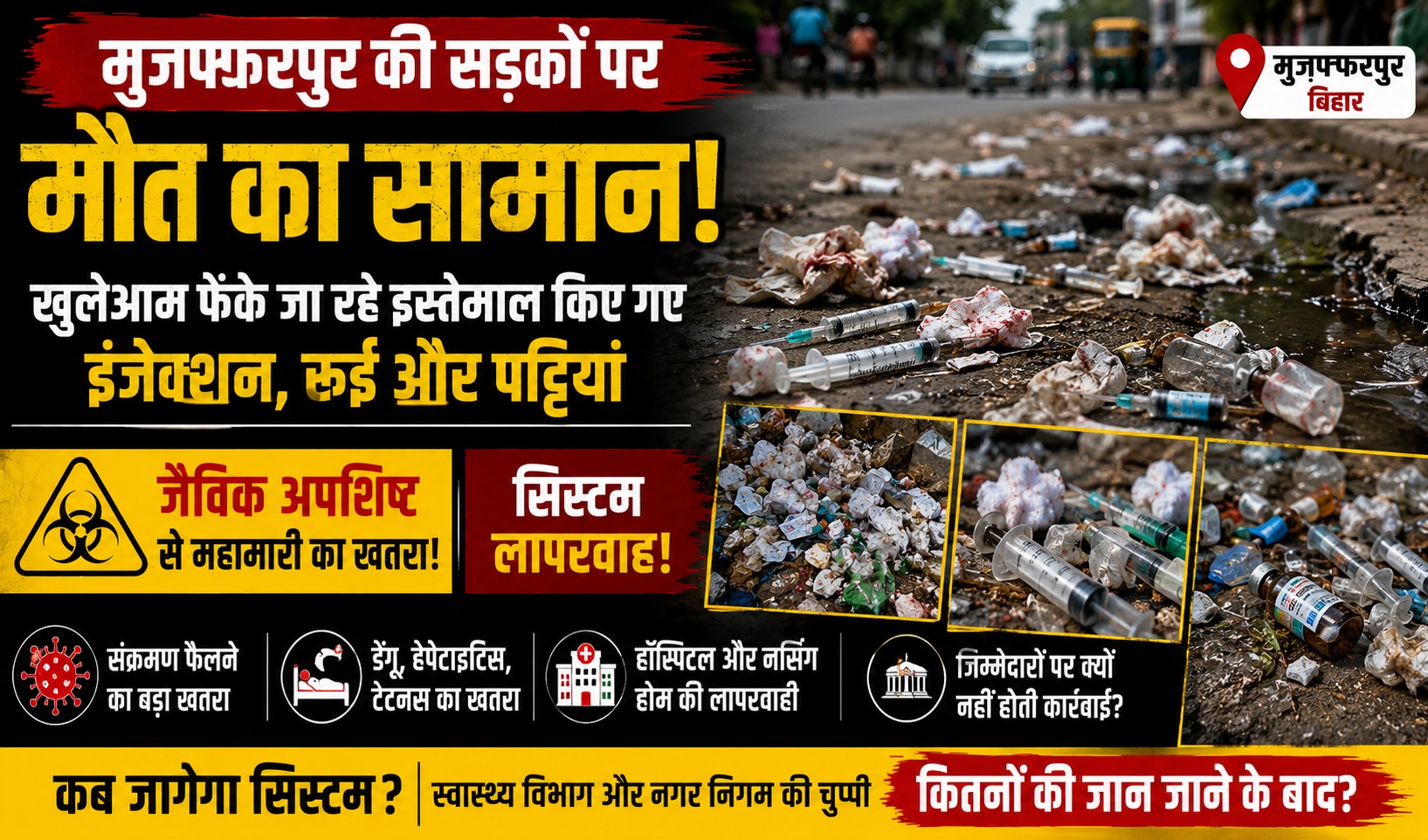
Merchandise of Death on the Streets of Muzaffarpur! Used Syringes, Blood-Soaked Cotton, and Bandages Dumped Openly; Bio-Medical Waste Threatens Epidemic as System Slumbers
A severe, life-threatening crisis is currently looming large over the major cities and towns of North Bihar—one that citizens frequently witness yet are forced to ignore. Bio-Medical Waste (hazardous organic waste) is being illegally dumped along main arterial roadsides, inside densely populated residential patches, and on vacant private plots. Operatives from private nursing homes, local clinics, and unauthorized pathology labs are brazenly discarding highly infectious syringes, blood-stained cotton, expired pharmaceuticals, used needles, and surgical dressings onto public garbage heaps without any safety compliance.
This horrific violation persists despite central and state administrations spending crores of rupees annually on sanitation and waste management advertisements. This exposed medical waste is not merely destroying environmental parameters; it is serving as a direct gateway for the transmission of deadly epidemics, including Hepatitis B, Hepatitis C, HIV, and severe dermatological infections.
This extensive investigative report from Ground Zero uncovers the absolute failure of administrative machinery, the blatant violation of Pollution Control Board regulations, and the dangerous gamble being played with public lives.
Ground Zero Report: How 'Markets of Death' are Spreading on Roadsides
A routine survey across various urban sectors reveals shredded white plastic sacks piled behind government and private healthcare facilities or scattered along major national highways. The contents spilling out of these bags onto the public streets are enough to send shivers down any citizen's spine:
Lethal Syringes and Exposed Needles : Unsuspecting pedestrians, barefoot children gathering scraps, and stray animals are stepping on these infected needles on a daily basis.
Blood-Stained Cotton and Dressings: Discarded cotton swabs and surgical gauze used during operations or dressings are being blown into nearby residences by the wind. During monsoon showers, this highly infectious material dissolves into the rainwater, contaminating local groundwater tables.
Anatomical Waste and Organic Residue: At certain vulnerable spots, organic tissue and anatomical waste amputated during surgeries are thrown directly into standard municipal dumpsters, where they are ripped apart by stray dogs and crows, magnifying the spread of airborne pathogens.
Impoverished Ragpicker Children: In the Direct Line of Fire
The most tragic and immediate impact of this gross negligence falls squarely upon impoverished, vulnerable children who scour garbage dumps every morning with sacks on their backs to collect plastic and scrap metal.
Statement from Eyewitnesses and Social Workers: "These children sift through hazardous waste piles bare-handed, without any gloves or protective footwear. Unaware of the lethal dangers, they frequently pick up used syringes to play with, or accidentally prick themselves while hunting for scrap metal. This is directly pushing these innocent children into the jaws of incurable diseases like AIDS and Hepatitis."
The Legal Framework: Statutory 'Bio-Medical Waste Management Rules' Blatantly Violated
Under the Bio-Medical Waste Management Rules (2016) institutionalized by the Government of India, healthcare facilities are under strict legal obligations to segregate and process clinical waste using a color-coded bag matrix:
| Bag Color Code | Type of Medical Waste | Prescribed Scientific Disposal Method |
|---|---|---|
| Yellow Bag | Blood-soaked cotton, anatomical waste, body tissues, expired drugs. | Mandatorily subjected to high-temperature Incineration to destroy pathogens. |
| Red Bag | Recyclable plastic waste, glucose bottles, syringes, catheters, tubing. | Must be chemically disinfected or autoclaved before being cleared for recycling. |
| Blue / White Container | Sharp objects, metallic needles, surgical blades, broken glass vials. | Must be deposited into puncture-proof containers and safely encapsulated. |
The Ground Reality: To bypass operational costs and specialized disposal fees charged by authorized bio-medical waste management agencies, private hospital administrators routinely pay unauthorized handlers to dump this hazardous waste into regular municipal bins or on secluded roadsides under the cover of darkness.
The Mysterious Silence of the Municipal Corporation and Pollution Control Board (CPCB)
The prolonged inaction of the local civic body and the State Pollution Control Board has raised serious questions:
Loading into Standard Garbage Vans: Legally, standard municipal trucks are strictly barred from lifting bio-medical waste. Yet, sanitation workers can regularly be seen handling these hazardous materials bare-handed, mixing clinical waste with daily household wet and dry waste before transporting it to open dumping grounds.
Absence of Inspections: The Pollution Control Board holds the legal mandate to cross-verify licenses and monitor where individual nursing homes and labs route their clinical waste. However, an absolute absence of surprise inspections over several months has left these private operators completely emboldened.
Rising Public Fury: "Who Takes Responsibility If an Epidemic Breaks Out?"
The open dumping of biological hazards has triggered deep resentment and anger among local residents. Families report that the sickening stench rising from these garbage heaps during the evening hours forces them to keep their doors and windows permanently sealed. Stray cattle often drag the medical debris onto the middle of the roads, posing a constant contamination and accident risk for motorcyclists and cyclists.
Local citizen forums have issued a blunt ultimatum to the district administration: if this illegal dumping is not completely halted within a week, and if the culprit hospitals are not identified and slapped with heavy financial penalties, residents will launch massive street agitations and blockades.
The open discarding of medical waste on city streets is not merely an administrative oversight; it is a collective criminal act. While hospitals are built to preserve human life, dumping lethal hazards onto public pathways to save a few pennies is a crime against humanity. The Health Department and the District Magistrate must immediately execute swift punitive actions. CCTV surveillance must be utilized to impound vehicles dumping waste at night, and the operational licenses of violating hospitals must be summarily revoked. Only then can our cities and children be truly safe from this invisible trap of death! Stay tuned.


