
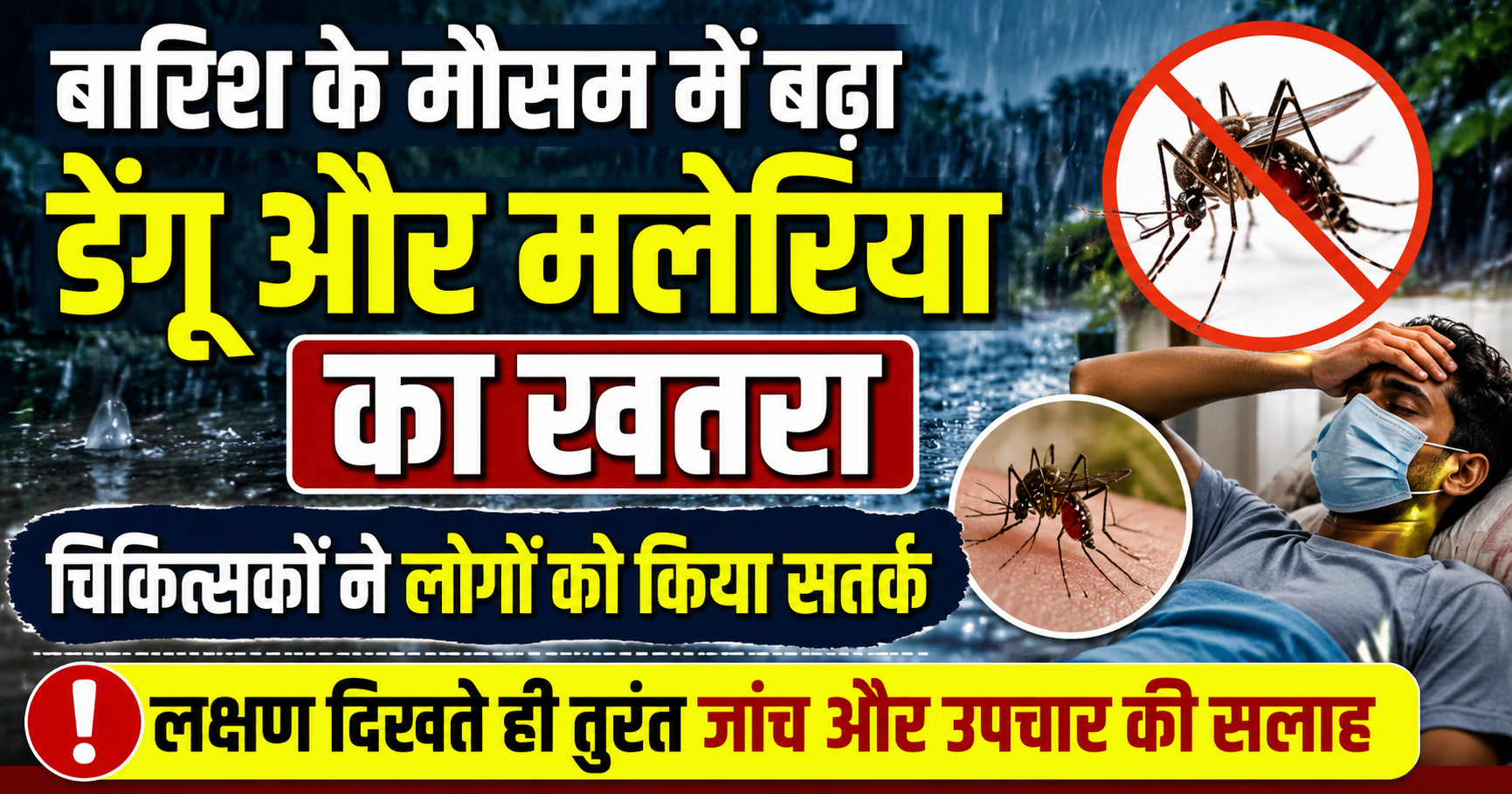
Dengue and Malaria Risk Rises During Monsoon; Doctors Urge Immediate Testing and Preventive Measures
Correspondent:
While the arrival of the monsoon has brought relief from the scorching summer heat, it has also increased the risk of several seasonal and infectious diseases. Health experts have warned that illnesses such as dengue, malaria, viral fever, typhoid, and waterborne infections become more common during the rainy season. They emphasize that even minor negligence can lead to serious health complications, making cleanliness, safe drinking water, and mosquito control essential priorities.
Renowned physician Dr. Nageshwar Panjiyar has urged people to remain extra cautious during the monsoon. According to him, adopting preventive measures at the right time can significantly reduce the risk of contracting dengue and malaria. He also advised people not to ignore symptoms such as fever, body aches, headaches, or weakness and to seek immediate medical consultation instead of self-medicating.
Mosquito Breeding Increases After Rainfall
Dr. Panjiyar explained that rainwater often accumulates in various places, creating ideal breeding grounds for mosquitoes. The Aedes aegypti mosquito, which transmits dengue, breeds in clean, stagnant water, while the Anopheles mosquito, responsible for malaria, also multiplies rapidly in waterlogged areas.
He pointed out that rooftop containers, air coolers, flower pots, discarded tires, coconut shells, broken utensils, and other open containers holding stagnant water contribute significantly to mosquito breeding. Therefore, these places should be cleaned and emptied at least once every week.
Drink Boiled or Purified Water
The rainy season also increases the risk of waterborne diseases. Dr. Panjiyar advised people to drink only boiled or properly purified water. Contaminated drinking water can cause illnesses such as diarrhea, cholera, typhoid, jaundice, and various gastrointestinal infections.
He recommended boiling drinking water whenever possible. If boiling is not feasible, certified water filters or approved water purification methods, including chlorine tablets where appropriate, should be used.
Common Symptoms of Dengue and Malaria
Medical experts note that the early symptoms of dengue and malaria often resemble those of common viral fever. As a result, many people fail to recognize the seriousness of the illness.
Common symptoms of dengue include:
High fever
Severe headache
Pain behind the eyes
Muscle and joint pain
Extreme weakness
Loss of appetite
Skin rashes
Bleeding from the nose or gums in severe cases
Symptoms of malaria may include:
High fever accompanied by chills
Shivering
Heavy sweating
Headache
Vomiting
Fatigue
Body aches
Seek Medical Testing Immediately if Fever Develops
Dr. Nageshwar Panjiyar stressed that anyone experiencing persistent fever, chills, or other suspicious symptoms should immediately visit a nearby hospital or health center for medical evaluation.
Early diagnosis enables doctors to identify the disease accurately and begin appropriate treatment without delay.
He also warned against taking antibiotics or other medications without medical advice. In particular, suspected dengue patients should avoid using painkillers unless prescribed by a qualified physician, as certain medications may increase the risk of bleeding complications.
Maintain Cleanliness at Home and in the Surroundings
Health experts emphasize that maintaining cleanliness remains the most effective way to prevent dengue and malaria. People should ensure that no stagnant water accumulates around their homes. Drains should be cleaned regularly, and garbage should not be allowed to pile up in open areas.
Water storage tanks should always remain covered, cooler water should be changed frequently, and unused containers or tires should not be allowed to collect rainwater. Residents are encouraged to inform local authorities if they notice persistent waterlogging in public areas.
Adopt Effective Mosquito Protection Measures
Dr. Panjiyar advised people to wear full-sleeved clothing, particularly during the early morning and evening hours when mosquitoes are most active. He also recommended using mosquito nets, installing window and door screens, and using mosquito repellents, coils, or vaporizers to reduce exposure.
He emphasized that children, pregnant women, and elderly individuals require extra protection because they may be more vulnerable to mosquito-borne infections.
Special Care for Children and Elderly People
According to healthcare professionals, children, senior citizens, and individuals with existing medical conditions generally have weaker immune systems, making them more susceptible to severe infections.
Parents should immediately seek medical attention if children develop high fever, unusual drowsiness, repeated vomiting, refusal to eat, or difficulty breathing.
Health Department on High Alert
With the onset of the monsoon, the Health Department has intensified its preparedness. Government hospitals and health centers are strengthening diagnostic and treatment facilities for dengue and malaria. Public awareness campaigns are also being conducted in several areas to educate residents about preventive measures.
Health officials are urging citizens to maintain cleanliness, eliminate mosquito breeding sites, and never ignore fever or other suspicious symptoms. Early diagnosis and timely treatment remain the most effective ways to prevent serious complications.
Awareness Is the Best Prevention
Medical experts believe that public awareness is the strongest defense against mosquito-borne diseases. If every household prevents water stagnation, maintains proper sanitation, consumes safe drinking water, and seeks prompt medical attention whenever symptoms appear, the spread of dengue and malaria can be significantly reduced.
Dr. Nageshwar Panjiyar concluded by advising people not to rely on rumors or unverified home remedies. Instead, they should consult qualified healthcare professionals. He emphasized that timely diagnosis, appropriate treatment, and proper preventive measures can help people stay safe from dengue, malaria, and other seasonal infectious diseases throughout the monsoon.


