
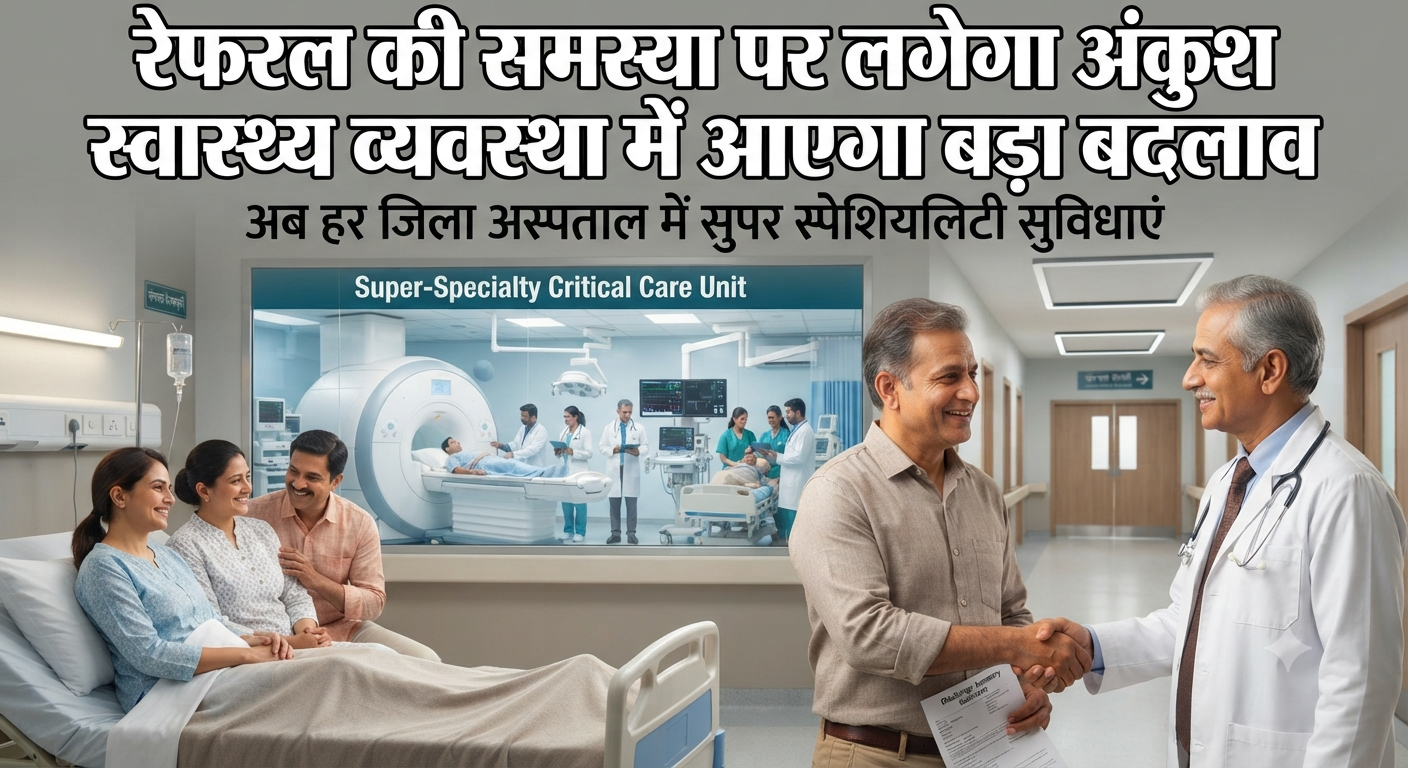
Curbing Referral Problems, A Major Shift in Healthcare
Patna: A historic step has been taken toward the decentralization of health facilities in Bihar and other states across the country. Work has begun on a plan to equip district hospitals with "super-specialty" services. The primary objective of this initiative is not only to improve the quality of healthcare services but also to put an end to the long-standing compulsion and trend of referring critical patients to medical college hospitals.
Decentralization of Health Services: A New Beginning
At present, while district hospitals have basic health facilities, they lack the expert doctors and advanced equipment needed to treat complex diseases such as neurology, cardiology, oncology (cancer), and nephrology. As a result, critical patients are forced to turn to big cities or medical college hospitals for treatment.
Under this new government initiative, the following changes are proposed for district hospitals:
Deployment of Specialist Doctors: The availability of doctors with super-specialty degrees (DM/MCh) will be ensured in every district hospital.
State-of-the-Art Machinery: Facilities such as cath labs, MRIs, CT scans, and dialysis units will be established at every district level.
Expansion of ICU: The capacity of critical care units for serious patients will be increased so that patients can receive the right treatment during the "golden hour."
The Problem of Referrals and the Patient Crisis
Until now, the situation has been that in any critical case, doctors at district hospitals have preferred to refer patients to larger hospitals rather than taking responsibility. There are several reasons for this:
Lack of Resources: It is risky to treat a critical patient without a ventilator or a specialist doctor.
Wasted Time: The time spent in an ambulance during a referral can often prove fatal for the patient.
Financial Burden: The families of patients face a heavy financial burden from living and seeking treatment in large cities.
With this initiative, the availability of heart specialists or neurosurgeons at the district level is expected to reduce referral rates by at least 60–70%.
Long-term Impact of the Initiative
Reduced Pressure on Medical College Hospitals: Currently, medical college hospitals (like PMCH, NMCH, etc.) are overwhelmed due to extreme overcrowding. When minor and serious cases are resolved at the district level, only "tertiary care" (highly complex cases) will reach medical colleges, which will further improve the quality of treatment.
Rejuvenation of Rural Health: The availability of super-specialty services in district hospitals will benefit millions of rural families who, until now, have lost loved ones due to a lack of treatment or were forced to sell their assets to seek treatment at private hospitals.
Local Economy and Employment: The establishment of modern hospitals at the district level will create new employment opportunities for paramedical staff, technicians, and support personnel. Additionally, strengthening infrastructure in the health sector will lead to overall regional development.
Challenges and Solutions
Although this plan is extremely ambitious, there will be challenges in its implementation:
Availability of Doctors: Persuading specialist doctors to work at the district level is a challenge. It will be mandatory to provide them with special incentive allowances and a better work environment.
Maintenance: After the arrival of expensive machinery, ensuring their regular maintenance and repair is essential; otherwise, many government hospitals will remain mere "referral centers."
Regular Monitoring: The health department will need to develop an online system to track how many critical patients were admitted in which district and how many were referred.
The transformation of district hospitals into "super-specialty" centers will be a boon for the common citizens of Bihar and the country. It is an effort to bring the "right to treatment" to the ground level. If the government implements this initiative with honesty and transparency, the face of healthcare services will change completely in the coming years.


