
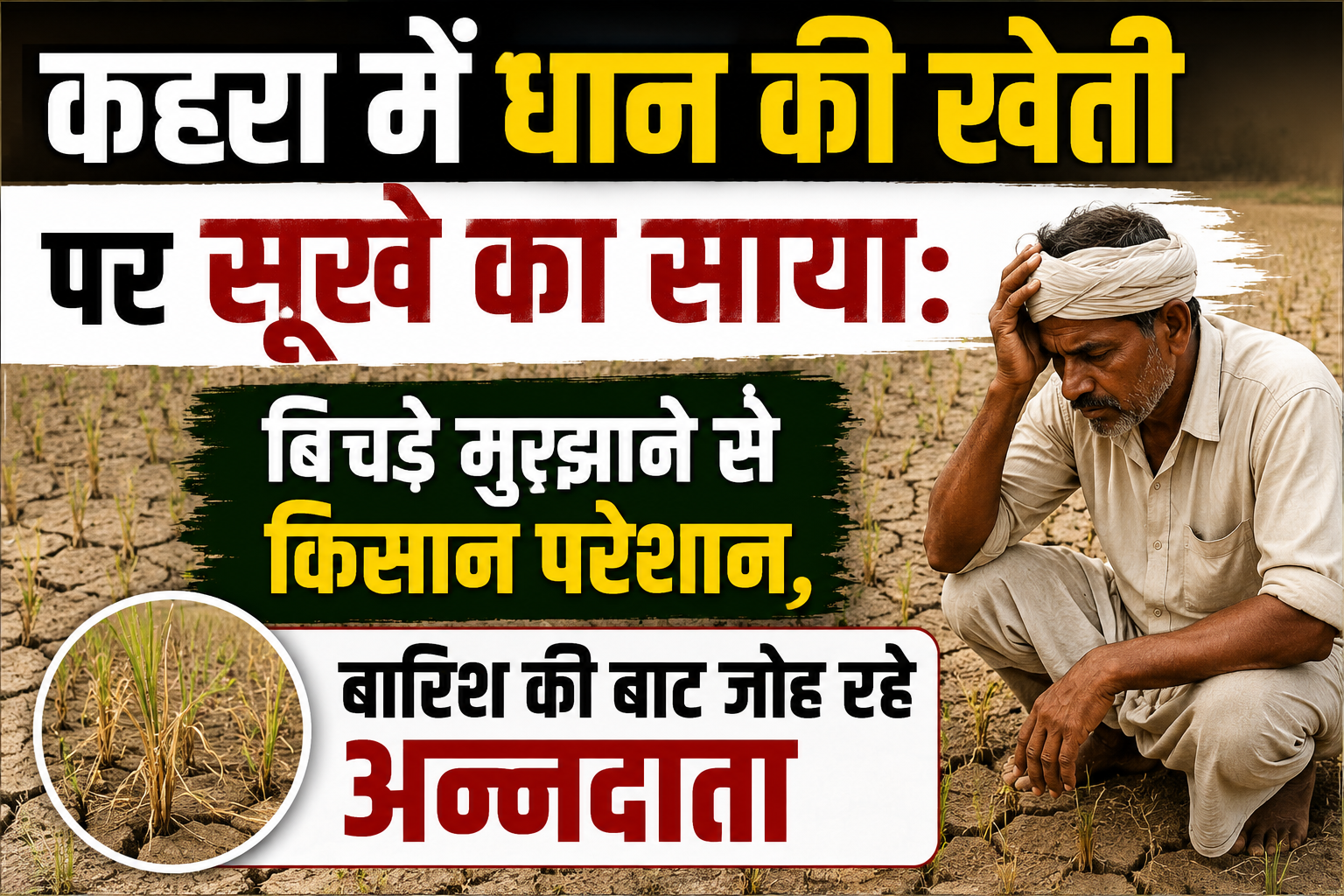
The Shadow of Drought over Paddy Cultivation in Kahra: Farmers Distressed as Seedlings Wither, Awaiting Rainfall
Kahra: The Kahra block of the Kosi region, once known for its fertile soil and lush green paddy fields, is currently going through a severe agricultural crisis. As June has passed and July has begun, the time for paddy transplantation has arrived, but the scorching sun and a delayed monsoon have caused deep concern among the farmers. The Kharif paddy seedlings (nursery) are on the verge of drying up, causing distress among the farmers of the region.
Hopes Dashed After Sowing in Mrigshira Nakshatra
According to traditional agricultural wisdom in rural areas, farmers had sown paddy seedlings with great enthusiasm during the Mrigshira Nakshatra, hoping for a timely monsoon so the seedlings would be ready for transplantation. However, nature has not been favorable this time. Despite sowing during the Mrigshira Nakshatra, there has not been sufficient rainfall in the region. Due to the lack of moisture, the seedlings germinated but are now turning yellow and drying up.
Lack of Irrigation Facilities: Even 'Borings' Proving Ineffective
The biggest challenge facing farmers is irrigation. In many villages of the Kahra block, due to the falling water table, private borewells have either dried up completely or are not yielding enough water. Farmers attempting to irrigate using motor pumps are facing massive power cuts and high fuel prices.
Sharing his plight, one farmer said, "We bought expensive seeds and prepared the seedlings with high hopes, but now we have no means to provide water. There is no water in the borewells, and even where there is, irrigation is not possible due to the lack of electricity. Our hard work is being ruined right before our eyes."
Kharif Crop: The Backbone of the Economy
Paddy is the primary crop for the farmers of the Kahra block. Not only does their family's sustenance depend on it, but the economic activities of the entire year are tied to this harvest. The damage to the seedlings directly translates to lower paddy production this year and devastating financial losses for the farmers. If the situation does not improve, the threat of starvation and debt traps could increase in the coming months.
Role of the Administration and Agriculture Department
In this dire situation, farmers are now looking toward the government for help with hopeful eyes. Farmers of the block have made the following demands to the administration:
Immediate Survey: A team from the Agriculture Department should visit the areas as soon as possible and assess the drought-affected seedlings.
Power Supply: Uninterrupted electricity supply should be ensured for irrigation so that farmers can somehow save their crops.
Diesel Subsidy: Given the rising cost of irrigation, the government should immediately release the diesel subsidy amount to the farmers.
Alternative Seeds: If the seedlings are completely destroyed, the government should arrange for short-duration paddy seeds so that farmers can re-sow.
Warning from Farmers' Unions
Local farmers' unions have warned that if it does not rain soon and the administration does not provide alternative irrigation arrangements, they will be forced to launch a protest. They argue that farmers are the ones who suffer the most due to the uncertainty of the monsoon every year. The Agriculture Department claims that they are monitoring the situation, but on the ground, the farmers have not yet received any significant assistance.
Nature's Fury and Climate Change
Experts believe that the lack of rainfall in Kahra this time is a part of Climate Change. The monsoon cycle has been completely disrupted. Earlier, fields used to be filled with water by the first week of July, but now a drought-like situation prevails. This situation is harmful not only for this year's yield but also for recharging the groundwater level.
The land of Kahra is currently looking skyward in anticipation. Farmers are visiting their fields day and night to check the condition of their seedlings. In some places, farmers are praying to God, while in others, they are weeping over their wasted hard work.
The situation is indeed worrying. The farmers of Kahra are hoping that the Rain God will soon be kind and that drops of rain will breathe new life into their withering crops. But until then, the administration must show proactive measures so that no farmer has to watch their crop be completely destroyed.


