
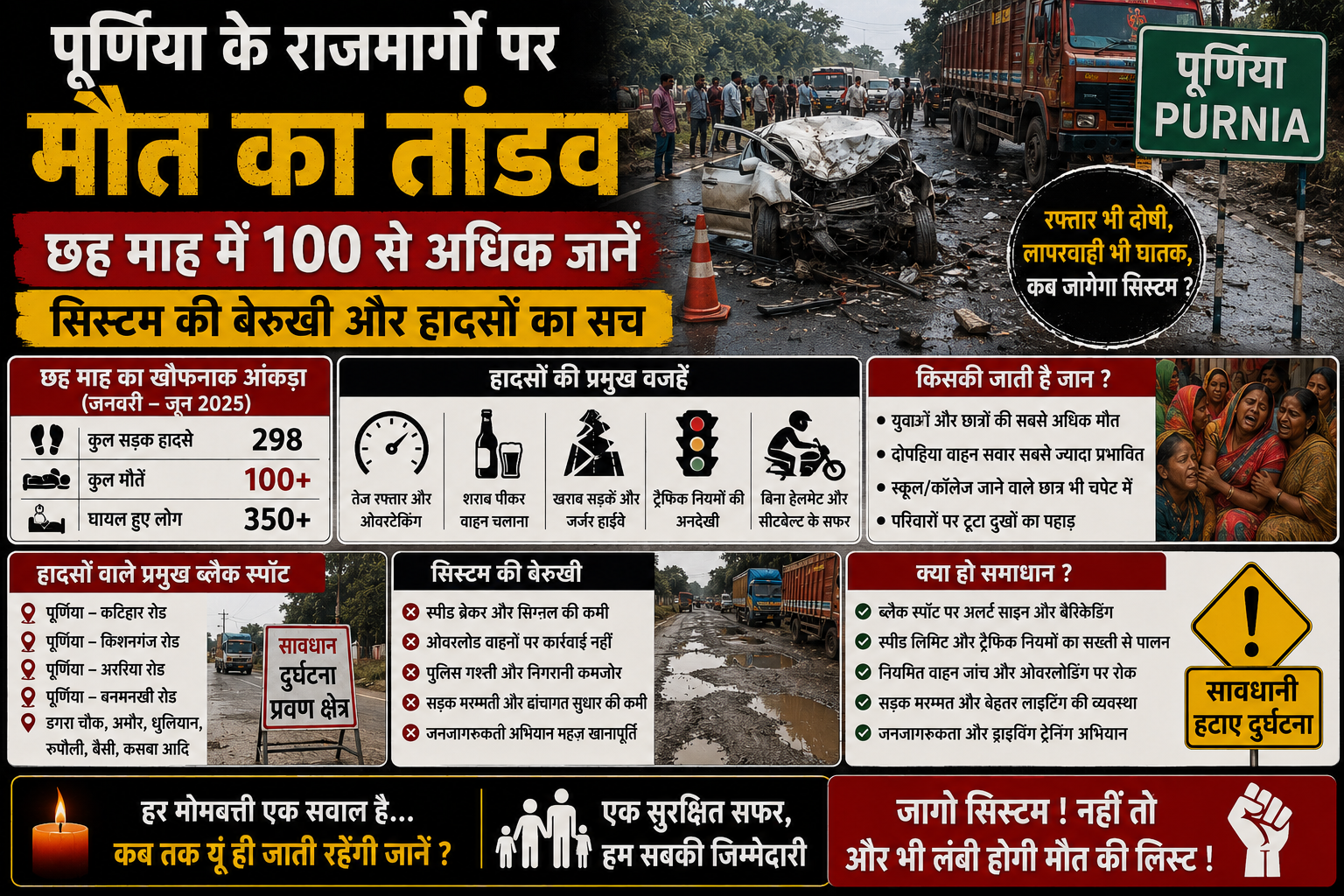
The Dance of Death on Purnia’s Highways — Over 100 Lives Lost in Six Months, the Harsh Reality of Systemic Negligenc
The roads of Purnia district in Bihar are turning crimson with blood these days. From National Highways (NH) to State Highways (SH), the fury of speed is extinguishing the light of some family every single day. If statistics are to be believed, more than 100 people have lost their lives in road accidents in Purnia in just the first six months of this year. This situation is not only alarming but also raises serious questions about the state of road safety management.
The Frightening Mathematics of Accidents
The graph of road accidents in Purnia is consistently trending upward. The month of May proved to be the deadliest this year, recording a total of 29 deaths. The situation remained similarly grim in April and June, where monthly death tolls of 21 were recorded.
| Month | Number of Deaths |
|---|---|
| January | 17 |
| February | 13 |
| March | 17 |
| April | 21 |
| May | 29 |
| June | 21 |
| Total (6 Months) | 118 |
(Note: These figures are compiled based on reports)
Main Causes of Road Accidents: Who is Responsible?
An analysis of these accidents reveals lapses at multiple levels, which can be categorized into three main areas:
Human Error
Reckless Speeding: Over-speeding is at the root of the majority of accidents. Drivers race their vehicles without regard for their own lives or the lives of others.
Disregard for Traffic Rules: Despite the presence of warning signs on the roads, drivers ignore them. Most drivers are not even aware of the meaning of these signages.
Lack of Safety Measures: The trend of bike riders not wearing helmets and car drivers not using seat belts is proving fatal.
Drunk Driving: Driving under the influence of alcohol remains a major cause of severe accidents.
Engineering and Structural Lapses
Dangerous Curves and Overgrowth: There is a lack of safety equipment (reflectors, crash barriers) at dangerous curves on the roads. In many places, overgrown bushes have reduced visibility, making it difficult to judge curves correctly at night.
Illegal Cuts and Encroachment: The direct connection of rural roads to the highway, illegal shops occupying service roads, and unauthorized parking have made the highways perilous.
Cutting of Crash Barriers: At many locations, crash barriers along the highways have been cut by locals to save time, leading to unauthorized and direct vehicular entry onto the highway.
Administrative Sluggishness
Lack of Oversight: Despite claims made in road safety committee meetings, the pace of improvement at the ground level remains slow.
Lack of Signage and Awareness: There is a poor state of road signage and a lack of concrete efforts toward training and sensitizing drivers.
Sensitive Zones and Challenges
The Purnia-Saharsa NH, NH-31, and the intersections around Dagarua, Baisi, and Maranga police station areas have been identified as highly sensitive 'Black Spots' for accidents. The lack of overbridges, underpasses, or safe crossings in these areas makes crossing the highway a near-death experience for pedestrians and small vehicle drivers.
The Way Forward: What Steps Can Be Taken?
Experts and local residents believe that an integrated approach is required to stop these accidents:
Engineering Improvements: Construction of overbridges, foot-overbridges, or underpasses must be prioritized at all 'Black Spots.' Regular maintenance of safety equipment at curves and the clearing of overgrown bushes must be made mandatory.
Strict Enforcement: Actions such as heavy fines and license cancellation for traffic violators must be implemented. Special drives against overloading and illegal parking should be conducted.
Public Awareness: Comprehensive campaigns should be launched to educate drivers about traffic rules and the importance of road signage.
These deaths on Purnia's highways are not just numbers; they are painful stories of shattered families. If road engineering is not improved, rules are not strictly enforced, and administrative accountability is not ensured in time, this "dance of death" will continue unabated. This systemic apathy is effectively trading the lives of ordinary citizens.


