

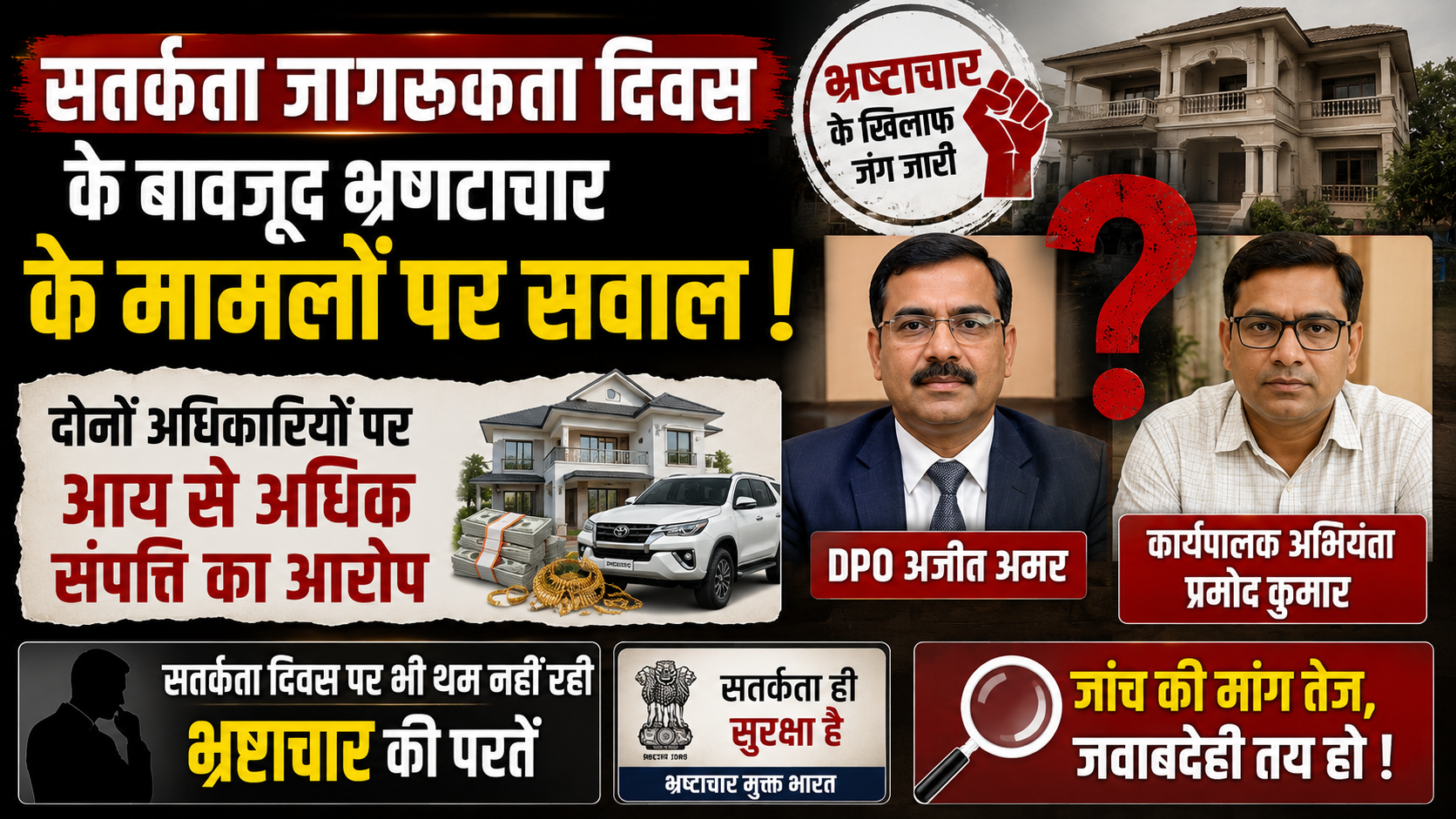
Questions Raised Over Corruption Despite Vigilance Awareness Day; DPO Ajit Amar and Executive Engineer Pramod Kumar Face Allegations of Disproportionate Assets
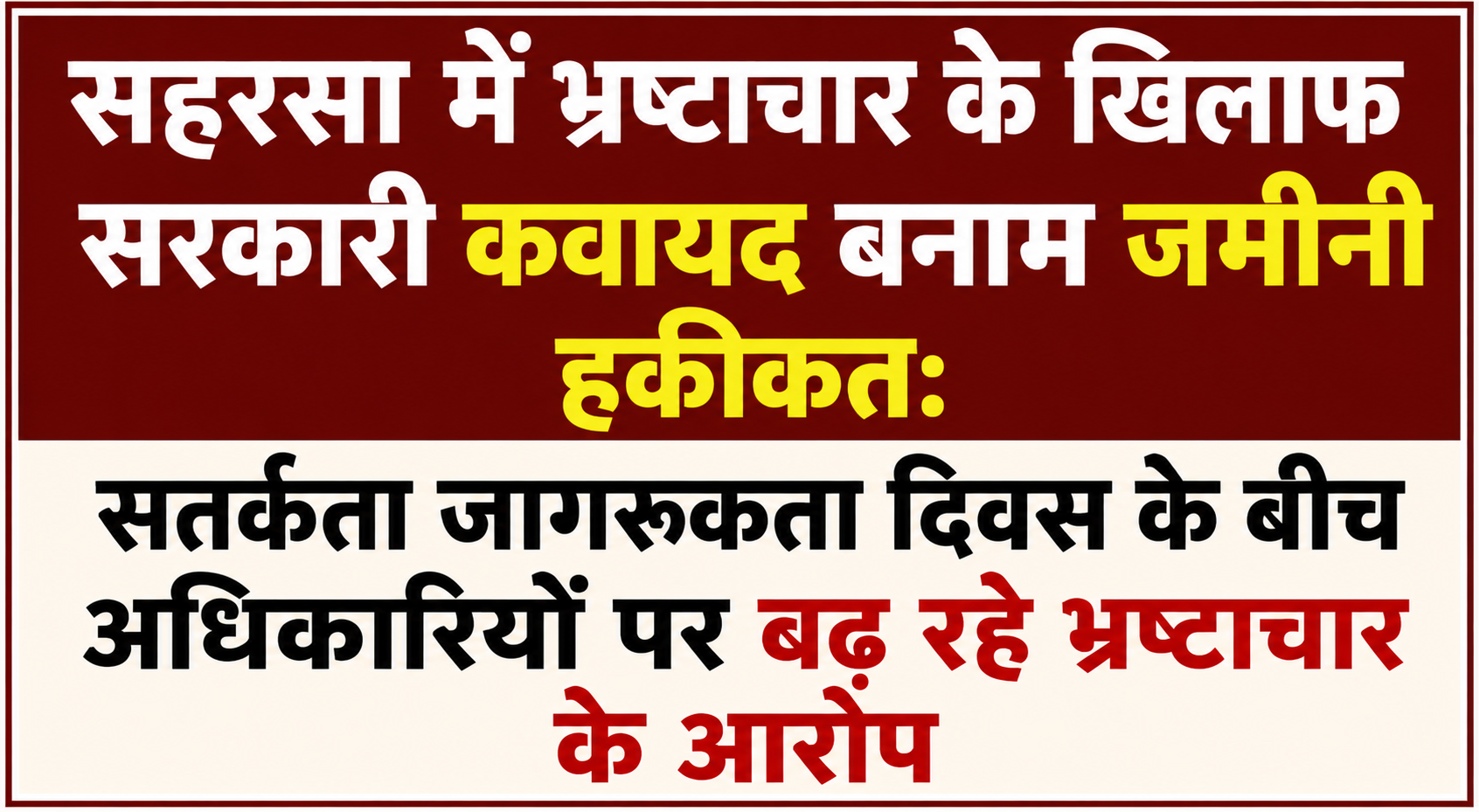
Saharsa: Despite the observance of Vigilance Awareness Day every year and various campaigns aimed at creating awareness against corruption, cases involving allegations of corruption against government officials continue to remain a matter of concern. In Saharsa, allegations related to the accumulation of disproportionate assets have reportedly been raised against Education Department DPO Ajit Amar and Executive Engineer Pramod Kumar, once again raising questions about transparency and accountability in the government system.
Allegations involving disproportionate assets are considered serious in nature. However, the mere existence of allegations against a government official does not amount to proof of guilt. The actual position can only be established after investigating agencies examine the evidence, legitimate sources of income, property details and relevant documents.
The cases being discussed in Saharsa have also raised questions about why alleged irregularities continue to emerge in the government system despite awareness campaigns and administrative monitoring against corruption.
Purpose of Vigilance Awareness Day
Vigilance Awareness Day and related programmes are organised every year with the objective of increasing awareness against corruption in government institutions. Such programmes emphasise integrity, transparency and accountability as important components of public administration.
Government employees and officials are reminded that public office should not be used for personal gain.
However, when allegations such as accumulation of disproportionate assets emerge against an official, questions naturally arise about the effectiveness of existing anti-corruption mechanisms.
Case Related to DPO Ajit Amar
Allegations related to the accumulation of disproportionate assets have reportedly emerged against Education Department DPO Ajit Amar.
The Education Department is an important part of the government administration. Officials associated with the department play significant roles in monitoring schools, teachers, government schemes and administrative activities.
Therefore, when allegations involving financial irregularities emerge against a senior official, an impartial investigation becomes important.
During such an investigation, the official's declared income, salary and other legitimate sources of earnings can be compared with property, investments and other assets held in the official's name or allegedly linked to the official.
Allegations Also Involve Executive Engineer Pramod Kumar
Similarly, allegations related to disproportionate assets have reportedly been raised against Executive Engineer Pramod Kumar.
Executive engineers play an important role in government construction and development projects. Under departmental rules, they may have responsibilities related to technical approvals, supervision of construction work and other technical activities.
Therefore, when allegations concerning assets are made against an executive engineer, investigators may examine the relationship between the officer's known income and the assets allegedly accumulated.
How Disproportionate Asset Cases Are Examined
In cases involving disproportionate assets, an investigating agency generally assesses a public servant's known and legitimate sources of income against the assets accumulated during the relevant period.
This may involve examining salary, legitimate investments, inherited property, loans, bank deposits, land, houses, vehicles and other financial or property records.
If an official's assets appear significantly higher than what can reasonably be explained through known income, investigators may attempt to determine the source of the additional funds.
However, a final conclusion can only be reached after a detailed investigation and due legal process.
Allegations Alone Do Not Establish Guilt
It is important to understand that the registration of a case or the emergence of allegations does not mean that an individual has been legally proven guilty.
An accused official has the right to explain the legitimate sources of income and assets.
Investigating agencies are also required to examine documents and evidence in an impartial manner.
Therefore, in the cases involving Ajit Amar and Pramod Kumar, the final position will become clear only after the investigation and legal process are completed.
Need for Greater Transparency in Government
The cases have once again intensified discussion about transparency in government departments.
Large amounts of public money are spent on government schemes and development projects. Officials therefore have a responsibility to ensure that public resources are used according to established rules.
Whenever allegations of corruption emerge, the impartiality and timeliness of the investigation become particularly important.
If allegations are found to be incorrect, an investigation can help establish the official's position. If the allegations are proven, appropriate legal action can follow.
Vigilance Mechanisms Need to Be Strengthened
Organising awareness programmes alone is not sufficient to completely eliminate corruption.
Monitoring mechanisms also need to be strengthened.
Regular scrutiny of property declarations, monitoring of suspicious transactions, timely action on complaints and independent functioning of investigative agencies can play an important role in controlling corruption.
There should also be accessible mechanisms through which citizens and complainants can report suspected irregularities without fear.
Greater Responsibility for Education and Construction Departments
The two cases reported in Saharsa involve officials from different departments.
One concerns the Education Department, while the other involves an official associated with construction and development work.
Both departments are directly connected with numerous government schemes and the expenditure of public resources.
The Education Department handles various programmes related to schools, teachers and education administration, while construction departments are involved in government spending on roads, buildings and other development projects.
Strong monitoring and transparent systems are therefore important in both areas.
Public Trust Is Most Important
Allegations of corruption against government officials do not affect only the individuals concerned. They can also influence public confidence in the government system.
When citizens approach government offices for services, they expect their work to be handled according to established rules.
Therefore, impartial investigation of corruption allegations and appropriate action when wrongdoing is established can help strengthen public trust in the administration.
Attention on Investigation and Findings
The future course of the cases involving allegations of disproportionate assets against Ajit Amar and Pramod Kumar will depend on the investigation and relevant documentation.
Investigators may examine the actual income of the officials, assets held in their names or allegedly linked to them, and the sources through which those assets were acquired.
If the officials are able to provide satisfactory evidence of legitimate sources for their assets, the investigation could develop accordingly. If a significant unexplained difference between income and assets is established, further legal action may follow under applicable laws.
The emergence of allegations of disproportionate assets against government officials in Saharsa despite annual Vigilance Awareness Day programmes and anti-corruption campaigns has raised questions about monitoring and accountability within the government system.
The actual status of the allegations involving Education Department DPO Ajit Amar and Executive Engineer Pramod Kumar will become clear only after the relevant investigations are completed. At present, the allegations should not be treated as established facts.
Effective control of corruption requires more than awareness programmes. Strong departmental monitoring, transparent scrutiny of assets, timely action on complaints and impartial investigations are equally important.
If the allegations against any official are established through investigation, appropriate action should be taken according to law. At the same time, if the allegations are not substantiated, the position of the concerned official should also be clearly established.
Ultimately, transparency, accountability and impartial investigation remain essential for strengthening public confidence in the government system.