
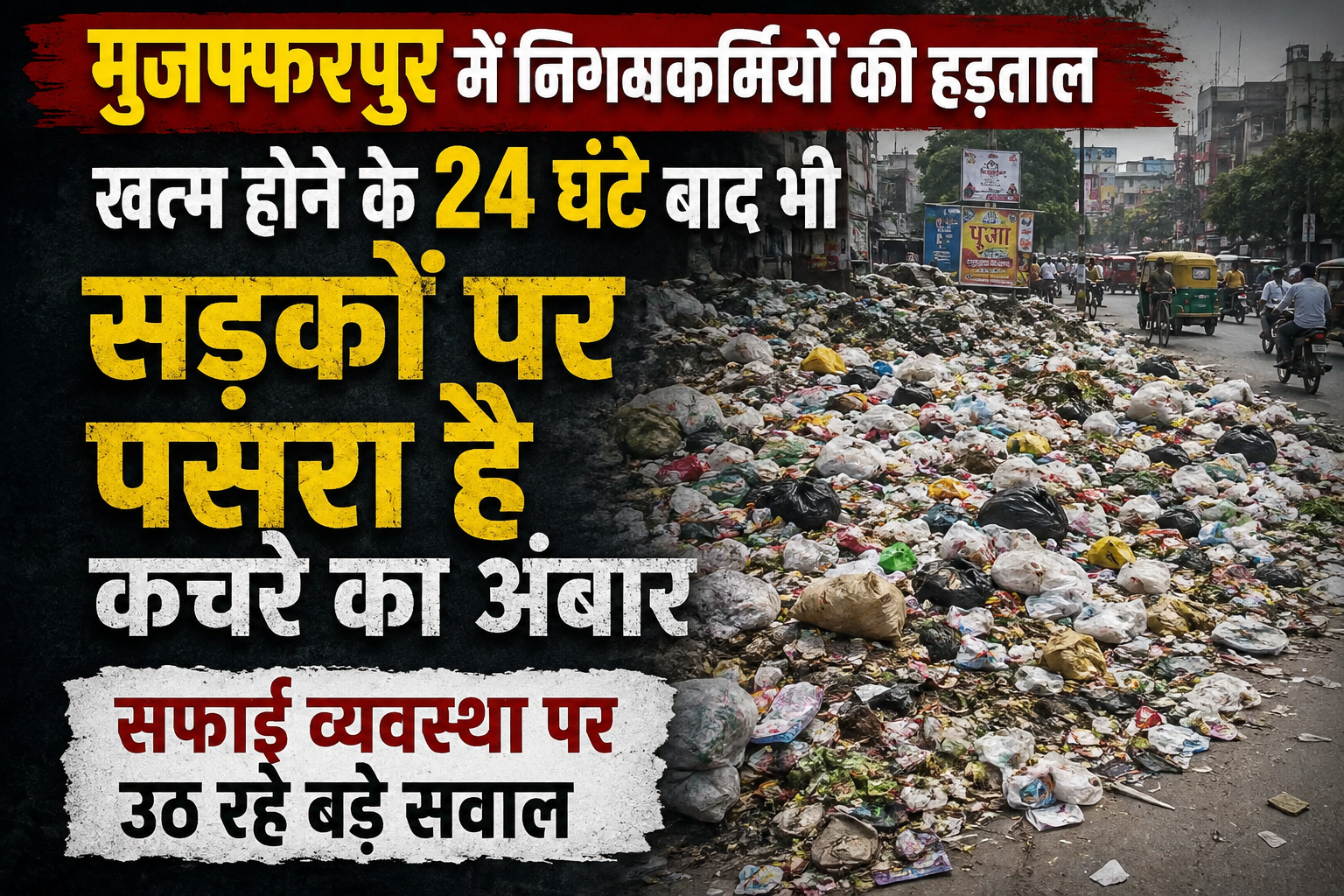
Piles of Garbage Litter Streets Even 24 Hours After Municipal Workers' Strike Ends in Muzaffarpur: Major Questions Raised on Sanitation System
Muzaffarpur: Even though the recent strike by Municipal Corporation workers and sanitation staff in Bihar's Muzaffarpur city has ended, the ground reality of the city tells a completely different story. Even after a full 24 hours have passed since the strike was called off, large heaps of garbage remain scattered across streets in prominent areas, busy markets, and residential colonies.
Due to the continued absence of sanitation workers and a lackadaisical work system, garbage collection in the city has completely collapsed. Despite tall claims by the Municipal Corporation, ordinary citizens are forced to live amidst filth, foul odor, and the constant threat of contagious diseases. Let us explore the details of this entire issue to see why Muzaffarpur's sanitation system has failed to get back on track even after the strike ended.
End of the Strike and Dashed Hopes
A few days ago, municipal sanitation workers and daily wage employees had launched an indefinite strike over various demands. This strike completely paralyzed waste management across the city. Door-to-door garbage collection vehicles were halted, and mountains of trash piled up from alleys to main roads.
Recently, following negotiations between the administration and the employee union, the end of the strike was announced. Ordinary citizens and shopkeepers expected that as soon as the strike concluded, the city's sanitation system would resume on a war footing and the city would be cleaned up within hours. However, when the condition of the streets remained unchanged even 24 hours after the strike ended, public anger boiled over.
Pathetic Condition of Prominent Areas and Markets
A visit to Muzaffarpur's busiest and most vital commercial hubs clearly demonstrates how ineffective the municipal administration has proven to be on the sanitation front.
Purani Bazaar and Saraiyaगंज Tower: Heaps of garbage lie right in front of shops and along the roads in these major commercial areas. Walking has become difficult for both customers and shopkeepers.
Company Bagh and Motijheel: In these posh and crowded areas as well, garbage bins have overflowed and spilled trash onto the streets. Stray animals (cows, dogs, and pigs) roam around these garbage heaps, obstructing traffic and increasing the risk of accidents.
Foul Odor and Mosquito Infestation: The stench rising from decomposing garbage has made it difficult for nearby shopkeepers and passersby to breathe. Waterlogging and rotting waste are accelerating the breeding of mosquitoes and flies, raising fears of an epidemic outbreak.
Absence of Sanitation Workers and Sluggish Administrative Response
When investigating the primary reasons why garbage collection remained disrupted even after the strike ended, major negligence on the part of the municipal administration came to light.
Workers Not Returning to Duty: Even after the strike was officially called off, many sanitation workers either failed to return to work or were found absent from their duties.
Mismanagement of Resources: The Municipal Corporation lacks no shortage of tractors, high-reach vehicles, and mechanical trucks, but due to poor administrative monitoring, these vehicles are not being deployed in a coordinated manner to lift garbage from all wards.
Burden of the Backlog: Since waste could not be cleared for several days during the strike, the garbage backlog grew so massive that clearing it requires double the manpower and time compared to normal days—a resource that is visibly lacking.
Anguish of Local Citizens and Shopkeepers
Widespread outrage against the Municipal Corporation is brewing among ordinary citizens and traders of Muzaffarpur due to this dilapidated state of the city.
Statement from the Traders' Association: A merchant from Purani Bazaar said, "Hearing the news that the strike had ended, we breathed a sigh of relief, thinking shops would now open in a clean environment. But even after 24 hours, the garbage is rotting just the same. Customers return upon seeing filth in front of our shops, which is hurting our business."
Local Resident: Another citizen stated that municipal officials only make claims about making the city smart on paper, but the reality on the ground is that a brief strike collapses the entire system. There is no one to keep the arbitrariness of sanitation workers in check.
Clarification and Ultimatum from Municipal Corporation Officials
After the matter gained traction and media coverage, senior officials of the Municipal Corporation finally awoke from their slumber. Corporation authorities stated that a special sanitation drive is underway to normalize the situation.
Roster-Based Work: Officials claimed that strict instructions have been issued to all ward inspectors and hygiene supervisors to clear out garbage heaps in their respective areas on a priority basis.
Action Against Absent Personnel: A list of sanitation workers remaining absent from work without notice even after the strike's conclusion is being prepared. Departmental action and salary deductions will be recommended against such negligent personnel.
Night Shift Sanitation: To clear the massive garbage backlog as quickly as possible, garbage collection from major markets and squares is now being initiated during nighttime hours as well.
The filth spread across the streets even 24 hours after the municipal workers' strike ended in Muzaffarpur proves how weak and insensitive the city's waste management apparatus is. Merely bringing an end to a strike is not enough; ensuring that subsequent operations run smoothly is a core responsibility of the administration. If the Municipal Corporation fails to take immediate, war-footing action, Muzaffarpur residents may face a severe health crisis. The time has come for officials to step out of paperwork claims, hit the ground, and prioritize city sanitation.


