
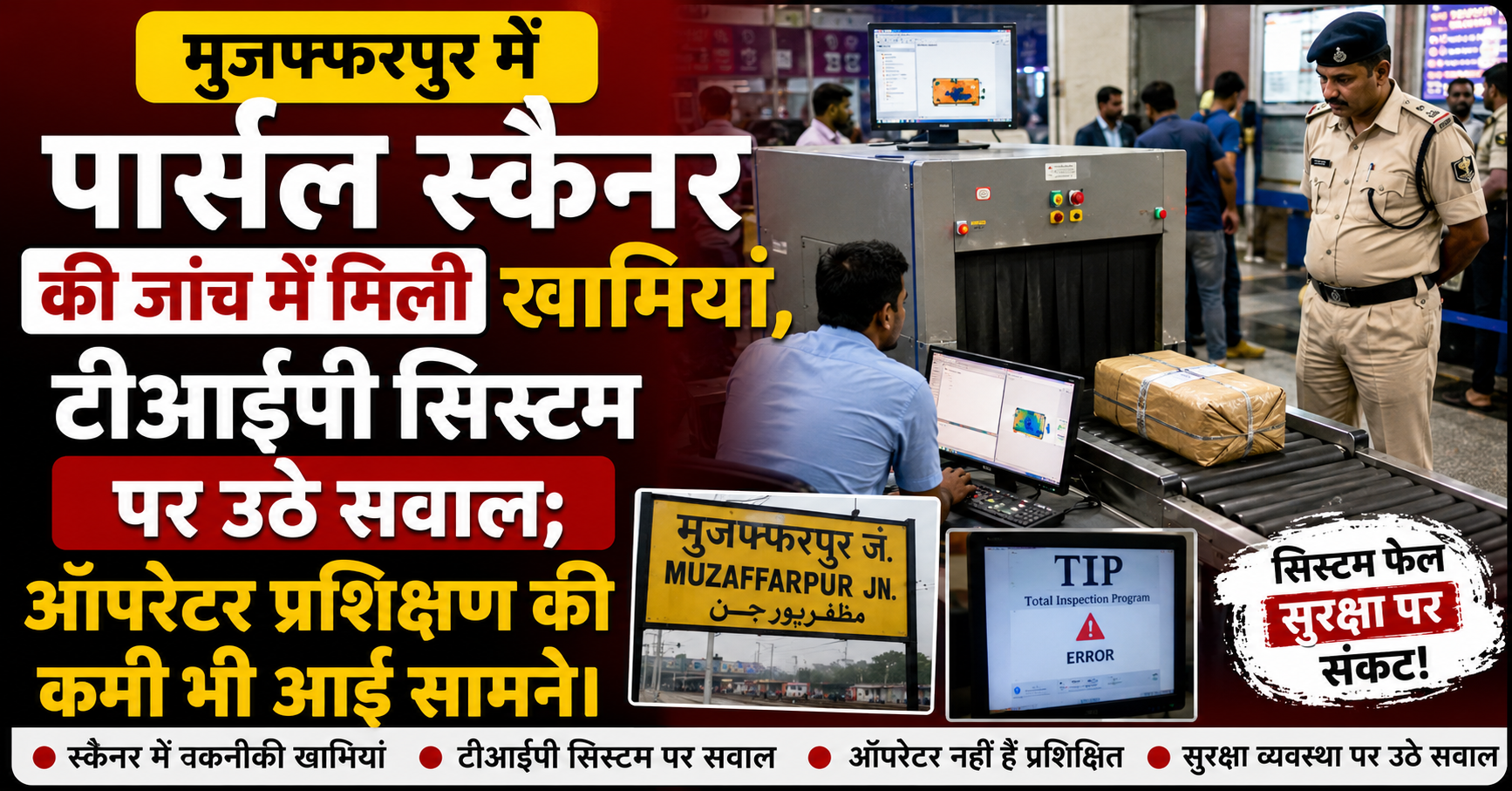
Parcel Scanner Inspection Reveals Gaps in TIP System; Operator Training Deficiency Among Unresolved Issues
Muzaffarpur: As part of efforts to strengthen railway security, a technical inspection of the parcel scanner was conducted at Muzaffarpur. During the inspection, several shortcomings were identified in the Threat Image Projection (TIP) system, an important security feature used to assess the alertness and efficiency of scanner operators. According to the inspection report, most of the identified issues have been rectified, but two significant deficiencies remain unresolved, including inadequate training of scanner operators. The scanner was also found to be operating at 160 kV (kilovolts), which was reported to be within the prescribed technical standards.
Railway authorities have taken the findings seriously and directed the concerned departments to address the remaining shortcomings at the earliest. Officials emphasized that passenger and parcel security remains their highest priority and that no compromise will be made on safety standards.
Comprehensive Technical Inspection Conducted
According to officials, the parcel scanner installed at the railway station underwent a routine technical inspection. Experts evaluated several aspects of its performance, including X-ray imaging capability, image quality, scanner efficiency, the Threat Image Projection (TIP) system, security alarm functions, and the operational skills of the personnel handling the equipment.
The objective of the inspection was to ensure that the scanner is fully capable of detecting suspicious objects, explosives, prohibited items, and other security threats concealed inside parcels.
Deficiencies Found in the TIP System
The inspection report highlighted certain shortcomings in the Threat Image Projection (TIP) system. The TIP system is an essential component of modern security screening technology, designed to assess the attentiveness of scanner operators by displaying simulated images of suspicious objects during routine scanning.
Officials stated that while most technical issues identified during the inspection have already been corrected, two deficiencies have not yet been fully resolved. The concerned agency has been instructed to address these issues without delay.
Lack of Operator Training Identified
One of the major concerns raised during the inspection was the inadequate training of some parcel scanner operators. Investigators found that certain operators had not received sufficient instruction on using the TIP system effectively or identifying suspicious objects during X-ray screening.
Security experts pointed out that even the most advanced screening equipment cannot function effectively unless it is operated by well-trained personnel. They recommended regular training sessions and refresher courses to improve the operators' ability to detect potential threats accurately.
Railway authorities have directed the concerned officials to organize specialized training programs for scanner operators to enhance their technical skills and operational efficiency.
Scanner Operating at Standard Voltage
During the technical evaluation, the parcel scanner was found to be operating at 160 kV, which experts confirmed is within the prescribed technical and safety standards.
Officials explained that this voltage level enables the scanner to generate clear X-ray images, allowing operators to identify suspicious or prohibited items concealed inside parcels more effectively.
Railway Strengthening Security Measures
The railway administration has been continuously upgrading security infrastructure at stations through the installation of advanced screening systems, CCTV surveillance cameras, door-frame metal detectors, and regular deployment of security personnel.
Officials stated that the inspection forms part of a broader initiative to ensure that all security equipment remains fully functional and capable of meeting evolving security challenges.
Regular Inspections to Continue
Railway authorities confirmed that periodic inspections of parcel scanners and other security equipment will continue in the future. Routine maintenance, software updates, and performance evaluations are considered essential to maintaining the reliability of the security system.
Officials said that timely maintenance and regular technical audits will help ensure that all security equipment operates at optimum efficiency.
Passenger Safety Remains the Top Priority
According to the railway administration, every parcel transported through the station undergoes security screening before dispatch. Authorities stressed that advanced technology must be complemented by skilled and well-trained personnel to ensure effective security.
Security experts believe that regular audits, preventive maintenance, and continuous operator training are key factors in strengthening railway security and minimizing potential risks.
Further Action Planned
The inspection report has been submitted to senior railway officials for review. Work has already begun to resolve the two remaining deficiencies identified during the inspection. Authorities have reiterated that there will be no compromise on security standards and that all necessary corrective measures will be implemented as soon as possible.
The inspection has highlighted that while modern security technology plays a crucial role in railway safety, its effectiveness ultimately depends on proper maintenance, continuous monitoring, and the competence of the personnel operating the equipment. The railway administration aims to ensure a safe and secure environment for both passengers and parcel transportation.


