
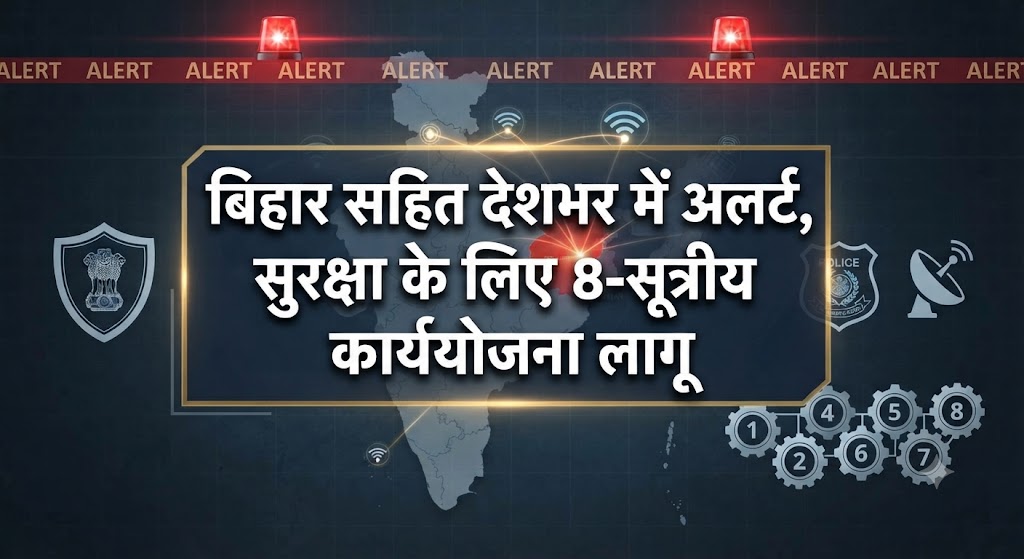
Nationwide Alert, 8-Point Action Plan Implemented
Patna/New Delhi: In view of the increasing threat of dengue across the country with the arrival of the monsoon, the central government has implemented a special national strategy named 'National Dengue Strategy Octalog.' According to the Health Department, this 8-point action plan has been specifically designed for states and districts that witness a high incidence of dengue every year. Local administrations, including several districts in Bihar, have already begun preparations to implement this strategy.
What is the 'Octalog' Strategy?
'Octalog' signifies a comprehensive action plan consisting of eight pillars. Its primary objective is to curb the spread of dengue, enhance disease surveillance, and strengthen the treatment infrastructure for patients.
The 8 main points of this strategy are:
Intensive Surveillance: Continuous monitoring of the disease status to ensure early detection of potential hotspots and new cases.
Effective Case Management: Organizing treatment in hospitals according to standard protocols to ensure complex cases are handled in time and the mortality rate is kept at a minimum.
Vector (Mosquito) Management: Launching special campaigns in urban and rural areas to destroy the breeding grounds of Aedes mosquitoes.
Rapid Outbreak Response: Implementing immediate fogging and sanitation drives in areas where cases spike to prevent further transmission.
Capacity Building: Training health personnel and frontline workers in modern diagnostic techniques and treatment methods.
Behavior Change Communication (Public Awareness): Extensive campaigning to bring about changes in public habits, ensuring that residents do not allow water to stagnate in or around their homes.
Inter-sectoral Coordination: Ensuring seamless coordination between the Health Department, Municipal Corporations, Education Department, and other community organizations.
Monitoring and Supervision: Periodically reviewing the implemented strategies to immediately rectify any shortcomings.
Special Emphasis on Preparations in Bihar
Several urban areas in Bihar have witnessed a significant rise in dengue cases over the past few years. According to the District Vector-Borne Disease Control Department, emphasis is being placed on observing a 'Dry Day' every week as part of this national strategy. Under this initiative, it has been made mandatory to clean water coolers, flower pots, refrigerator trays, and old containers weekly. The administration has appealed to the public to avoid self-medication and instead seek immediate testing at government hospitals if fever develops.
Administrative Directives and Public Responsibility
Health experts emphasize that the Aedes mosquito, which transmits dengue, primarily breeds in clean and stagnant water. The government has instructed all states to ensure free testing and platelet treatment for dengue in all government hospitals.
Furthermore, the core message of 'Cleanliness is Safety' has been issued to the general public. Officials state that while the administration can provide resources, public cooperation is mandatory to eliminate mosquito breeding. Wearing full-sleeved clothing, using mosquito nets, and preventing water accumulation during the monsoon are the most effective weapons against this disease.


