
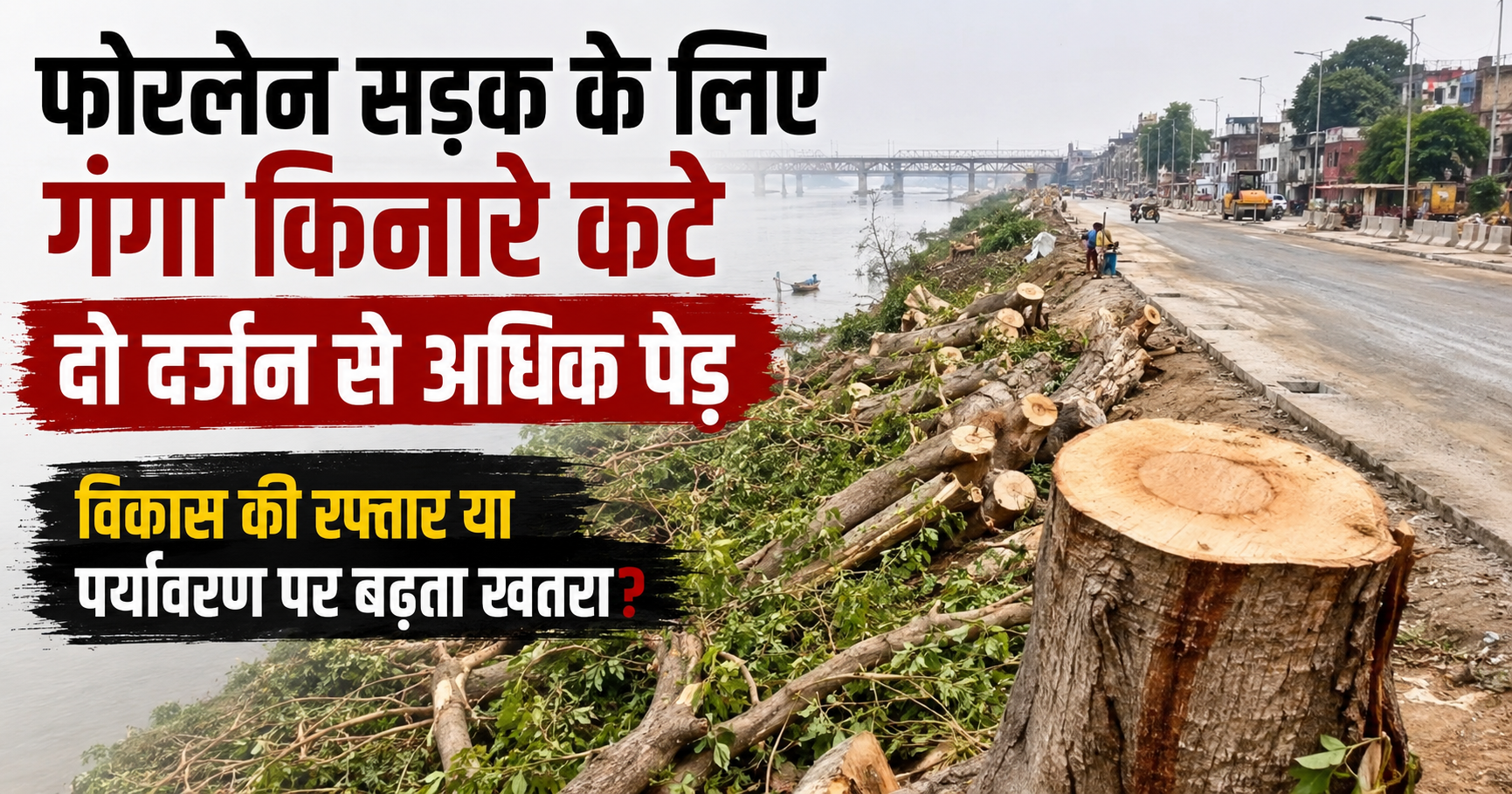
More Than Two Dozen Trees Cut Along the Ganga for Four-Lane Road: A Step Toward Development or a Growing Environmental Threat?
Patna City: The proposed four-lane road being constructed parallel to JP Ganga Path between Bhadraghat and Didarganj is being considered a major infrastructure project for the eastern part of the capital. While the road is expected to provide long-awaited relief from the chronic traffic congestion on Ashok Rajpath, the felling of more than two dozen green trees along the Ganga for the project has sparked a fresh debate over environmental conservation. Local residents, environmentalists, and social organizations have expressed concern over the declining greenery and stressed the need to strike a balance between development and environmental protection.
A Major Boost to Traffic Connectivity
The four-lane road is being developed along the Ganga, parallel to JP Ganga Path, connecting Bhadraghat, Mahavir Ghat, Chitragupt Temple, Khajekalan, Maharaj Ghat, and Didarganj. Residents of the area have long struggled with severe traffic congestion on Ashok Rajpath, where narrow roads and increasing vehicle numbers often result in hours-long traffic jams.
Once completed, the new road is expected to provide an alternative route for thousands of commuters traveling to and from the eastern parts of Patna, significantly reducing traffic pressure. Experts believe the project will improve connectivity for residents of Patna City, Didarganj, Fatuha, and nearby areas while facilitating smoother movement of commercial vehicles.
More Than Two Dozen Trees Felled
The road construction has required the removal of several old and mature trees along the Ganga riverbank. According to local residents, more than two dozen trees have already been cut down, including large Peepal, Banyan, and other shade-giving species. Heavy machinery has been used to remove trees at several locations, altering the natural landscape of the riverfront.
The impact of tree cutting is clearly visible in areas such as Bhadraghat, Mahavir Ghat, the Chitragupt Temple complex, and Maharaj Ghat, where the green cover has noticeably diminished.
Officials Claim Proper Approval Was Obtained
Officials associated with the project have stated that all trees were removed only after obtaining the necessary approvals from the Forest Department. According to them, the process complied with all applicable government regulations and environmental guidelines.
They also said that compensatory plantation will be carried out as required under environmental norms. However, local residents argue that newly planted saplings cannot immediately replace the ecological value of decades-old mature trees.
Environmentalists Raise Serious Concerns
Environmental experts emphasize that trees along the Ganga are not merely a source of greenery but also play a vital role in maintaining the river's ecological balance. Large trees such as Peepal and Banyan help regulate temperature, improve air quality, prevent soil erosion, and provide habitat for birds and other wildlife.
Experts warn that continued large-scale tree felling could increase temperatures along the riverbank, reduce biodiversity, and negatively impact the region's environmental sustainability.
Demand to Relocate Trees Instead of Cutting Them
Residents and environmental groups have argued that if road construction was unavoidable, authorities should have considered transplanting mature trees rather than cutting them down. Several Indian cities have successfully relocated large trees using advanced transplantation techniques.
Citizens believe such alternatives should have been explored during the planning stage so that infrastructure development could proceed with minimal environmental damage.
Balancing Development and Environmental Protection
Urban planning experts agree that modern roads and infrastructure are essential for a growing city like Patna. However, they also stress that environmental conservation is equally important. If infrastructure projects continue to reduce green cover, the city could face increased pollution, rising temperatures, and more severe climate-related challenges in the future.
They recommend designing future infrastructure projects in ways that preserve as many existing trees as possible. Where tree removal is unavoidable, authorities should ensure large-scale compensatory plantation along with proper maintenance and monitoring of newly planted trees.
Mixed Reactions from Local Residents
Many residents have welcomed the project, saying the new four-lane road will ease long-standing traffic problems and boost economic and commercial activities in the region. Others, however, believe development should not come at the cost of the environment.
Several citizens have suggested that extensive plantation should be carried out along both sides of the new road to compensate for the loss of mature trees. They believe timely action by the administration can help maintain a balance between urban development and environmental sustainability.
A Challenge for the Future
As Patna continues to expand, large-scale infrastructure projects have become increasingly important. However, experts say it is equally necessary to carefully assess their environmental impact. The cutting of trees along the Ganga has once again raised an important question: Can rapid urban development coexist with environmental conservation?
While the four-lane road is expected to improve transportation and reduce traffic congestion, environmentalists argue that meaningful efforts to restore green cover are essential. They believe that large-scale plantation drives, protection of existing trees wherever possible, and sustainable planning should accompany infrastructure development to ensure long-term environmental balance and a healthier future for the city.


