
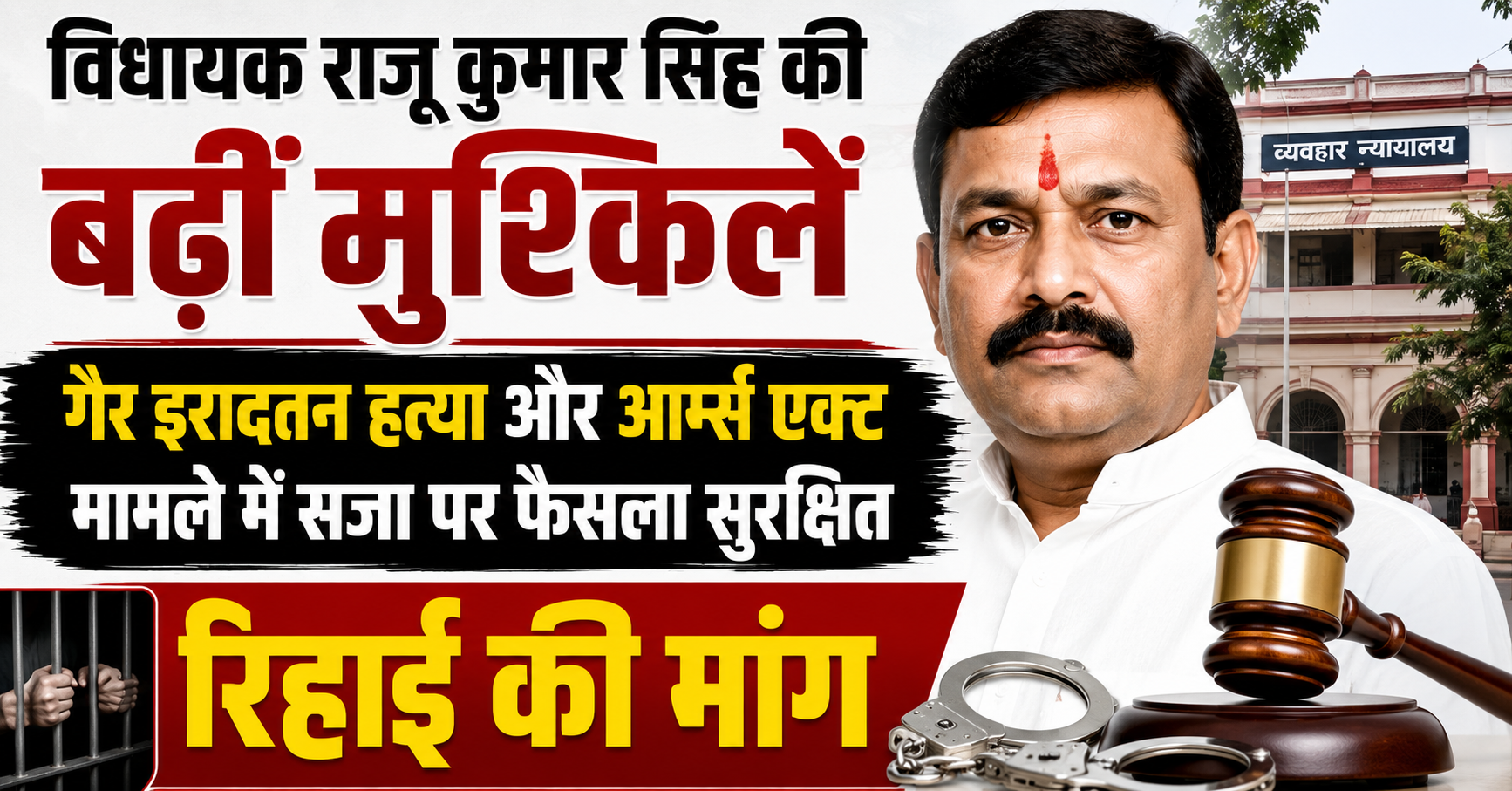
MLA Raju Kumar Singh Faces Sentencing in Culpable Homicide and Arms Act Case; Defense Seeks Release
Muzaffarpur/New Delhi: The legal troubles of Muzaffarpur MLA Raju Kumar Singh have intensified as the Rouse Avenue Court in New Delhi is currently hearing arguments on sentencing in a case involving culpable homicide not amounting to murder and violations under the Arms Act. Following his conviction, the court has moved to the sentencing stage. During the hearing, the MLA's legal team requested the court to release him or impose the minimum possible sentence.
The prosecution, on the other hand, argued that since the accused has been convicted, the court should award an appropriate punishment in accordance with the law. The defense urged the court to consider Singh's background, his role as an elected public representative, and other mitigating circumstances while deciding the sentence. The court is expected to pronounce its final order after hearing both sides.
Court Hearing Focuses on Sentencing
According to available information, after recording the conviction, the court has begun the process of determining the appropriate sentence. Under the Indian judicial system, both the prosecution and the defense are given an opportunity to present arguments regarding the quantum of punishment after a conviction.
During the proceedings, senior defense lawyers requested the court to either release the MLA or impose a lenient sentence, citing his long-standing public service and responsibilities as an elected representative.
Prosecution Seeks Appropriate Punishment
The prosecution argued that once an accused has been found guilty, the court should impose a punishment proportionate to the offence. Prosecutors urged the court to consider the seriousness of the crime, the evidence presented during the trial, and the applicable legal provisions while deciding the sentence.
They also maintained that the rule of law applies equally to everyone, regardless of a person's political status or public office.
Nature of the Offence
Culpable homicide not amounting to murder refers to cases where a person's actions result in another person's death, but the circumstances do not legally amount to murder. Indian criminal law provides separate provisions for such offences, and the sentence depends on the facts established during the trial and the court's findings.
In this case, Raju Kumar Singh has also been convicted under the Arms Act, and the court will consider both convictions while determining the final sentence.
Maximum Punishment of Up to 10 Years
Legal experts note that the punishment for culpable homicide not amounting to murder varies depending on the specific legal provision under which the conviction has been recorded and the circumstances of the offence. In this case, the applicable provision carries a maximum sentence of up to ten years' imprisonment. However, the final punishment will depend entirely on the court's assessment of the facts, evidence, and legal considerations.
The court may also impose a fine or issue other directions as permitted under law.
Defense Requests Leniency
During the sentencing hearing, the defense highlighted that Singh is an elected legislator who has been actively involved in public service for many years. His lawyers argued that he had cooperated with the judicial process throughout the proceedings and deserved a chance for reform.
The defense also appealed for leniency on humanitarian grounds. However, the prosecution opposed these submissions, arguing that sentencing should be based solely on the law and the established facts of the case.
Political Attention on the Case
The proceedings have attracted significant political attention in Muzaffarpur and across Bihar. As an active political leader, Singh's case is being closely watched by political parties, supporters, and observers.
Political analysts believe that if the court imposes a substantial sentence, it could have implications for his political career and future electoral prospects.
Legal Experts Explain the Process
Legal experts point out that conviction and sentencing are two distinct stages in the criminal justice process. After a conviction, the court considers several factors—including the nature of the offence, the circumstances of the accused, prior criminal history (if any), and mitigating or aggravating factors—before deciding the sentence.
They also emphasize that the judicial process should be respected and that conclusions should await the court's final order.
Supporters and Opponents Await the Verdict
The hearing has generated considerable discussion among both supporters and political opponents of the MLA. While his supporters hope the court will show leniency, others believe the punishment should strictly follow the law.
Regardless of public opinion, the court's decision will be based on the evidence presented and the applicable legal provisions.
What Happens Next?
The court will now consider the submissions made by both sides before delivering its final sentencing order. If a sentence is imposed, the defense will have the legal right to challenge the decision before a higher court.
Under Indian law, any appeal or request for suspension of sentence will be dealt with in accordance with the legal process.
The sentencing proceedings against Muzaffarpur MLA Raju Kumar Singh in the culpable homicide and Arms Act case have reached a crucial stage before the Rouse Avenue Court. While the defense has sought release or a reduced sentence, the prosecution has urged the court to impose an appropriate punishment under the law. The offence is punishable with a maximum imprisonment of up to ten years, though the actual sentence will depend on the court's final determination. The verdict is expected to have significant legal and political implications.


