
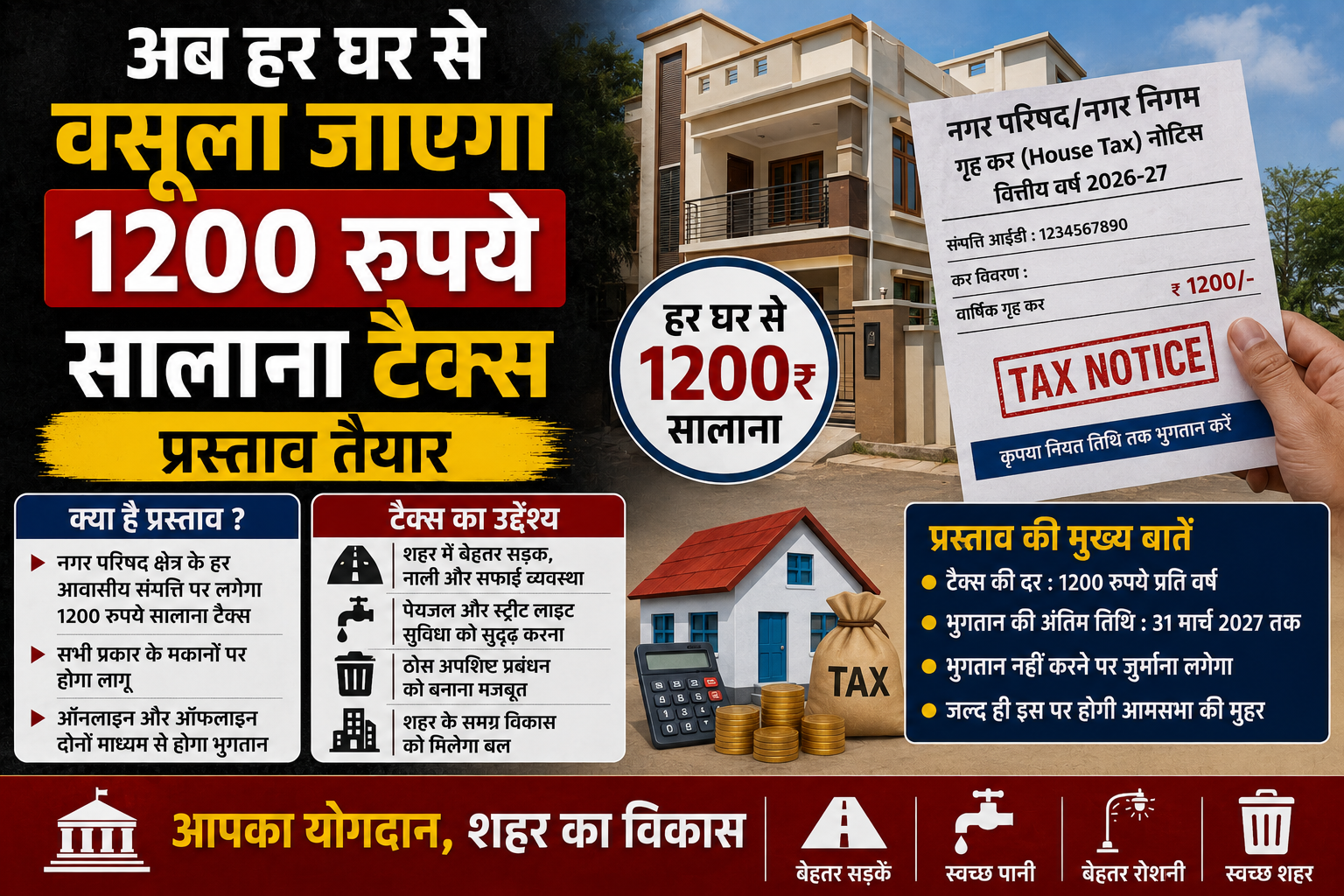
Annual Tax of ₹1,200 to be Levied per Household, Proposal Prepared
Patna: The Bihar government is set to take a major and bold step toward making the state’s Gram Panchayats financially 'self-reliant.' Based on the recommendations of the 16th Central Finance Commission, the State Panchayati Raj Department has prepared a proposal to implement a tax system in all Gram Panchayats of Bihar, similar to the one in urban local bodies. Under this new system, a framework has been outlined to collect an average annual tax of ₹1,200 per household in rural areas.
Primary Objective: Self-Reliant Panchayats
According to officials from the Panchayati Raj Department, the main objective of this initiative is to ensure that Panchayats do not remain dependent solely on grants received from the State and Central governments. The Commission recommends that Panchayats generate revenue from their own local resources to empower themselves.
Detailed Structure of the Tax System
Various categories have been determined for the calculation and collection of taxes under the proposed system:
Residential Tax (Holding Tax): An average tax of ₹1,200 per year will be collected from each household. However, this amount may vary based on the size and location of the building.
Higher Rates for Commercial Buildings: Buildings used for commercial purposes (shops, warehouses, etc.) will be taxed at a higher rate compared to residential buildings.
Other Utilities: In addition to the household tax, 'user charges' may also be collected for other services available in the Panchayat, such as water supply, solid waste management, and street light maintenance.
Hoardings and Banners: There will also be a provision to levy fees on hoardings, banners, and advertisements put up by commercial establishments within the Panchayat area.
Protection for the Weedy: 'No Extra Burden on the Poor'
The government has paid special attention to the pockets of the common man in this proposal:
Beneficiaries of Housing Schemes: Owners of houses built under the Pradhan Mantri Awas Yojana will not have to pay this tax individually. The holding tax for such houses will be paid by the concerned department (Rural Development Department).
Rule of Equality: This tax system will be more effective in Panchayats where basic infrastructure is better developed.
Government Rationale: Why is this tax necessary?
Several solid reasons have been cited for this government decision:
Financial Independence: Due to the apprehension of potential cuts in Central Finance Commission grants in the future, Panchayats need to increase their 'Own Source Revenue' (OSR).
Urban-like Amenities: The state government aims to provide urban-style facilities in villages. Funding is essential for the continuous maintenance of sanitation, drinking water, and lighting.
Accountability: When citizens pay taxes, they will be able to demand greater accountability from their Panchayat representatives regarding development in their area, fostering a healthier democratic culture.
The Path Ahead: What is the Process?
This proposal is currently awaiting cabinet approval:
Cabinet Seal: The Panchayati Raj Department has sent the draft to the Finance Department. Once approved by the Cabinet, a set of by-laws will be issued for the entire state.
Promise of Transparency: The department states that the entire tax collection process will be digital (online) so that there is no room for corruption and the money is deposited directly into the Panchayat's account.
Challenges and Reactions
With the announcement of this decision, widespread discussion has begun in the rural areas of Bihar:
Public Reaction: While one section considers it necessary for development, many villagers are concerned about this 'new tax.'
Administrative Challenge: Panchayats currently do not have sufficient staff for tax collection. In such a situation, it will be significant to see how the government implements this process on the ground.
This is a sign of a revolutionary change for the Gram Panchayats of Bihar. However, its success will depend entirely on how transparently the government makes the tax scope and collection process. If this model succeeds, Bihar’s Panchayats will not only become self-reliant, but the pace of village development will also increase manifold.


