
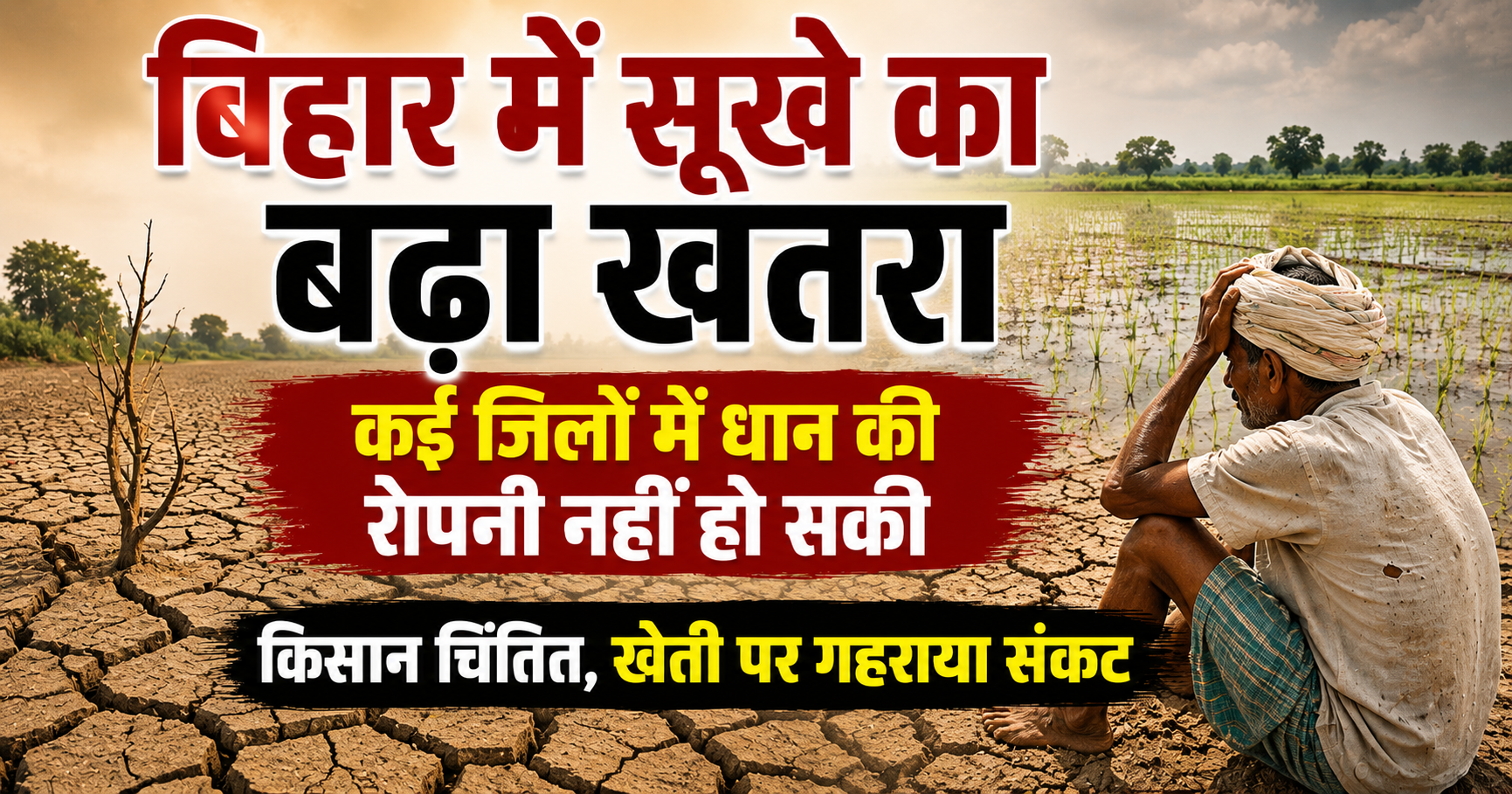
Drought Threat Looms Over Bihar, Paddy Transplantation Yet to Begin in Several Districts; Farmers Grow Increasingly Worried
Patna: The slow progress of the monsoon has emerged as the biggest concern for farmers across Bihar, with the state now facing the growing threat of drought-like conditions. Below-normal rainfall in several parts of the state has severely affected the ongoing kharif farming season, particularly paddy cultivation. The situation has become so critical that paddy transplantation has not even begun in many districts, leaving farmers anxiously waiting for adequate rainfall.
Agricultural experts warn that if substantial rainfall does not occur within the next few days, Bihar's paddy production could suffer significantly. Such a scenario would not only affect farmers' incomes but also have a wider impact on the state's agriculture-dependent rural economy.
Several Districts Witness Severe Delay in Paddy Transplantation
According to available reports, paddy transplantation has not yet begun in several districts, including Supaul, Siwan, Sheikhpura, Saharsa, Nawada, Nalanda, Lakhisarai, Khagaria, Katihar, Jehanabad, East Champaran, Gaya, Buxar, and Bhojpur.
These districts have received considerably less rainfall than normal, leaving fields without the moisture required for paddy cultivation. Since paddy transplantation depends heavily on adequate water levels, farmers are unable to move seedlings from nurseries into their fields despite having prepared them.
In many villages, agricultural fields have already started developing cracks due to prolonged dry conditions, adding to farmers' concerns.
Kharif Crops Under Pressure
Paddy is Bihar's principal kharif crop and serves as the primary source of livelihood for millions of farming families. The delay in transplantation has raised fears of lower crop yields and reduced agricultural output.
Agricultural scientists note that timely transplantation is crucial for achieving optimum productivity. Any prolonged delay may reduce yields and negatively affect crop quality.
Apart from paddy, other kharif crops such as maize, pulses, and oilseeds are also beginning to experience stress because of insufficient rainfall. In several areas, farmers have postponed sowing altogether.
Farmers Face Mounting Anxiety
Across rural Bihar, farmers continue to monitor weather forecasts with growing concern. Those who have already invested in seeds, fertilizers, and other agricultural inputs are particularly worried.
Many farmers say that if rainfall does not arrive soon, their investments and months of preparation could go to waste. Some have attempted irrigation using diesel-operated pumps and private tube wells, but continuous irrigation has become financially unsustainable because of the high cost of diesel.
Small and marginal farmers are considered the most vulnerable, as they often lack adequate irrigation infrastructure and cannot afford prolonged additional expenses.
Irrigation Challenges Add to the Crisis
The situation has become even more difficult because canals, reservoirs, and other water sources in many parts of Bihar are also experiencing inadequate water levels.
Even in areas covered by irrigation projects, the limited availability of water makes it difficult to supply all agricultural fields. Experts warn that if rainfall does not improve soon, demand for groundwater extraction and diesel-powered irrigation is likely to increase substantially.
Agriculture Department Monitoring the Situation
The Agriculture Department is closely monitoring rainfall patterns and the progress of paddy transplantation across the state. District-level officials are regularly submitting reports so that authorities can formulate alternative strategies if necessary.
Agricultural experts are advising farmers to closely follow weather forecasts and seek guidance from local agricultural scientists. If the dry spell continues, farmers may also be encouraged to cultivate short-duration paddy varieties or consider alternative crops that require less water.
Impact on the Rural Economy
Agriculture forms the backbone of Bihar's rural economy. A significant decline in paddy cultivation would affect not only farmers but also agricultural laborers, fertilizer and seed dealers, farm equipment suppliers, transport operators, and local businesses.
A successful paddy season typically boosts economic activity across villages, whereas a drought-like situation could reduce employment opportunities and weaken rural purchasing power.
All Eyes on the Monsoon
Farmers are now pinning their hopes on the revival of the southwest monsoon. If substantial rainfall occurs soon, paddy transplantation can still begin in many affected areas. However, experts caution that the longer the delay continues, the greater the potential reduction in agricultural production.
According to agricultural specialists, the next few weeks will be critical for Bihar's kharif season. Adequate rainfall during this period could significantly reduce potential losses.
Farmers Seek Government Assistance
Farmers have urged the state government to take timely measures if the dry conditions persist. They have called for alternative irrigation arrangements, diesel subsidies, seed assistance, and other relief measures to help reduce financial losses.
Several farmer organizations have also requested the government to continuously monitor drought-prone regions and announce special relief packages if the rainfall deficit worsens.
Situation Depends on Weather in the Coming Days
At present, Bihar's agricultural sector remains heavily dependent on the arrival of adequate monsoon rainfall. If the monsoon fails to regain momentum soon, drought-like conditions could become more severe, affecting paddy production, farmers' livelihoods, and the state's overall agricultural economy.
For now, thousands of farmers across Bihar continue to wait for timely rainfall. While improved weather conditions could still revive agricultural activities, a prolonged rainfall deficit may pose one of the biggest challenges to the state's farming sector this year.


