
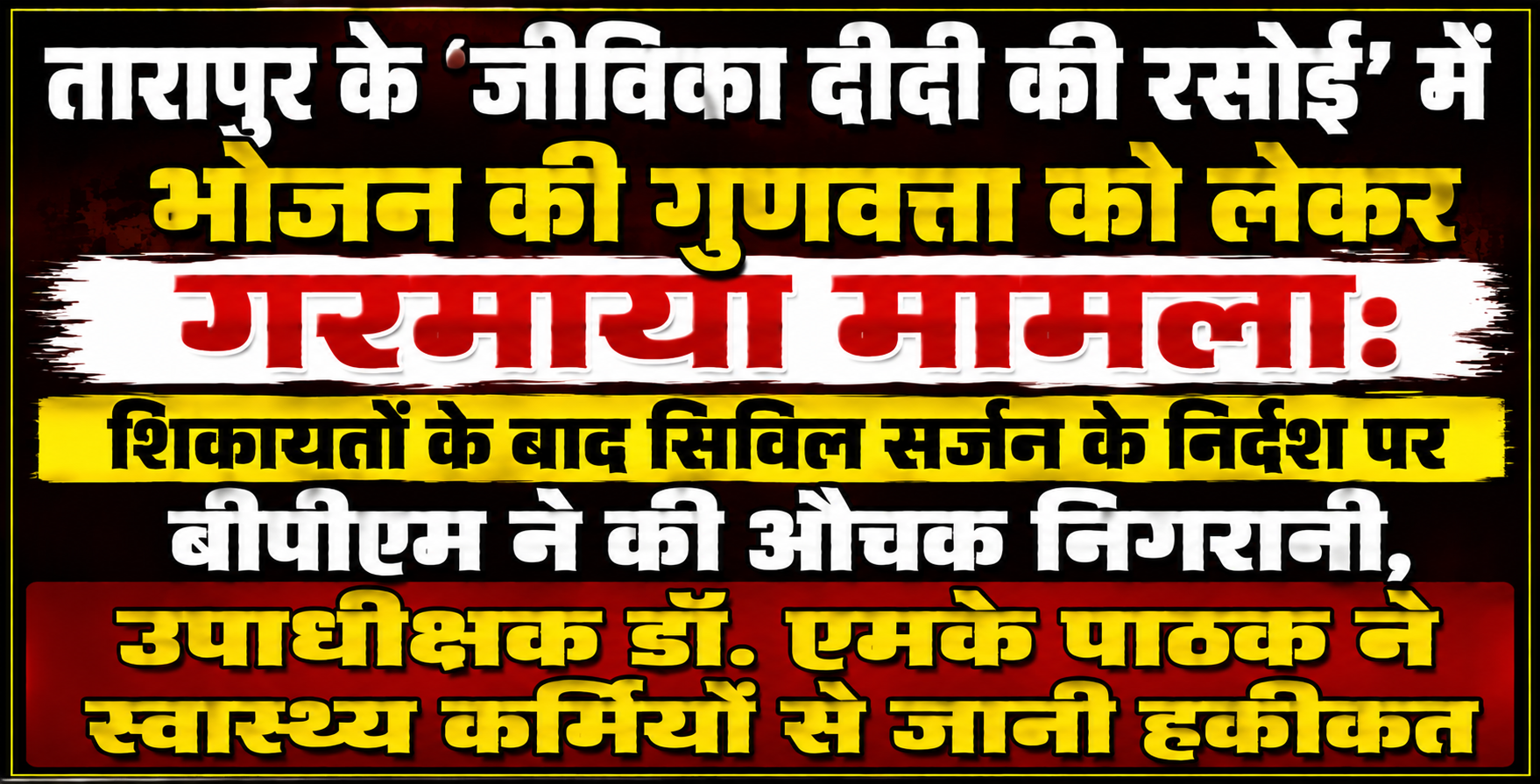
Controversy Surrounds Quality of Food at Tarapur's 'Jivika Didi Ki Rasoi': Following Complaints and Civil Surgeon's Directives, BPM Conducts Surprise Monitoring; Deputy Superintendent Dr. MK Pathak Gathers Ground Reality from Health Personnel
Tarapur (Munger): 'Jivika Didi Ki Rasoi', an ambitious initiative of the Bihar government aimed at economically empowering rural women, is back in the spotlight. For the past few days, continuous questions had been raised regarding the quality and standards of food provided to patients via 'Jivika Didi Ki Rasoi' operating within the Tarapur Subdivisional Hospital premises in Munger district. The district health administration took the complaints made by hospitalized patients and their attendants regarding food taste, hygiene, and nutritional value with utmost seriousness.
According to information received, following strict directives from the Civil Surgeon, the Block Project Manager (BPM) arrived in Tarapur to conduct surprise monitoring of 'Jivika Didi Ki Rasoi'. On the other hand, Hospital Deputy Superintendent Dr. MK Pathak also arrived at the spot to gather detailed information regarding food quality from health personnel and patients stationed there. This administrative stir has heightened vigilance among hospital management and the women operating the kitchen. Let us examine the complete and detailed account of this entire episode.
What Is the Whole Matter? Why Were Questions Raised on Food Quality?
The primary objective of 'Jivika Didi Ki Rasoi' is to provide home-like, fresh, nutritious, and high-quality food to patients admitted to government hospitals. Under this scheme, meals are provided to patients free of cost or at fixed rates. However, disagreements over operational standards had been surfacing at the Tarapur hospital for some days.
Continuous Patient Complaints: Patients admitted to various hospital wards and their relatives alleged that the quality of food supplied from the kitchen had deteriorated over the past some period. Issues such as delayed meal deliveries, watery lentil and vegetable preparations, and meals not conforming to the prescribed menu were coming to light.
Impact on Health and Nutrition: Patients undergoing treatment in government hospitals are already physically weak; under such circumstances, failure to receive nutritious diet slows down their recovery process. When these complaints escalated continuously, the matter reached the Civil Surgeon's cognizance.
Strict Directives from Civil Surgeon and Surprise Monitoring by BPM
Viewing the gravity of the matter, immediate intervention was initiated from the district level, deploying officials to the field to ascertain ground realities.
Civil Surgeon's Firm Stance: The Civil Surgeon of Munger instructed the Tarapur hospital management that any laxity or negligence regarding patient meals would not be tolerated. He ordered the immediate execution of inspections and monitoring of kitchen operations.
Surprise Inspection by BPM: In light of the Civil Surgeon's directives, the Block Project Manager (BPM) conducted a surprise inspection of 'Jivika Didi Ki Rasoi' in Tarapur. The BPM entered the kitchen to meticulously examine cleanliness, raw materials utilized in food preparation (spices, lentils, rice, oil, etc.), storage conditions, and the overall cooking process. Explicit instructions were issued to the women present that food quality must not be compromised under any circumstances.
Deputy Superintendent Dr. MK Pathak's Initiative: Feedback from Health Personnel and Patients
To rectify the situation locally and ensure patient satisfaction, Tarapur Subdivisional Hospital Deputy Superintendent Dr. MK Pathak also played an active role.
Interacting with Patients Across Wards: Dr. MK Pathak toured various hospital wards, interacting directly with patients and their attendants to inquire about the food being served. He gathered feedback from patients concerning food taste, quantity, and hygiene.
Inquiries with Health Personnel: The Deputy Superintendent also questioned health personnel and duty nurses stationed at the hospital regarding whether meals were reaching patients on time. He instructed personnel to regularly check the quality of food packets or plates so that any shortcomings could be addressed immediately.
Objective of 'Jivika Didi Ki Rasoi' and Scope for Improvement
The 'Jivika Didi Ki Rasoi' scheme serves as an exemplary model of rural women's self-reliance, supporting the livelihoods of hundreds of families. However, quality control remains the most crucial aspect for its successful operation.
Emphasis on Transparency and Cleanliness: This surprise inspection and administrative probe clarify that operating committees must pay special attention to cleanliness, adhered menus, and punctuality.
Warning for the Future: This strictness by officials sends a clear message that if complaints regarding food quality resurface in the future, stringent action can be initiated against the concerned agency or management.
The monitoring and investigation conducted by the BPM and Deputy Superintendent Dr. MK Pathak under the Civil Surgeon's directives, following questions raised over food quality at 'Jivika Didi Ki Rasoi' in the Tarapur Subdivisional Hospital, reflect administrative sensitivity. The administration's stance toward patient health and rights is commendable. It is anticipated that this action will improve kitchen operations, ensuring that every patient admitted to the hospital receives fresh, nutritious, and quality food on time, thereby preserving the credibility of 'Jivika Didi Ki Rasoi' while offering relief to patients.


