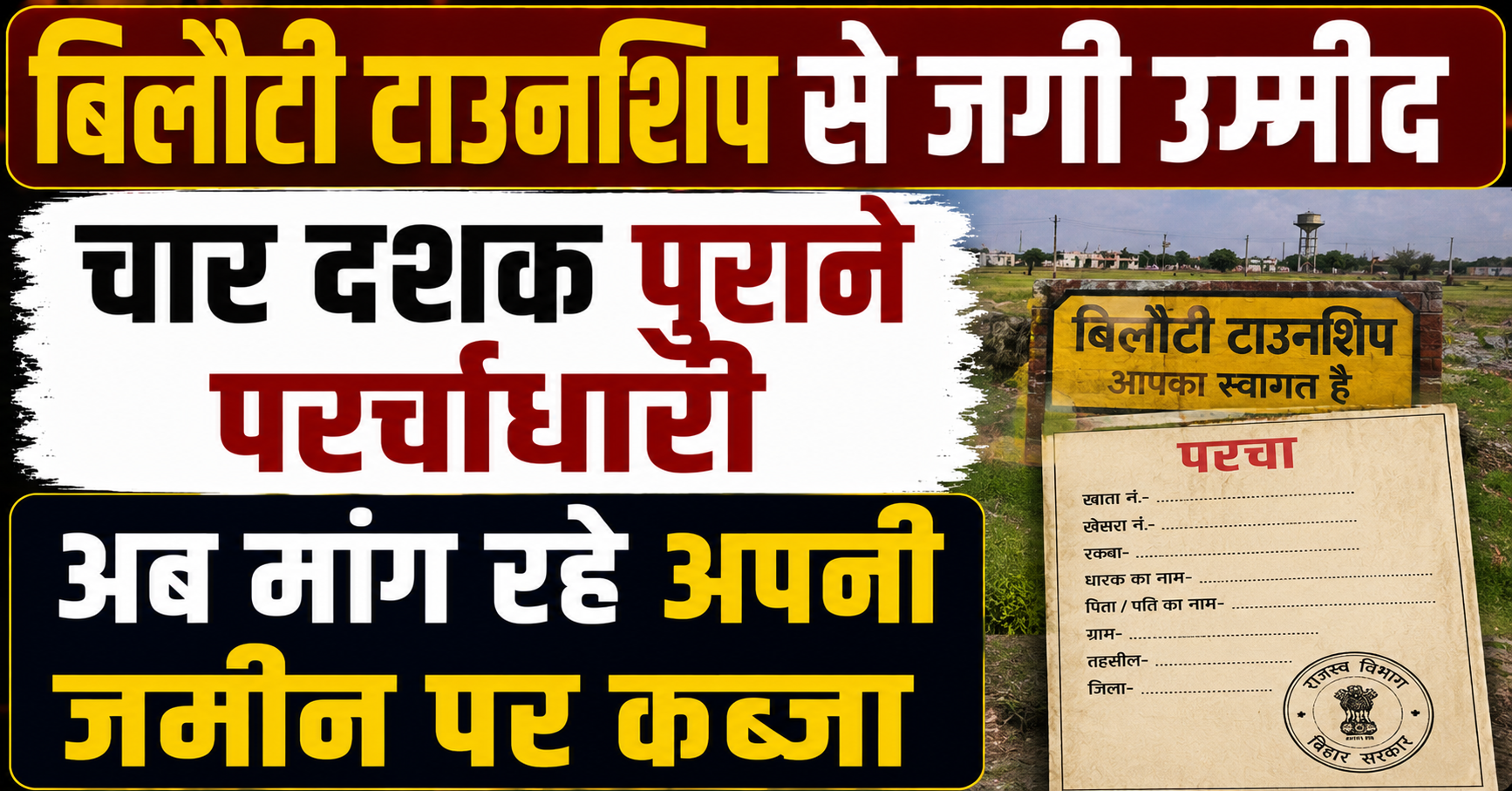
Bilauti Township Revives Hope for Four-Decade-Old Land Allottees Seeking Possession of Their Plots
Shahpur (Bhojpur): The township being developed in the southern part of Bilauti village for the rehabilitation of erosion-affected families from Jawainiya village has become a symbol of hope not only for displaced residents but also for landless families who received residential land allotments under the government's Homestead Scheme nearly four decades ago. Beneficiaries from Scheduled Caste and Other Backward Class communities are now urging the administration to conduct land measurements and hand over possession of the plots that were allotted to them years ago.
According to local residents, the new township is being established to rehabilitate families displaced by river erosion in Jawainiya village. As part of the project, roads, electricity, drinking water, and other essential infrastructure are being developed in the area. This ongoing transformation has encouraged long-time land allottees to renew their demand for possession of the land officially assigned to them decades ago.
Villagers said that many landless families were first allotted residential plots under the Homestead Scheme in 1983. Additional allotments were made in 1995, 2005, and 2014. However, despite receiving official land allotment certificates, most beneficiaries were never able to settle permanently on their plots. Even after several decades, many families are still waiting to take physical possession of the land legally allocated to them.
Several of the original beneficiaries have since passed away. Their legal heirs are now pursuing the claim to the allotted land, stating that while government records recognize the allotments, they have never been able to exercise actual ownership by occupying or developing the plots.
Some beneficiaries attempted to settle on their allotted land years ago by constructing temporary huts. However, according to local residents, unidentified individuals allegedly set the huts on fire one night. The incident created fear among the families, discouraging them from returning to the site. Since then, much of the allotted land has remained vacant.
The beneficiaries explained that when they initially received their allotment certificates, the area lacked even basic infrastructure. There were no proper roads, electricity, drinking water facilities, or drainage systems. Because of the absence of essential amenities, most families found it impractical and unsafe to move into the isolated area and establish permanent homes.
The situation is now changing with the development of the new rehabilitation township. The construction of roads, power infrastructure, drinking water facilities, and other civic amenities has significantly improved the area's livability. As a result, the old land allottees believe that they can now finally build permanent houses on their allotted plots and live there with dignity.
The beneficiaries have requested the administration to conduct a formal survey of their land, demarcate the boundaries, and officially hand over possession of their respective plots. They argue that if the government granted them ownership rights decades ago, they should now receive the practical benefit of those rights. Many families said they are economically weak and cannot afford to purchase private land, making the government-allotted plots their only hope for owning a permanent home.
Local social workers have also supported their demand, stating that the primary objective of government housing and rehabilitation schemes is to provide landless families with secure and dignified living conditions. If eligible beneficiaries continue to wait for possession of their allotted land for decades, they argue, the purpose of these welfare schemes remains unfulfilled. They have urged the administration to treat the matter as a priority.
Residents believe that a positive decision by the administration would provide permanent housing opportunities to dozens of deserving families while ensuring the orderly development of the new township. They also noted that resolving long-pending land issues would help prevent future legal disputes and social conflicts in the area.
Administrative officials have indicated that if the beneficiaries submit the necessary applications and supporting documents, the claims will be examined in accordance with the law. The process would include verification of land records, official measurement, and boundary demarcation before any further action is taken under the applicable rules. Officials have reiterated that the government's objective is to ensure that eligible beneficiaries receive the full benefits of welfare schemes.
For the families who have waited for decades, the development of the Bilauti township has rekindled hope that they may finally receive possession of the land promised to them many years ago. They are now looking to the administration for timely action, believing that a positive decision could fulfill a dream that has remained pending for more than forty years and enable many landless families to begin a new chapter of life in homes of their own.