
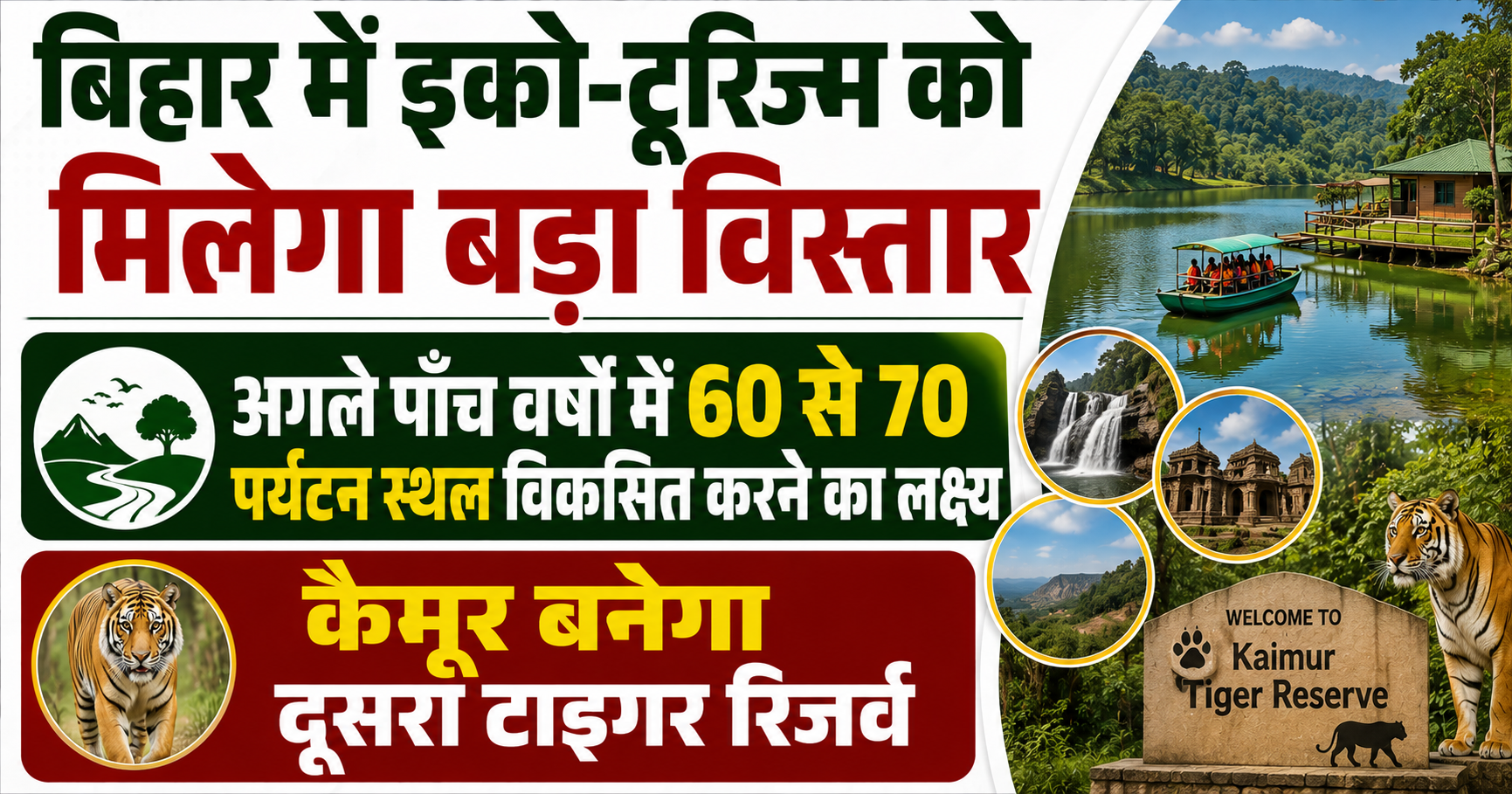
Bihar to Expand Eco-Tourism on a Large Scale, Targets 60–70 Eco-Tourism Destinations in the Next Five Years; Kaimur to Be Developed as the State's Second Tiger Reserve
Patna: The Bihar government is working aggressively to give the state's tourism sector a new identity by promoting its rich natural heritage. As part of its long-term tourism strategy, the government has placed eco-tourism at the forefront of its development agenda. The initiative aims not only to boost tourism but also to promote environmental conservation, biodiversity protection, sustainable livelihoods, and rural economic development.
According to the Tourism Department, Bihar currently has 10 to 15 operational eco-tourism destinations, while more than 24 major natural sites are being developed rapidly. In addition, the government has identified over 50 new potential eco-tourism locations for future development. The goal is to increase the number of eco-tourism destinations in the state to 60–70 within the next five years, positioning Bihar among India's leading eco-tourism destinations.
Government Prioritizes Eco-Tourism Development
The Bihar government believes that the state is known not only for its religious and historical heritage but also for its forests, wildlife, lakes, waterfalls, hills, and rich biodiversity, all of which have immense tourism potential.
To tap this potential, the Tourism Department, in collaboration with the Forest and Environment Department, is developing natural destinations where visitors can experience nature while promoting environmental awareness and sustainable tourism.
Ambitious Five-Year Expansion Plan
The Tourism Department has prepared an ambitious roadmap for expanding eco-tourism across the state.
While Bihar currently has 10 to 15 active eco-tourism destinations, infrastructure development is underway at more than 24 major sites. Additionally, over 50 potential locations have been identified for future development.
If the plan is successfully implemented, Bihar will have 60 to 70 eco-tourism destinations within the next five years.
Valmiki Tiger Reserve Remains the Biggest Attraction
According to the Tourism Department, the Valmiki Tiger Reserve in West Champaran is Bihar's most important eco-tourism destination.
It is the state's only officially designated tiger reserve and is renowned for its dense Terai forests, rich biodiversity, tigers, elephants, leopards, deer, and numerous other wildlife species.
Located along the India-Nepal border, the reserve attracts both domestic and international tourists. Visitors enjoy jungle safaris, birdwatching, and immersive experiences in a pristine natural environment.
Kaimur to Be Developed as Bihar's Second Tiger Reserve
The government is also working to develop the Kaimur Wildlife Sanctuary into Bihar's second Tiger Reserve.
Kaimur is known for its scenic hills, dense forests, spectacular waterfalls, trekking trails, and diverse wildlife.
Officials believe that once it receives Tiger Reserve status, Kaimur has the potential to emerge as a major national and international eco-tourism destination while generating new employment opportunities for local communities.
Development Planned for Bhimbandh and Gautam Buddha Wildlife Sanctuaries
The Bhimbandh Wildlife Sanctuary and the Gautam Buddha Wildlife Sanctuary are also among Bihar's key eco-tourism destinations.
These protected forests provide visitors with opportunities to experience nature, observe wildlife, and explore rich biodiversity in a peaceful environment.
The Tourism Department is improving roads, visitor facilities, information centers, and eco-friendly tourism infrastructure at these locations.
Unique Experience at Vikramshila Dolphin Sanctuary
The Vikramshila Gangetic Dolphin Sanctuary is one of Bihar's most distinctive eco-tourism attractions.
Visitors can take boat rides on the Ganges River to observe the endangered Gangetic Dolphin in its natural habitat.
This unique wildlife experience attracts nature lovers, researchers, photographers, and wildlife enthusiasts from across the country.
Kanwar Lake to Become a Major Birdwatching Destination
The Kanwar Lake Bird Sanctuary is another important natural attraction in Bihar.
Recognized as one of Asia's largest freshwater lakes, it becomes a seasonal home to thousands of migratory birds arriving from Siberia and other parts of the world during winter.
The government plans to further promote birdwatching, nature tourism, and environmental education at the sanctuary.
Rajgir, Kakolat, and Ghora Katora Also Included
The eco-tourism expansion plan also covers several other prominent natural destinations, including:
- Rajgir Hills
- Kakolat Waterfall
- Ghora Katora Lake
- Barabar-Gurupa Hills
- Surajpur Wetland
These sites are known for their scenic landscapes, forests, hills, lakes, and waterfalls.
Authorities are focusing on improving tourist amenities, road connectivity, sanitation, visitor safety, and environmentally sustainable infrastructure at these destinations.
Boost to Local Employment and Economy
Experts believe that expanding eco-tourism will generate substantial economic benefits beyond the tourism sector.
The initiative is expected to create employment opportunities for local youth in guiding services, hospitality, homestays, transportation, handicrafts, and the sale of local products.
It is also likely to strengthen the rural economy by increasing visitor spending in nearby communities.
Strong Emphasis on Environmental Conservation
The government has made it clear that all eco-tourism projects will be implemented in accordance with environmental conservation principles.
Tourism development will be carried out without harming forests, wildlife, water resources, or biodiversity. Local communities will also be actively involved to ensure sustainable development and conservation.
A New Identity for Bihar Tourism
The Tourism Department believes that successful implementation of these projects will expand Bihar's tourism identity beyond its historical and religious significance.
The state aims to establish itself as a major destination for eco-tourism, wildlife tourism, adventure tourism, and rural tourism at the national level.
Bihar's ambitious eco-tourism expansion plan represents a major step toward transforming the state's tourism landscape. The development of destinations such as the Valmiki Tiger Reserve, the proposed Kaimur Tiger Reserve, the Vikramshila Gangetic Dolphin Sanctuary, Kanwar Lake Bird Sanctuary, Bhimbandh Wildlife Sanctuary, Rajgir Hills, Kakolat Waterfall, and several other natural attractions is expected to significantly boost tourism across the state.
With a target of developing 60 to 70 eco-tourism destinations over the next five years, the initiative goes beyond attracting tourists. It is designed to promote environmental conservation, create local employment opportunities, strengthen rural economies, and position Bihar as one of India's emerging eco-tourism hubs.


