


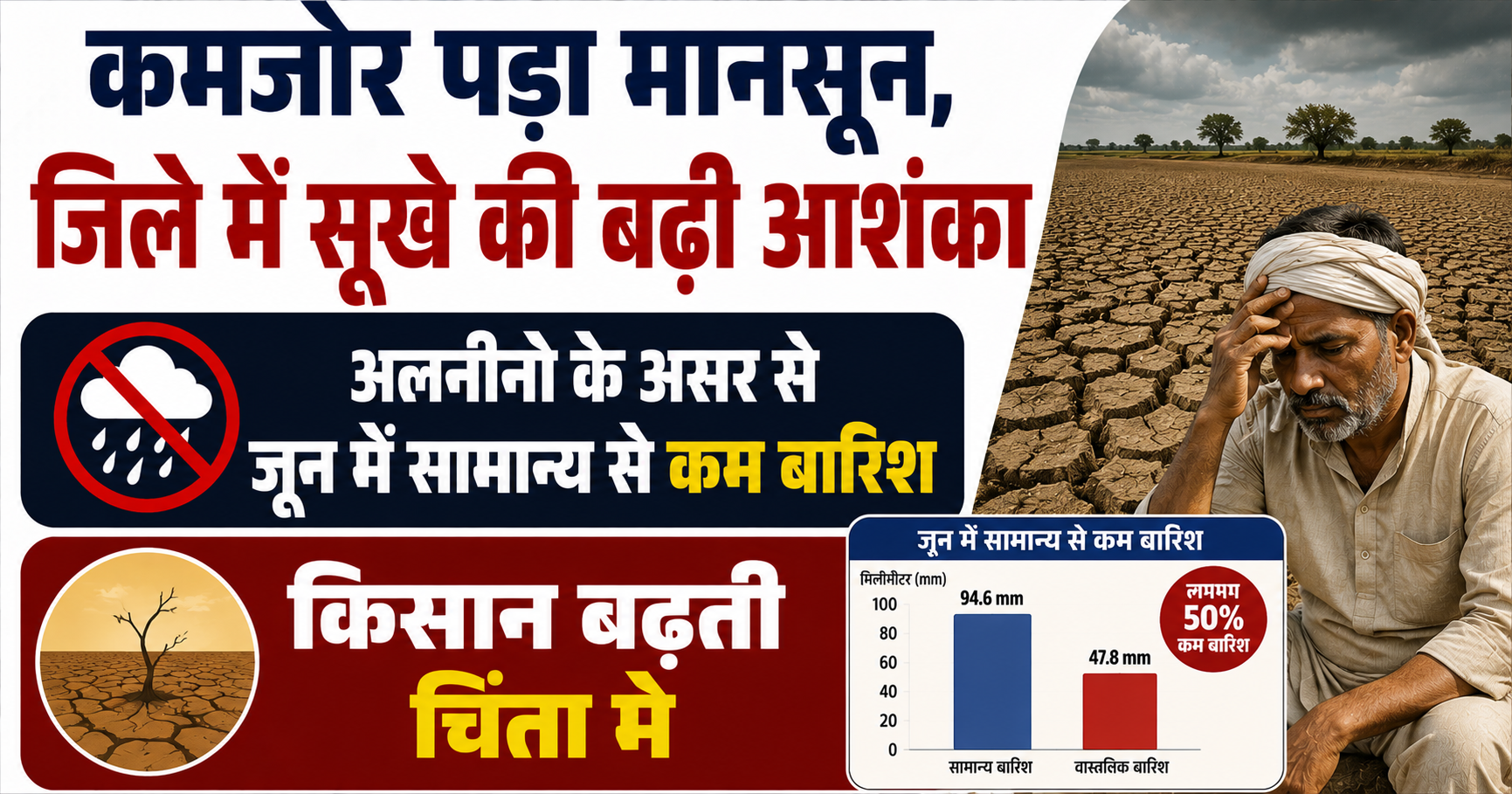
Weak Monsoon Raises Drought Concerns as Rainfall Remains Below Expectations; El Niño Impact Worries Farmers
Jagran Correspondent: The district is witnessing growing concerns over a possible drought this year as the southwest monsoon has failed to perform as expected during June. With rainfall remaining significantly below normal and zero rainfall recorded over the past two days, fears of a prolonged dry spell are increasing. Experts attribute the weak monsoon activity largely to the impact of El Niño, which has disrupted normal weather patterns and affected rainfall distribution across the region.
The lack of adequate rainfall has begun to impact agriculture, particularly paddy cultivation, as farmers struggle to find sufficient water for transplantation. Agricultural experts warn that if the situation continues, the sowing and production of Kharif crops could be seriously affected.
Monsoon Falls Short of Expectations in June
Normally, by the end of June, the district receives sufficient rainfall for farmers to begin paddy transplantation. This year, however, the monsoon has progressed much more slowly than expected.
Apart from a few light showers, most parts of the district have received very little rain, leaving agricultural fields without the moisture required for cultivation.
Adding to the concern, rainfall data has remained zero for the past two days, while rising temperatures and humid weather have made conditions uncomfortable for residents.
El Niño Weakens Monsoon Activity
According to meteorologists, El Niño has significantly influenced this year's monsoon.
The weather phenomenon alters sea surface temperatures and atmospheric circulation, often reducing the intensity of the Indian monsoon. As a result, many regions are experiencing below-normal rainfall.
Experts caution that if El Niño continues to affect weather patterns, the agricultural sector could face serious challenges in the coming weeks.
Farmers Grow Increasingly Concerned
Farmers across the district say that the crucial period for paddy transplantation is passing without adequate rainfall.
Many have already prepared nurseries for paddy seedlings, but the absence of sufficient water has prevented transplantation into the fields.
This has raised concerns about financial losses, as delays in cultivation may reduce crop yields and increase production costs.
In villages across the district, farmers continue to look toward the skies, hoping for substantial rainfall.
Kharif Crops May Be Affected
Besides paddy, crops such as maize, pulses, and oilseeds also depend heavily on timely monsoon rainfall.
If adequate rainfall does not occur in early July, sowing operations for these crops may be delayed, potentially affecting overall agricultural production and farmers' incomes.
Agricultural experts note that delayed planting often leads to reduced productivity and lower yields.
Water Sources Beginning to Decline
The shortage of rainfall is affecting more than just farming.
Water levels in ponds, village reservoirs, irrigation canals, and other local water bodies have started declining. If the dry spell continues, irrigation water may become increasingly scarce.
This could force farmers to rely on diesel-powered pumps and other artificial irrigation methods, significantly increasing cultivation costs.
Weather Department Closely Monitoring the Situation
The Meteorological Department is continuously monitoring the evolving weather conditions.
Officials say that while the monsoon has weakened, it has not withdrawn, and changes in weather conditions are still possible over the coming days.
However, they have advised farmers and residents to closely follow updated weather forecasts before making agricultural decisions.
Administration Keeping a Close Watch
The district administration has also begun reviewing the situation.
The Agriculture Department has been instructed to remain in contact with farmers and provide necessary technical guidance.
If rainfall deficiency persists, authorities may consider alternative agricultural strategies and possible relief measures.
Experts Advise Efficient Water Management
Agricultural experts have urged farmers to plan cultivation based on the latest weather forecasts.
Farmers with access to irrigation facilities have been advised to use available water efficiently and adopt water conservation techniques to maximize limited resources.
Such measures could help minimize losses if rainfall continues to remain below normal.
Rising Heat Affecting Daily Life
The prolonged absence of rain has also increased humidity and daytime temperatures across the district.
Both urban and rural residents are facing uncomfortable weather conditions, with many eagerly waiting for rainfall to bring relief from the heat.
Climate Change Adds to the Challenge
Experts believe that climate change is making weather patterns increasingly unpredictable.
Extreme rainfall events and prolonged dry spells are becoming more frequent, making agriculture more vulnerable to climatic variations.
They emphasize the need for climate-resilient farming practices, improved water management, and modern agricultural techniques to reduce future risks.
With below-normal rainfall during June, zero rainfall recorded over the past two days, and the impact of El Niño weakening the monsoon, concerns over a possible drought are growing across the district. Farmers, who depend heavily on monsoon rains for paddy transplantation and Kharif cultivation, are among the worst affected.
If substantial rainfall does not arrive soon, agricultural production, rural livelihoods, and water resources could face significant challenges. For now, farmers and residents alike remain hopeful that the monsoon will regain strength and provide the much-needed rainfall in the coming days.