
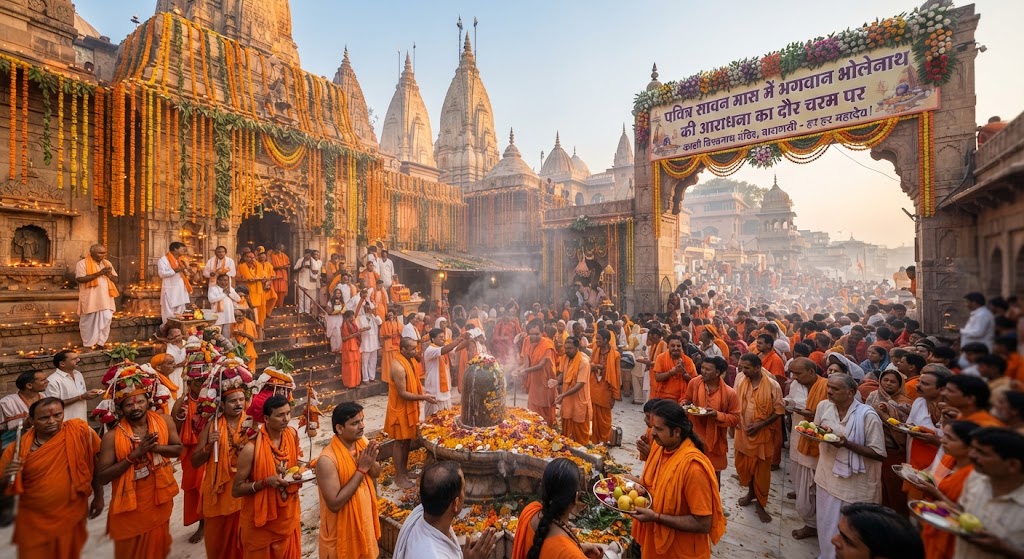
Worship of Lord Bhole Nath Peaks During the Holy Month of Sawan; Huge Demand for Bel Leaves and Fragrant Flowers, Devotees Flock to Sanatani Shops Decorated Outside Temples
Bhagalpur, Special Correspondent: As soon as the holy month of Sawan (Shravan)—so dear to Mahadev, the Lord of lords—commences, the entire Silk City Bhagalpur and its surrounding regions echo with chants of "Har Har Mahadev" and "Bam Bam Bhole." During this sacred month, devotees perform various rituals and prayers to appease Lord Shiva. Amidst this religious fervor, the market demand for Bel leaves (Bilpatra) and various types of fragrant flowers, which are considered most crucial for the worship and ablution of Lord Shiva, has skyrocketed. Shops adorned with flowers and Bel leaves outside the city's famous Budhanath Temple, Bhootnath Temple, Lord Agneyeshwar Nath Temple, and other shrines are lending a vibrant new color to the religious festivities and economy throughout the month.
Why Do Bel Leaves and Flowers Surge in Demand During Sawan?
According to Hindu religious beliefs and scriptures, the month of Shravan is most beloved by Lord Shiva. It is believed that to soothe the intense heat generated in Lord Shiva's body after consuming poison during the Samudra Manthan (churning of the ocean), the gods offered him cooling items.
The Glory of Bel Leaves: The Skanda Purana and Shiva Purana explicitly mention that Lord Shiva is immensely pleased simply by offering a three-petaled (tripad) unbroken Bel leaf. Bel leaves not only provide coolness to Lord Shiva but also symbolize the trigunatmaka consciousness and the destruction of a human's three sins (physical, verbal, and mental).
The Significance of Flowers: Datura, Ak (Madar) flowers, marigolds, roses, and kaner flowers are especially dear to Bholenath. Decorating Shiva with these natural and fragrant flowers during Sawan days is considered highly meritorious, creating a massive demand for them in the market.
Shops Decorated Outside Temples: A Major Employment Opportunity for Women and Small Traders
The scene outside Bhagalpur's prominent shrines on Mondays of Sawan and special dates is remarkable. Shops set up along temple pathways and main gates radiate special vibrancy during this season:
Attraction of Colorful Flowers and Leaves: Garlands of marigolds, Datura fruits, Madar flowers, lotus flowers, neatly arranged bundles of Bel leaves, and worship materials (bhang, datura, akshat, roli, sandalwood, and raw milk) are tastefully displayed at the shops.
Income for Local Small Vendors: Small flower vendors, farmers, and women coming from urban and rural areas earn a tidy sum during this month of Sawan by selling fresh Bel leaves and flowers plucked from their fields or gardens. Vendors state that while they engage in other odd jobs throughout the year, flower sales during these four weeks of Sawan provide financial support to their families.
Impact of Rising Demand and Inflation: Surge in Prices of Fresh Leaves and Flowers
Amidst this dynamics of demand and supply, prices of Bel leaves and flowers also witness an upward trend during Sawan:
Price of Bel Leaves: Bel leaves that are easily available or cost very little on normal days command good prices on every Monday of Sawan based on their purity and size. Unbroken Bel leaves with three leaflets, free from cuts or blemishes, are in highest demand.
Flower Prices: Prices of flower garlands and mixed worship kits increase on the first and second Mondays of Sawan, yet devotees' faith remains undiminished. Without any bargaining, devotees purchase the finest flowers and Bel leaves to offer to Mahadev.
Message of Environment and Nature Conservation
A positive aspect of this entire tradition is linked to the environment and nature. With the surging demand for Bel leaves and flowers during Sawan, people are also becoming increasingly aware of planting Bael trees (Aegle marmelos) and conserving flowering plants in their neighborhoods, gardens, and temple courtyards. Speakers and environmentalists believe that if the conservation of Bael trees is coupled with religious faith in this manner, it will further expand the footprint of this medicinal plant.
The shops of Bel leaves and flowers decorated outside Bhagalpur's temples are not merely centers of commerce; rather, they are living symbols of India's Sanatan culture, unwavering devotion, and dedication to nature. In this sacred breeze of Sawan, when an ordinary devotee devoutly offers a single Bel leaf and a Madar flower to Lord Shiva, the entire atmosphere becomes devotional. This demand and market vibrancy prove that even amidst the race of modernity, our ancient traditions remain deeply rooted and vibrantly alive in society today.


