
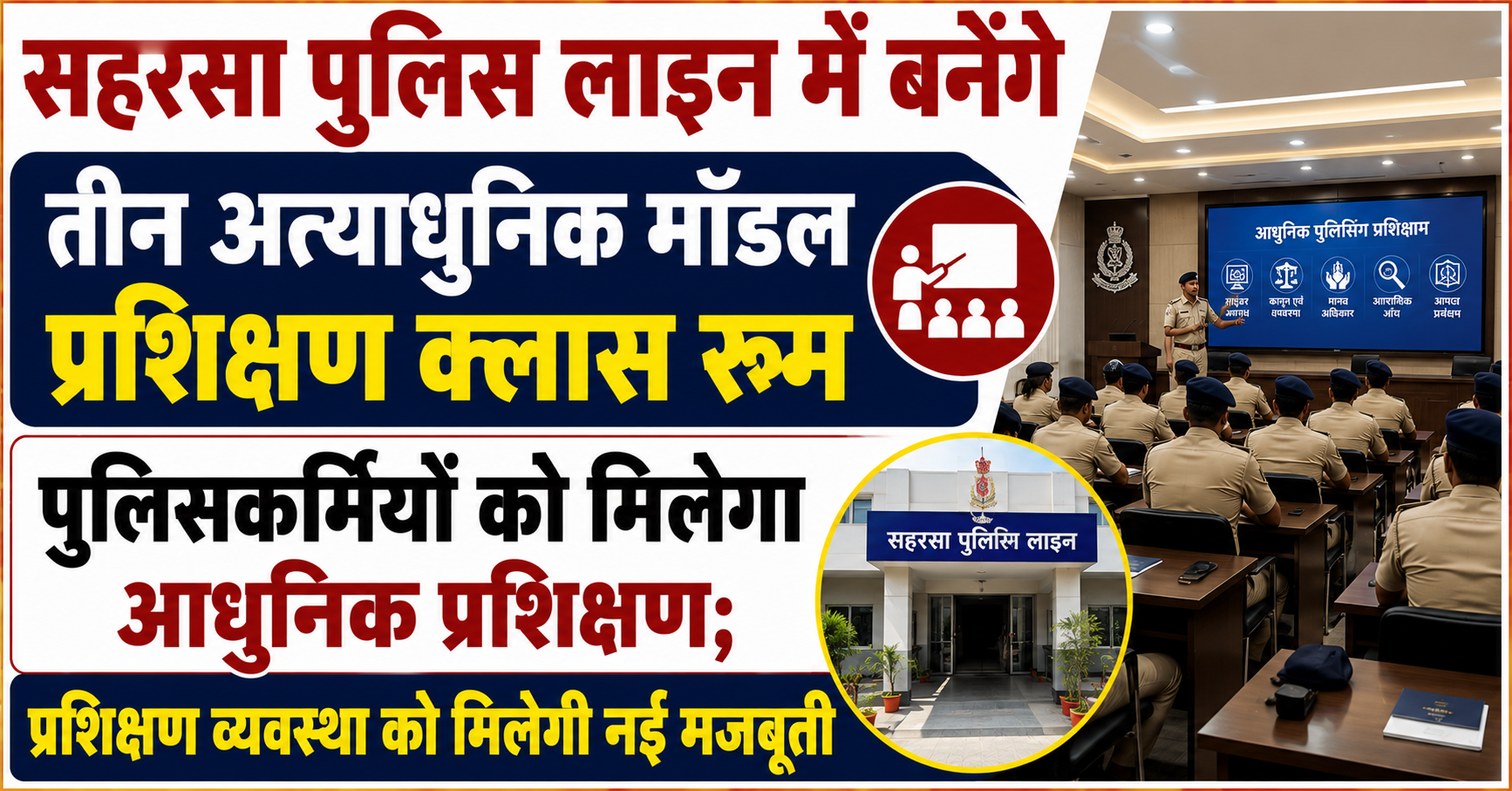
Three Modern Model Training Classrooms to Be Built at Saharsa Police Lines to Strengthen Police Training
Saharsa: In a significant step toward modernizing the Bihar Police and enhancing the professional capabilities of its personnel, three state-of-the-art model training classrooms will be constructed at the Saharsa Police Lines. Each classroom will have a seating capacity of 39 trainees, providing police personnel with a modern learning environment equipped to meet the evolving demands of contemporary policing. The initiative is expected to improve the quality of police training and strengthen the overall efficiency of the force.
According to police officials, the nature of law enforcement has changed rapidly in recent years. Crimes have become increasingly sophisticated and technology-driven, making traditional training methods insufficient. Modern policing now requires expertise in areas such as cybercrime investigation, digital evidence handling, forensic techniques, disaster management, crowd control, women's and child safety, human rights, community policing, and emergency response. The proposed training infrastructure has been planned with these emerging requirements in mind.
Under the project, three model classrooms, each accommodating 39 trainees, will be constructed with modern infrastructure and advanced training facilities. The classrooms will feature comfortable seating arrangements, high-quality furniture, proper lighting and ventilation, digital teaching aids, projectors, smart display systems, audio equipment, and other essential training resources. These facilities will enable trainers to deliver both theoretical and practical instruction more effectively.
Officials stated that the new classrooms will significantly enhance the quality of training programs conducted at the police lines. In addition to classroom lectures, trainees will benefit from case studies, digital presentations, video-based learning, interactive discussions, and practical demonstrations, allowing them to develop both technical knowledge and operational skills.
At present, several training programs are conducted with limited infrastructure, which often affects their effectiveness. Once the new classrooms become operational, a larger number of police personnel will be able to receive training simultaneously in a well-equipped environment. This will also help ensure that regular training sessions are conducted more systematically and efficiently.
Experts believe that continuous training plays a crucial role in maintaining an effective police force. As laws, technologies, and crime patterns continue to evolve, police personnel must regularly upgrade their knowledge and skills. High-quality training not only improves operational efficiency but also strengthens investigative capabilities and enhances public service delivery.
The proposed model classrooms will support specialized training in cyber security, digital forensics, criminal investigation, traffic management, VIP security, disaster response, crowd management, women's safety, child protection, human rights, and the handling of sensitive cases. Regular workshops on modern policing techniques and the use of advanced technology will also be organized.
Police officials believe that better training directly contributes to improved law and order. Well-trained officers are more capable of preventing crime, conducting professional investigations, responding effectively during emergencies, and building stronger relationships with the public. This, in turn, helps increase public confidence in the police force.
The construction project will be carried out in accordance with modern quality and safety standards. The buildings will include adequate lighting, safe electrical installations, fire safety measures, proper ventilation, and accessibility features for persons with disabilities. Concerned agencies have been instructed to complete the project within the prescribed timeframe while maintaining high construction standards.
Apart from routine police training, the new classrooms will also be used for departmental meetings, seminars, workshops, and specialized capacity-building programs. This will further strengthen the infrastructure of the Saharsa Police Lines and support the continuous professional development of police personnel.
Administrative officials said that the Bihar Government has been giving priority to police modernization by expanding training infrastructure and improving technical capabilities across the state. The construction of these model training classrooms in Saharsa is considered an important part of this broader modernization initiative.
Police authorities are confident that once the project is completed, the Saharsa Police Lines will emerge as a stronger training center for law enforcement personnel. Officers trained in these modern facilities will be better prepared to tackle emerging challenges and perform their duties with greater professionalism and efficiency.
Experts emphasize that the effectiveness of any police force depends not only on equipment and resources but also on the quality of its training. Regular, technology-oriented, and practical training enables police personnel to improve crime prevention, investigation, public interaction, and overall law enforcement capabilities.
Preparations for the construction of the three model training classrooms have already begun at the Saharsa Police Lines. Upon completion, the project is expected to significantly improve training standards, equip police personnel with modern skills, and strengthen the district's law enforcement system to meet the demands of contemporary policing.


