
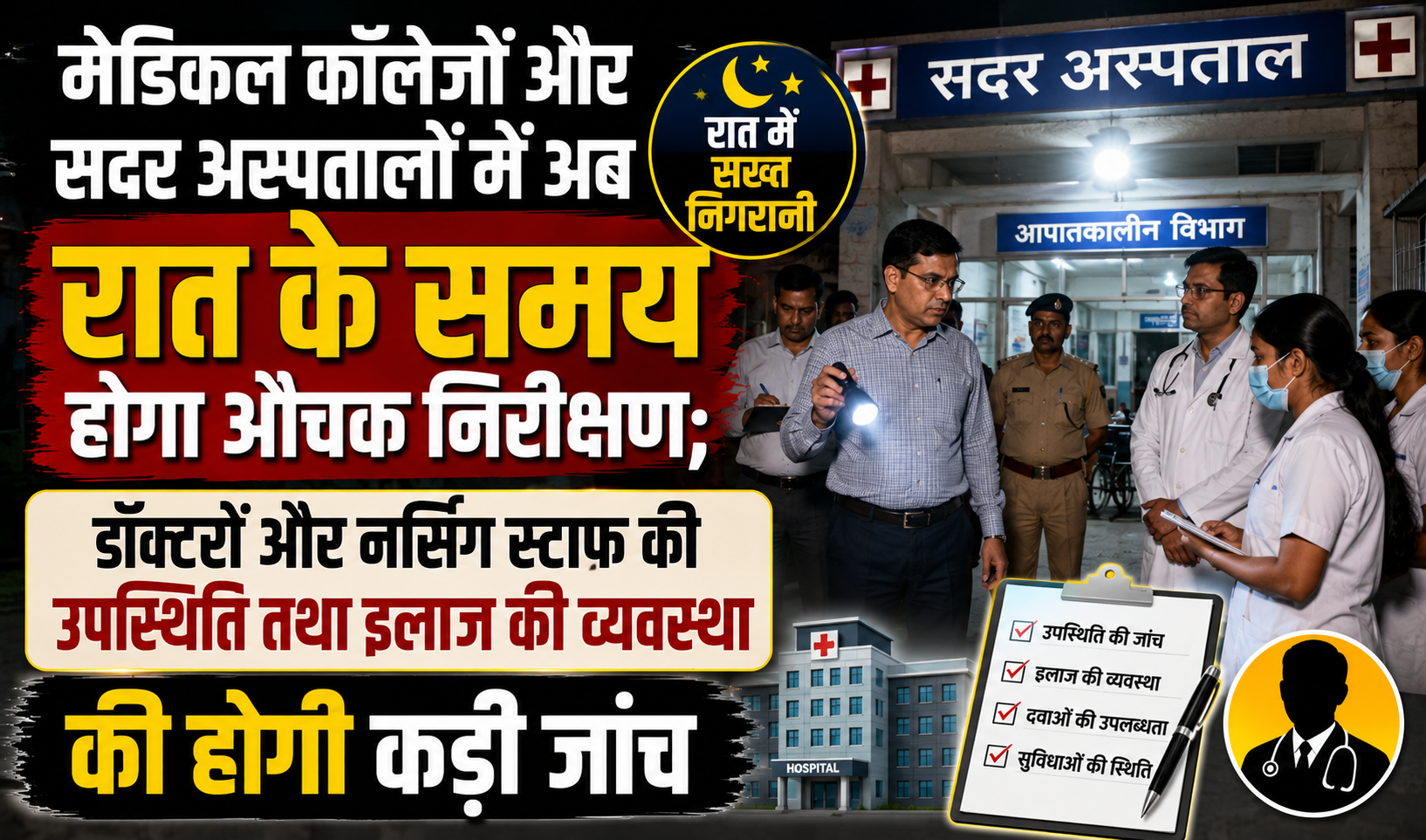
Quality of Patient Care and Attendance of Doctors and Nursing Staff to Be Checked
In a strong step toward making the healthcare system in Bihar robust, transparent, and accountable, the state government and the health department have made an official decision to conduct surprise night inspections of medical colleges and Sadar hospitals. This initiative aims to improve the quality of medical treatment in the state's hospitals and curb laxity among healthcare personnel during duty hours.
The primary objective of this surprise inspection campaign is to ensure that patients arriving at hospitals during nighttime emergencies receive timely and superior medical care. Under this drive, intensive checks will be carried out regarding the night duty attendance and presence of doctors, paramedical staff, and nursing staff. Additionally, assessments will be made concerning available patient treatment arrangements, the availability of medicines, and hospital sanitation. Let us analyze in detail this new and stringent decision by the state health department, its objectives, inspection procedures, and its long-term impacts on healthcare services in Bihar.
Main Objective of Surprise Inspections: Transparency and Improvement in Night Shifts
Frequent complaints had emerged that doctors remain absent from government hospitals at night, leaving patient care solely to junior doctors or interns, frequently denying critical patients timely treatment.
Checking Doctor and Nursing Staff Attendance: During these surprise inspections, it will be strictly verified whether doctors and nursing staff rostered for night duty are physically present in the hospital or not. Personnel found missing from duty will face immediate and strict departmental action.
Assessing Treatment Arrangements: Senior officials will directly monitor the actual state of medical services received by patients during nighttime hours across emergency wards, ICUs, labor rooms, and trauma centers.
Which Hospitals Will Be Under Special Surveillance?
The scope of this order by the state health department will encompass all major government medical institutions across Bihar.
Medical College Hospitals: All government medical colleges and hospitals located across Patna, Muzaffarpur, Gaya, Bhagalpur, Darbhanga, and other districts (such as SKMCH in Muzaffarpur) will fall under this radar, where thousands of patients arrive daily for treatment.
Sadar Hospitals: Inspection teams will also visit Sadar hospitals located at district headquarters during nighttime hours, ensuring that patients arriving from rural and remote areas receive better healthcare benefits.
Key Focus Points of Inspection: What Will Be Checked?
When health department officials or administrative teams arrive for surprise inspections at night, they will focus heavily on the following key points:
Attendance Register: Physical verification of all medical and non-medical staff deployed on night shifts will be conducted.
Availability of Medicines: Checks will verify whether life-saving drugs are readily available in emergency wards and pharmacies.
Cleanliness and Sanitation: The state of ward sanitation during nighttime hours will be evaluated.
Patient and Attendant Feedback: During inspections, officials will directly interact with patients and their attendants to gather information regarding hospital arrangements and the behavior of doctors.
Potential and Positive Impacts of This Step
This stringent decision by the health department has triggered widespread ripples across the department, with strong expectations of positive outcomes.
Curbing Negligence: Prompted by the fear of surprise inspections, doctors and healthcare staff will now foster a sense of fear and responsibility, ensuring they cannot shirk their duties.
Improvement in Healthcare Services: As the administrative apparatus activates, hospital operations will automatically get back on track, restoring the general public's complete trust in government hospitals.
This decision by the Bihar State Health Department to conduct surprise night inspections of medical colleges and Sadar hospitals serves as a revolutionary step toward establishing transparency and accountability in the healthcare sector. Rigorous checks on the attendance of doctors and nursing staff along with treatment setups will ensure that even the most marginalized citizens receive accessible and quality healthcare services. If implemented with strictness and consistency, this campaign will undoubtedly bring about an unprecedented and positive transformation in Bihar's public medical infrastructure.


