
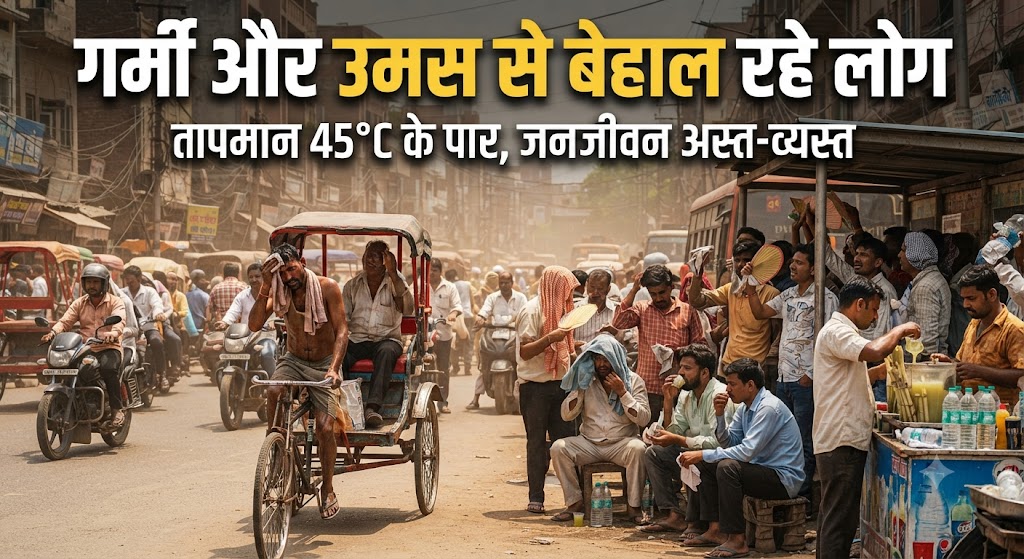
Power Outage Persists for Hours in Several Areas Including Naya Bazar PSS Due to Equipment Failure; People Distressed by Heat and Humidity
Bhagalpur (Correspondent): The state of power supply in the silk city of Bhagalpur is steadily worsening these days, severely impacting normal daily life. On Thursday, the game of hide-and-seek played by electricity across various areas of the city left people drenched in sweat. The situation became even more critical when power supply remained completely disrupted in several major parts, including the highly vital Court Area of the city, from 11:00 AM to 2:00 PM. This crisis arose due to a sudden technical failure and the breakdown of essential equipment at the Naya Bazar Power Sub-Station (PSS), causing work to come to a standstill across thousands of homes and offices.
Technical Failure at Naya Bazar PSS Emerges as the Primary Cause
According to information received, a major technical glitch suddenly developed in the grid or equipment falling under the Naya Bazar Power Sub-Station on Thursday morning:
Equipment Breakdown: According to electricity department engineers, due to technical damage in the sub-station's main equipment (transformer or breaker panel), power supply had to be suspended with immediate effect for safety reasons.
Time Taken for Maintenance Work: Following the breakdown, the department's technical team arrived at the spot and initiated repair work on a war footing. However, owing to the delicate nature of the equipment and the time consumed in repairs, residents had to face a power crisis extending beyond the scheduled timeframe (11:00 AM to 2:00 PM).
Court Area and Other Affected Zones: Government Offices and Courts Remain in Darkness for Three Hours
The disruption of electricity caused the greatest difficulty for judicial work and government offices:
Judicial Work Affected: The district court, lawyers' chambers, and various government offices are situated in the Court Area. The sudden outage during the afternoon caused severe hardships for judges, advocates, and litigants who had traveled from afar. With fans and coolers turned off amid humid heat, people appeared distressed.
Commercial Activities Halted: Due to a lack of power in Naya Bazar, Khanjarpur, and surrounding market areas, the work of small shopkeepers and business owners was severely impacted. Inverters had run out of backup, forcing operations to be managed through generators or alternative arrangements.
The Game of Hide-and-Seek in Other Parts of the City
Aside from Naya Bazar and Court Area, the power supply situation in other parts of the city remained unsatisfactory as well:
Rolling Blackouts and Tripping: Local residents allege that electricity has been intermittently cutting out without any prior notice for the past few days. At the slightest technical fault or increase in load, power to entire neighborhoods is cut off.
Web of Tree Branches and Dilapidated Wires: Experts believe that dilapidated power wires and tree branches colliding with lines during pre-monsoon or general winds serve as the primary cause of tripping, yet the department is taking no concrete steps in this regard.
Public Anger and the Department's Clarification
Outraged city residents facing repeated power cuts have raised questions regarding the functioning style of the electricity department:
Grief of Consumers: Ordinary citizens state that despite paying electricity bills regularly, they are unable to receive uninterrupted power. Power cuts during this hot season are also affecting the health of children and the elderly.
Department's Assurance: Meanwhile, the executive engineer and local officials of the electricity department clarified that an emergency shutdown had to be taken due to a sudden equipment failure. The team acted promptly to rectify the glitch and emphasized regular maintenance to prevent such issues in the future.
Thursday's incident in Bhagalpur—involving equipment failure at the Naya Bazar PSS and hours of power disruption across various areas including the Court Area—proves that the city's electrical infrastructure remains extremely weak and incapable of withstanding modern loads. Unless the department replaces old machinery with advanced technology and implements a robust grid system, the general public will continue to face such hardships. Swift and concrete action at the administrative level is urgently required in this direction.


