
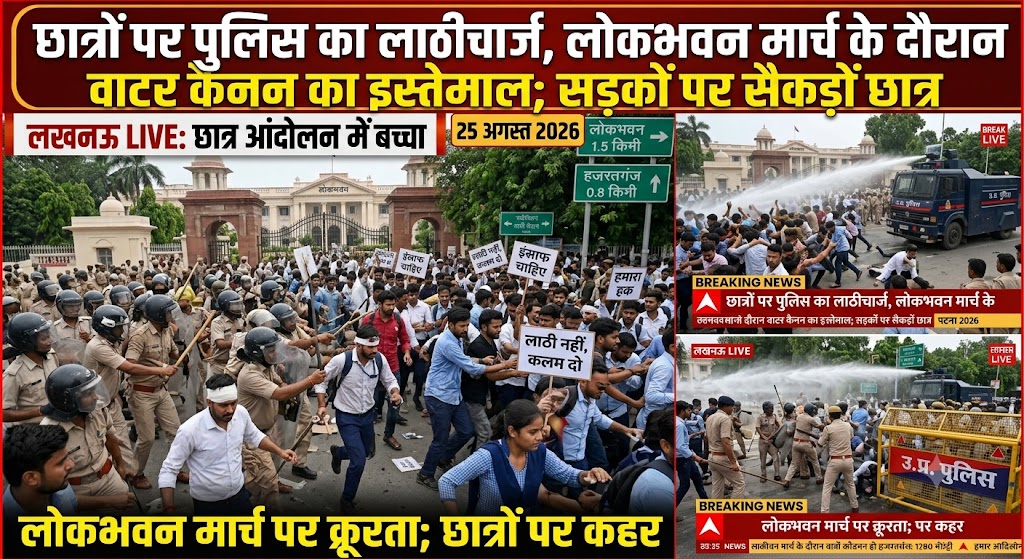
Police Lathi-Charge Students, Water Cannon Used During March Toward Lok Bhavan; Hundreds of Students on Streets
Patna, August 25: The situation became tense in Bihar’s capital Patna on Tuesday amid a student protest. Hundreds of students protesting over demands related to teacher recruitment and employment took to the streets and attempted to march toward Lok Bhavan. Tension reportedly developed between the police and protesters when authorities tried to stop the march. Police used water cannons to prevent the protesters from moving forward, followed by reports of a lathi-charge.
With a large number of students present on the roads, the administration faced a challenge in maintaining law and order and managing traffic in several parts of Patna. Police deployment was increased, while senior officials, including the District Magistrate (DM) and Senior Superintendent of Police (SSP), monitored the situation.
Students March Toward Lok Bhavan
Students have been protesting in Patna over teacher recruitment and employment-related issues. On Tuesday, the protesters decided to march toward Lok Bhavan to press their demands. Large groups of students gathered and began moving along the roads.
The protesters said they wanted to communicate their demands directly to the government. They raised slogans concerning recruitment reforms, increased employment opportunities and various issues related to competitive examinations.
As the crowd grew, the administration strengthened security arrangements. Police erected barricades and appealed to protesters to remain within the designated area.
Police Use Water Cannon
When the students attempted to move toward Lok Bhavan, police tried to stop them. The protesters, however, continued to insist on moving forward. Police subsequently used water cannons to push the crowd back.
The strong water jets reportedly created a chaotic situation among the protesters. Despite the action, several students remained at the site and continued raising slogans over their demands.
Water cannons are generally used by authorities as a crowd-control measure to push protesters back without direct physical force. In this case too, police used them to prevent protesters from moving beyond the designated route.
Reports of Lathi-Charge
Following the use of water cannons, the situation reportedly became more tense. There were also reports of a police lathi-charge while authorities attempted to disperse the protesters.
The reported lathi-charge increased anger among students at the protest site. Some protesters objected to the police action and said they had been demonstrating peacefully over their demands.
At the same time, police and the administration had the responsibility of controlling the crowd and preventing any untoward incident. Officials attempted to keep the situation under control during the operation.
Hundreds of Students on the Streets
Hundreds of students were reportedly present on Patna’s streets on Tuesday, making the situation particularly sensitive. The large gathering also created the possibility of disruption to traffic movement.
Students gathered in different groups and attempted to move forward while raising slogans. Police deployed additional personnel and used barricades to prevent the protesters from proceeding toward Lok Bhavan.
The administration attempted to keep the protest within the designated area and prevent the crowd from advancing along routes leading toward Lok Bhavan.
DM and SSP Monitor Situation
Given the seriousness of the situation, the Patna District Magistrate and Senior Superintendent of Police, along with other senior officials, were present at the location or continuously monitored developments.
Senior officials reviewed police deployment and security arrangements. Their objective was to maintain law and order while minimizing inconvenience to ordinary citizens.
The situation presented an additional challenge because the protest was taking place in an important area of the capital. Prolonged road blockages or large gatherings in such locations can affect the movement of the general public.
Movement Continues Over Students’ Demands
The protesters’ demands are focused on teacher recruitment and employment-related issues. The students want the government to make the recruitment process more transparent and provide adequate employment opportunities for qualified young people.
The candidates say they have been preparing for competitive examinations for a long time. Delays in recruitment or uncertainty regarding rules have increased their concerns about their future, they said.
The students have urged the government to hold discussions with them and take a clear decision on their demands.
Protesters Demand Dialogue With Government
The protesting students said they want to resolve their concerns through dialogue with the government. They believe discussions between officials and representatives of the students could help resolve several issues.
The protesters alleged that despite repeated demonstrations, their concerns have not received adequate attention. They said this was why they were forced to take their protest onto the streets.
The protesters maintained that their objective was not to inconvenience ordinary citizens but to ensure that their demands reached the government.
Tension Between Police and Students
The main reason for the tension during the march toward Lok Bhavan was the attempt to prevent the students from proceeding further. Police had erected barricades as part of security arrangements, while the protesters wanted to continue their march.
When the standoff continued, police first used water cannons. Reports of a lathi-charge followed.
In such situations, it is important to bring the situation under control as quickly as possible and prevent any violent incident. The administration’s responsibility includes maintaining law and order while also ensuring the safety of protesters and members of the public.
Traffic Movement Also Affected
The presence of hundreds of students on the roads affected traffic movement in parts of Patna. The possibility of slow-moving traffic and congestion on major routes required additional arrangements by the administration.
Police deployment was increased around the protest site. Officials attempted to manage traffic through alternative routes and control the crowd.
Maintaining normal traffic flow during a major protest is an important challenge for the administration in any capital city. Patna witnessed a similar situation on Tuesday.
What Happens to the Protest Next?
Following the police action, the major question now is how the student movement will develop. If the government begins discussions with the students or announces a clear decision on their demands, the protest could ease.
However, if the protesters believe that no concrete steps are being taken, they may decide to continue or intensify their movement.
Attention is now focused on the next strategy of student organizations and protesters. The administration may also maintain heightened security arrangements in anticipation of further demonstrations.
All Eyes on Government’s Decision
Tuesday’s protest in Patna highlights growing concerns among students regarding teacher recruitment and employment. The protesters say they are worried about their future and want the government to resolve issues related to the recruitment process.
Following the reported police action, the situation has become more serious. Dialogue with the students and the government’s position on their demands will now be important.
For now, the administration is monitoring the situation after hundreds of students gathered on Patna’s streets and police used water cannons, followed by reports of a lathi-charge. Police personnel remain deployed under the supervision of senior officials, including the DM and SSP.
The situation in the coming hours will depend largely on discussions between the government and students and the protesters’ next course of action. For now, the students continue to demonstrate and are urging the government to take an early decision on their demands.


