
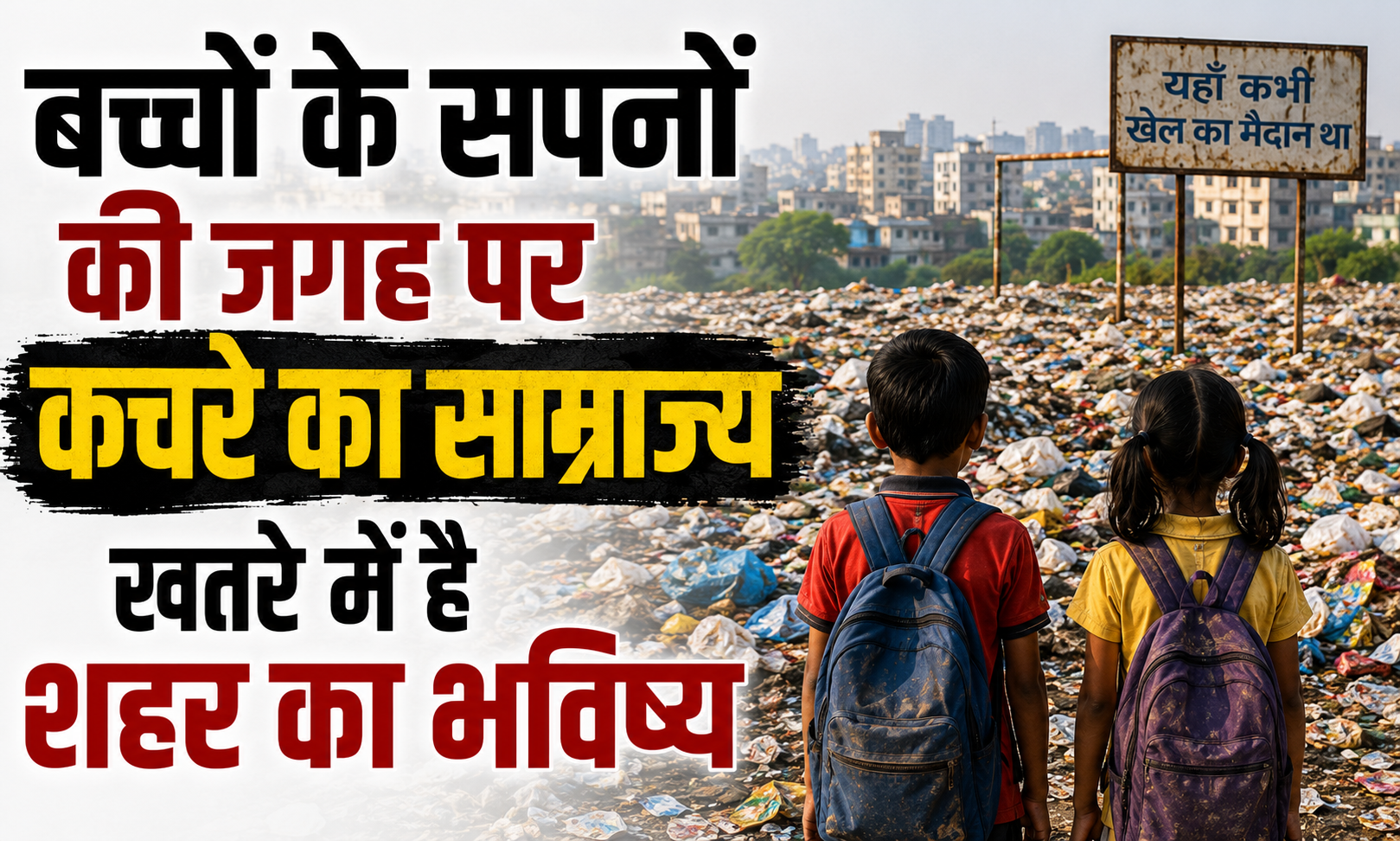
Playgrounds or Trash Cans Childhood Lost in the Rush of Development, Playgrounds Turned into Dumping Yards
The story of any city's development begins with its playgrounds—spaces where childhood flourishes, where future athletes are born, and where the foundation of a community is strengthened. However, the current reality in many urban areas, including Bihar, is deeply disturbing. In places where the laughter of children echoed until yesterday, there are now mountains of trash. The conversion of playgrounds into "dumping yards" is not just a matter of sanitation; it is a major assault on the childhood and health of the coming generation.
The Sacrifice of Childhood and Administrative Apathy
In the rush of urban expansion, the administration began encroaching upon lands reserved for children for decades. Local residents recount that, initially, a small dustbin was placed in the name of cleanliness. Slowly, that dustbin turned into a small waste collection center, and today, it has transformed into a massive landfill (dumping yard).
The tale of this degradation is not limited to one neighborhood. Garbage, plastic bags, rotting food, and construction debris have replaced the playgrounds. The soil where children once learned to walk is now too filthy to even step on.
The 'Invisible' Danger Looming Over Health
The presence of a dumping yard in a playground is not a minor administrative lapse; it is a major public health crisis. Doctors describe this as "slow poison":
The Poison of Air Pollution: Garbage heaps often contain plastic and other toxic materials. The smoke released from burning this waste is filled with carcinogenic chemicals. Children living in nearby houses are struggling with asthma, allergies, and chronic respiratory diseases.
A Breeding Ground for Infectious Diseases: Mosquitoes and flies breeding on rotting waste are responsible for diseases like dengue, malaria, and chikungunya. This waste attracts rats and stray animals, which carry deadly diseases like cholera and leptospirosis directly into children's homes.
Depletion of Groundwater: The toxic liquid (leachate) seeping into the ground from the trash is poisoning nearby wells and borewells. This is creating long-term health complications for children.
Social and Psychological Impact
Childhood is not just about school and studies. The loss of playgrounds is hindering the development of children's social skills. Today's children are forced into a "digital prison" because, when they step outside, they either fear traffic or the filth of the dumping yard. Children who were once physically active are now falling prey to obesity and mental stress (depression). These playgrounds, which were once centers of social interaction, have become sources of isolation and illness.
Questioning Administrative Accountability
Often, when local citizens complain to officials, they are dismissed with excuses about "lack of space." The question remains: if these lands were marked for sports in the town planning, how were they allocated for waste management?
Under the 'Swachh Bharat' mission, the government talks about door-to-door waste collection, but no one knows where the disposal is happening. The rule that dumping yards should be built far from the city using scientific methods exists only on paper. On the ground, vacant playgrounds have become the easiest "dumping spots" for municipal bodies.
The Need for Concrete Solutions
To overcome this crisis, it is time for society and the government to stand together:
Segregation at Source: Municipal bodies must ensure that waste is collected separately (wet and dry) from every household.
Scientific Landfill Sites: Instead of residential areas and playgrounds, waste should be disposed of at scientific landfill sites far from the city, where it can be converted into manure or energy.
Revival of Playgrounds: The local administration should identify these playgrounds, make them "garbage-free," and restore facilities for children.
Public Participation: Resident Welfare Associations (RWAs) and neighborhood committees must take charge of monitoring these grounds. Strict fines and protests are necessary wherever garbage is being dumped.
What Legacy Are We Leaving Behind?
Playgrounds are not just pieces of empty land; they are the foundation of the health, culture, and future of the next generation. If we are handing over a generation a legacy of trash heaps instead of playgrounds, we are building a sickly and mentally weak society.
It is time to reclaim these grounds. The administration must change its priorities. Remember, a society that steals its children's childhood to build mountains of trash can never progress sustainably. We must clear these heaps of garbage so that the games and laughter of children can return.


