


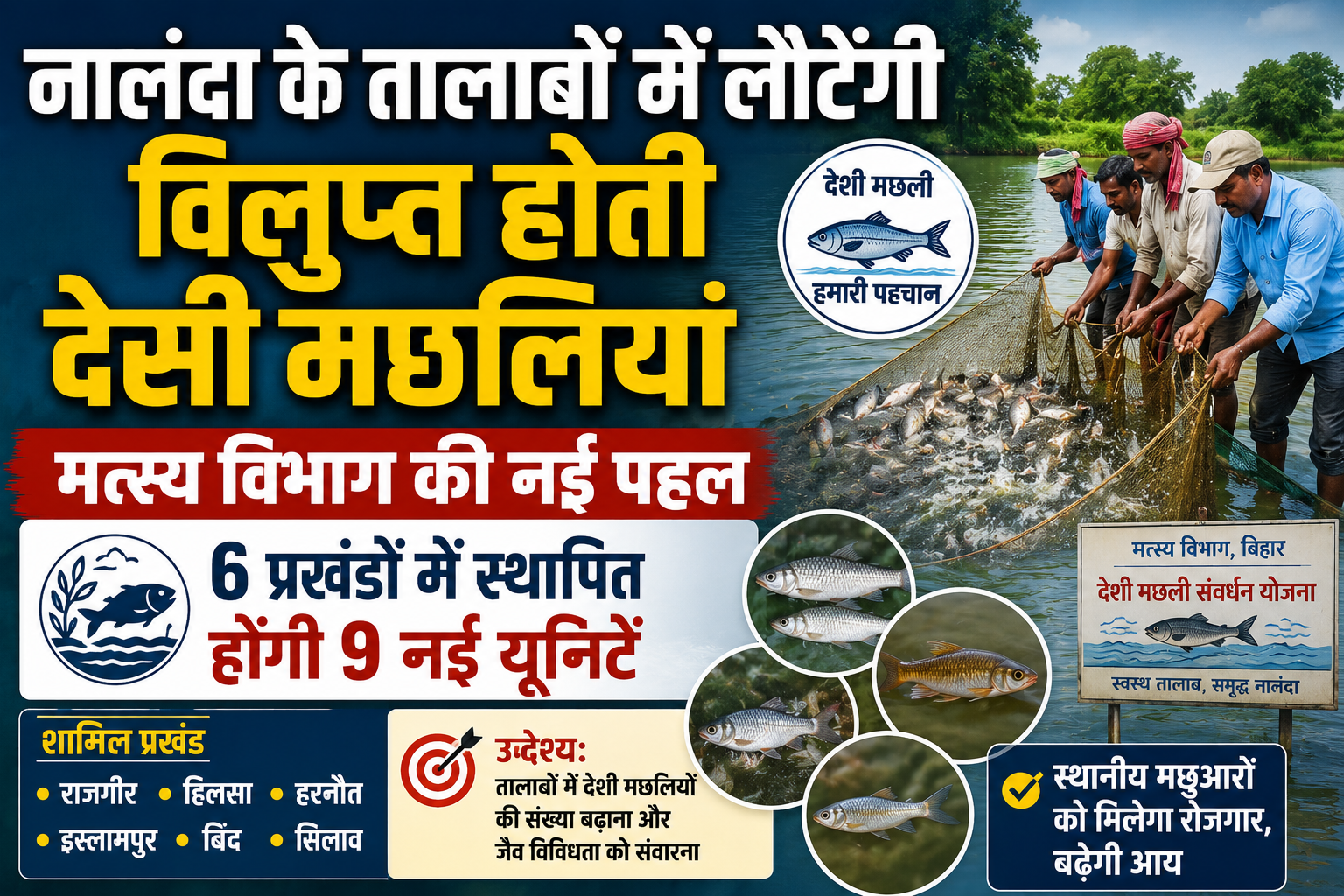
Nalanda to Revive Native Fish Species in Village Ponds; Fisheries Department to Establish Nine New Units Across Six Blocks
Bihar Sharif: In a significant initiative to conserve native fish species that are gradually disappearing from ponds and water bodies in Nalanda district, the Fisheries Department has launched a new program aimed at promoting sustainable aquaculture. The department has decided to encourage the scientific farming of minor carp, freshwater prawns (shrimp), and catfish. As part of the initiative, nine new fish production units will be established across six blocks of the district. Selected farmers will receive technical training, scientific guidance, and institutional support to help revive indigenous fish species while increasing their income through modern aquaculture practices.
Officials from the Fisheries Department said the initiative is not only intended to increase fish production but also to conserve biodiversity, restore native aquatic species, and strengthen the rural economy.
Major Step Toward Conserving Indigenous Fish
Over the past several years, the population of many traditional native fish species in ponds and natural water bodies has declined significantly. Experts attribute this decline to environmental changes, water pollution, unscientific fish farming practices, and the increasing dominance of non-native species.
Recognizing these challenges, the Fisheries Department has designed a conservation strategy aimed at restoring native fish populations while maintaining ecological balance in local water bodies.
Nine New Units to Be Set Up in Six Blocks
During the first phase of the program, six blocks in Nalanda district have been selected for the establishment of nine new aquaculture units.
These units will focus on the scientific cultivation of minor carp, freshwater prawns, and catfish. Selected farmers will also receive specialized training in pond preparation, seed selection, water quality management, feed management, disease prevention, and scientific fish farming techniques.
Farmers to Receive Training and Technical Support
The Fisheries Department plans to provide farmers with not only financial assistance but also comprehensive technical training.
Experts will educate participants on pond management, maintaining water quality, proper feeding practices, disease control, and the use of modern aquaculture technologies to maximize production.
In addition, farmers will receive ongoing technical guidance and advisory support from fisheries experts throughout the implementation of the project.
Special Focus on Minor Carp, Prawns, and Catfish
The program will primarily promote the farming of minor carp, freshwater prawns (shrimp), and catfish.
According to fisheries experts, these species enjoy strong market demand and can generate higher returns for farmers when cultivated using scientific methods.
At the same time, encouraging these species will contribute to the conservation of local biodiversity and strengthen the aquatic ecosystem.
Boost for the Rural Economy
Fish farming has become an increasingly important source of livelihood in rural areas. The department believes that this initiative will not only increase farmers' incomes but also create new employment opportunities across the district.
Higher fish production is expected to improve supply in local markets while benefiting related sectors such as transportation, processing, storage, and marketing.
Contribution to Nutritional Security
Experts point out that fish is an excellent source of high-quality protein and essential nutrients. Increasing local production will improve access to fresh and nutritious fish for consumers.
The initiative is expected to strengthen nutritional security, particularly in rural communities where access to animal protein is often limited.
Promotion of Scientific Aquaculture
Through this program, the Fisheries Department aims to encourage farmers to adopt scientific fish farming methods alongside traditional practices.
Regular monitoring of water quality, balanced feeding, disease management, improved fish seed, and modern production techniques are expected to significantly enhance productivity.
Environmental Conservation Also a Priority
Officials stated that maintaining ecological balance will be a key focus during the implementation of the project.
Farmers will receive guidelines on pond conservation, maintaining water quality, and protecting local biodiversity to ensure sustainable aquaculture practices.
Experts believe that restoring native fish species will help preserve the health and balance of local aquatic ecosystems.
Farmers to Benefit from Government Schemes
Selected beneficiaries will also receive assistance available under various government fisheries development programs, including training, subsidies, and technical support.
The Fisheries Department will regularly monitor the implementation of the project to ensure that benefits reach eligible farmers and that the program achieves its intended objectives.
Experts Welcome the Initiative
Fisheries experts have described the program as a positive step toward increasing fish production in Nalanda.
They emphasized that conserving indigenous fish species is important not only for economic development but also for maintaining biodiversity and protecting the environment.
Enthusiasm Among Farmers
The announcement has generated considerable enthusiasm among fish farmers across the district. Many have expressed interest in expanding their aquaculture activities by adopting modern farming techniques.
Farmers believe that access to quality fish seed, scientific training, technical assistance, and better market linkages could significantly improve their livelihoods and make fish farming a more profitable enterprise.
The Fisheries Department's initiative to revive native fish species and promote scientific aquaculture in Nalanda represents an important step toward biodiversity conservation and rural economic development. The establishment of nine new aquaculture units across six blocks, along with the promotion of minor carp, freshwater prawns, and catfish farming, is expected to increase fish production while providing farmers with modern training and technical support.
The initiative is likely to improve farmers' incomes, create employment opportunities, strengthen nutritional security, and restore indigenous aquatic biodiversity. Experts believe that if implemented successfully, Nalanda could once again become known for its rich native fish resources and serve as a model for similar conservation and aquaculture programs in other districts of Bihar.