
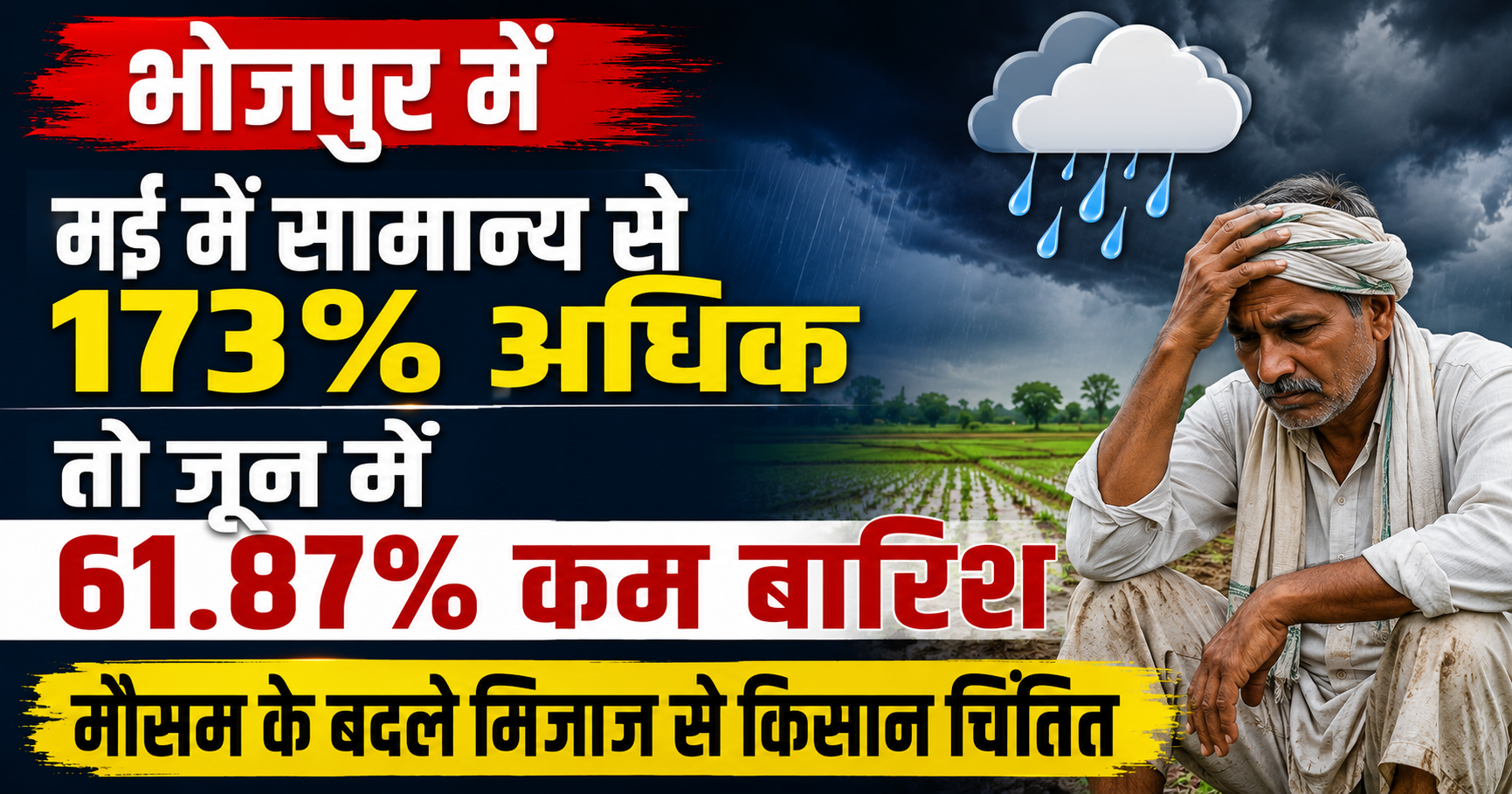
May Recorded 173% Above-Normal Rainfall, June Saw 61.87% Rain Deficit; Farmers Concerned Over Changing Weather Pattern
Ara: The uneven rainfall pattern in Bhojpur district this year has become a major concern for farmers during the early monsoon season. While 49.70 mm of rainfall was recorded in May, which was 173% above the normal level, June received only 41.44 mm of rainfall, 61.87% below the seasonal average. The sharp contrast between the two months has disrupted agricultural activities and left farmers anxiously waiting for consistent monsoon showers.
Agricultural experts say the significant rainfall deficit in June has directly affected paddy transplantation, sowing of Kharif crops, and soil moisture levels. If adequate rainfall does not occur in the coming days, farmers may be forced to depend on irrigation, increasing the cost of cultivation.
May Received Much Higher Than Normal Rainfall
According to official weather data, Bhojpur district recorded 49.70 mm of rainfall in May, which was 173% higher than the normal average for the month.
The above-normal rainfall had raised hopes among farmers that the monsoon season would also remain favorable. Many had already begun land preparation and other farming activities in anticipation of timely rains.
However, those expectations were dampened by the poor rainfall recorded in June.
June Witnessed a Significant Rainfall Deficit
In June, the district received only 41.44 mm of rainfall, far below the normal level for the month.
According to the Meteorological Department, the rainfall was 61.87% below normal, creating concerns among farmers as the monsoon season began.
The shortage of rainfall has reduced soil moisture in many areas, delaying paddy nursery management and transplantation activities.
Farmers Express Growing Concern
Farmers across the district say their fields remain dry due to the lack of rainfall in June.
Many who had already prepared paddy nurseries are now waiting for sufficient water before beginning transplantation. Others fear they may have to rely on diesel pumps and other irrigation facilities if the rains do not improve soon.
They believe that additional irrigation expenses will significantly increase the cost of farming.
Paddy Cultivation Affected
Paddy is the most important Kharif crop in Bhojpur district, and successful transplantation depends heavily on adequate rainfall and sufficient water in the fields.
Due to the rainfall deficit in June, transplantation has been delayed in several areas. Agricultural experts warn that prolonged delays could negatively affect crop growth and overall production.
Irrigation Costs May Rise
If rainfall remains below normal, farmers may have no option but to use private irrigation systems.
The use of diesel-powered pumps, electric motors, and other irrigation equipment will increase production costs, placing an additional financial burden on small and marginal farmers.
Weather Department Monitoring the Situation
The Meteorological Department is continuously monitoring rainfall and weather conditions across the district.
Officials say fluctuations in monsoon activity are not unusual, but if the rainfall deficit continues for an extended period, agriculture could face serious challenges.
Farmers have been advised to stay updated with weather forecasts and follow recommendations issued by the Agriculture Department.
Agriculture Department Remains Alert
The Agriculture Department is also closely monitoring the rainfall situation.
Officials said that if the dry spell continues, farmers will be provided guidance on alternative irrigation methods, water conservation techniques, and scientific farming practices.
Technical assistance will also be offered to help farmers manage their crops under changing weather conditions.
Concerns Over Kharif Crop Production
Experts believe that if sufficient rainfall does not occur during the first half of July, Kharif crop production could be adversely affected.
Besides paddy, crops such as maize, pulses, and other seasonal crops also depend heavily on timely rainfall. Therefore, the coming weeks are considered crucial for agriculture in the district.
Farmers Hope for Active Monsoon
Most farmers are now hoping that the monsoon will become more active in July.
They believe that timely rainfall would allow agricultural operations to return to normal and ensure adequate water availability for paddy transplantation and other farming activities.
Importance of Water Conservation
Agricultural experts have also emphasized the need to promote rainwater harvesting, farm ponds, micro-irrigation systems, and modern agricultural practices.
They believe these measures can reduce the adverse impact of irregular rainfall and help farmers cope with changing climatic conditions in the future.
The contrasting rainfall pattern in Bhojpur district—173% above-normal rainfall in May followed by a 61.87% deficit in June—highlights the increasing unpredictability of weather conditions. The shortage of rainfall during June has affected paddy transplantation and other Kharif farming activities, causing concern among farmers. While hopes remain that the monsoon will strengthen in the coming weeks, continued rainfall deficiency could lead to higher irrigation costs and lower agricultural productivity, making the upcoming weeks critical for the district's farming community.


