
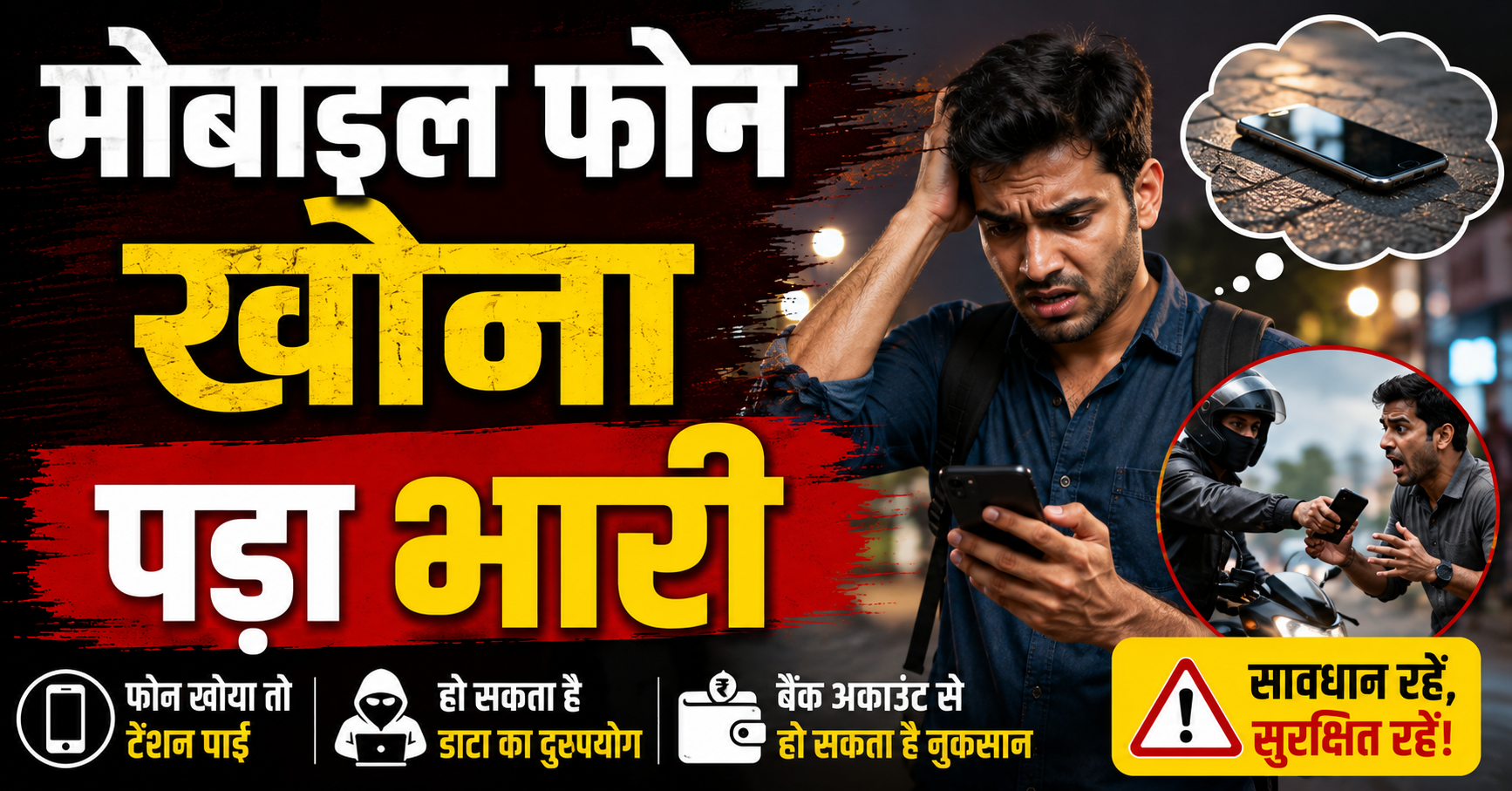
Losing a Mobile Phone Proves Costly; Failing to Block the Number Costs the Victim Dearly, Crafty Thief Uses the Phone to Clean Out Thousands of Rupees from Bank Account and Procures a New ATM Card
Bhagalpur, Special Correspondent: In today's digital era, smartphones have become an essential part of our lives, but a startling instance from Bhagalpur district highlights just how costly even a minor lapse in vigilance can be. Often, people whose mobile phones are lost or stolen limit their actions to getting a new SIM card issued or lodging a general missing-person report (Sanha) at a police station, failing to take the security of their bank accounts seriously. In one such sensational incident, a victim suffered heavy financial losses as a direct consequence of failing to block their mobile number and secure their bank accounts in a timely manner. Exploiting the mobile phone, a crafty thief not only looted a large sum from the victim's bank account but also managed to get a new ATM card issued in their name.
The incident pertains to the Bhagalpur region, where a common citizen's mobile phone suddenly went missing. Initially treating it as a routine mishap, the victim searched around for the phone, and upon failing to find it, decided to lodge a standard complaint with the police:
Negligence and Procrastination: Immediately after losing the phone, the victim neither contacted their telecom service provider (SIM operator) to get the number blocked nor immediately sealed or put a hold on their bank accounts.
Target of Cyber Criminals: In the modern age, losing a phone is akin to handing a treasure trove over to criminals. This phone belonging to the victim fell into the hands of a crafty cyber thief or gang, who possessed the technical know-how to breach banking systems by exploiting the SIM card and data present inside the mobile device.
The Crook Initiates the Act Upon Getting the Phone: How the Fraud Was Executed
Once the smartphone came into the thief's possession, they first figured out a way to bypass the phone's password or lock, or to insert the SIM card into another device for use:
Misuse of One-Time Passwords (OTPs): Nowadays, the majority of bank accounts are linked to mobile numbers, and the entire framework of UPI or net banking relies on the One-Time Password (OTP) received on that specific number. Utilizing the victim's mobile number, the astute thief gained access to various financial apps and net banking portals.
Looting Money from the Account: With great cunning, the accused transferred money from the victim's bank account to other accounts and began draining the account via online shopping or transactions. By the time the victim received notifications from the bank, it was already too late.
Things Took a Worse Turn When a New ATM Card Was Issued
The most alarming and shocking aspect of this incident was that the thief did not limit themselves to online breaches; they also committed financial fraud physically in collusion with the banking system:
Acquiring a New ATM Card: When an option to issue a new debit/ATM card is selected on a mobile number registered within the banking system, the corresponding OTP arrives on that exact number—which was now in the possession of the thief. Exploiting the OTP received on that number, the accused got a new debit/ATM card reissued by the bank in the victim's name.
Cash Withdrawals: The crook not only looted the account through digital channels but also withdrew cash from various ATM booths using the newly issued ATM card. When the victim discovered this upon receiving a bank statement, the ground beneath their feet slipped away.
Complaint Lodged with Police and Cyber Cell, Investigation Underway
Realizing the extent of the scam, the victim immediately registered a written complaint at the Bhagalpur cyber police station and the local police station:
Technical Investigation by the Cyber Cell: Taking the matter seriously, the police cyber cell began tracking down the phone number, IP address, and details of the ATM card used to make withdrawals or purchases. Police suspect this could be the handiwork of an organized cyber-criminal syndicate targeting individuals through stolen mobile phones.
Questions Raised Over Bank Roles: Locally, discussions have also flared up regarding whether bank management should exercise greater vigilance in verifying customers when issuing ATM cards. However, preliminarily, this incident appears entirely to be the consequence of losing control over a mobile number and failing to block the SIM in time.
Experts' Advice: What Immediate Steps to Take if You Lose Your Phone
This incident has once again served as a major warning for ordinary citizens. Cyber experts state that if your mobile phone is ever lost or stolen, you should keep the following key points in mind:
Block the SIM Immediately: Call your service provider (such as Jio, Airtel, Vi, etc.) and get your mobile number's SIM card blocked first so that no OTPs or calls can reach the thief.
Put Banking Services on Hold: Contact the customer care of your respective banks to immediately block or temporarily freeze net banking and UPI services operated via your mobile number.
File an FIR or General Report (Sanha) at the Police Station: Registering a complaint with the police ensures you remain legally protected if any illegal activity (such as cybercrime or fraud) is carried out using that number or phone.
Utilize the CEIR Portal: Visit the Ministry of Communications, Government of India's 'CEIR' (Central Equipment Identity Register) portal to block the IMEI number of your lost mobile, preventing that phone from ever being used again on any network across the country.
This incident from Bhagalpur stands as a living example of how costly even a slight lapse in vigilance can be in the digital age. Losing a phone is not merely the loss of hardware or a gadget; it rings alarm bells regarding the security of your entire financial and personal data. Only through timely awareness and precautionary steps can the nefarious designs of such crafty thieves and cyber fraudsters be thwarted.


