
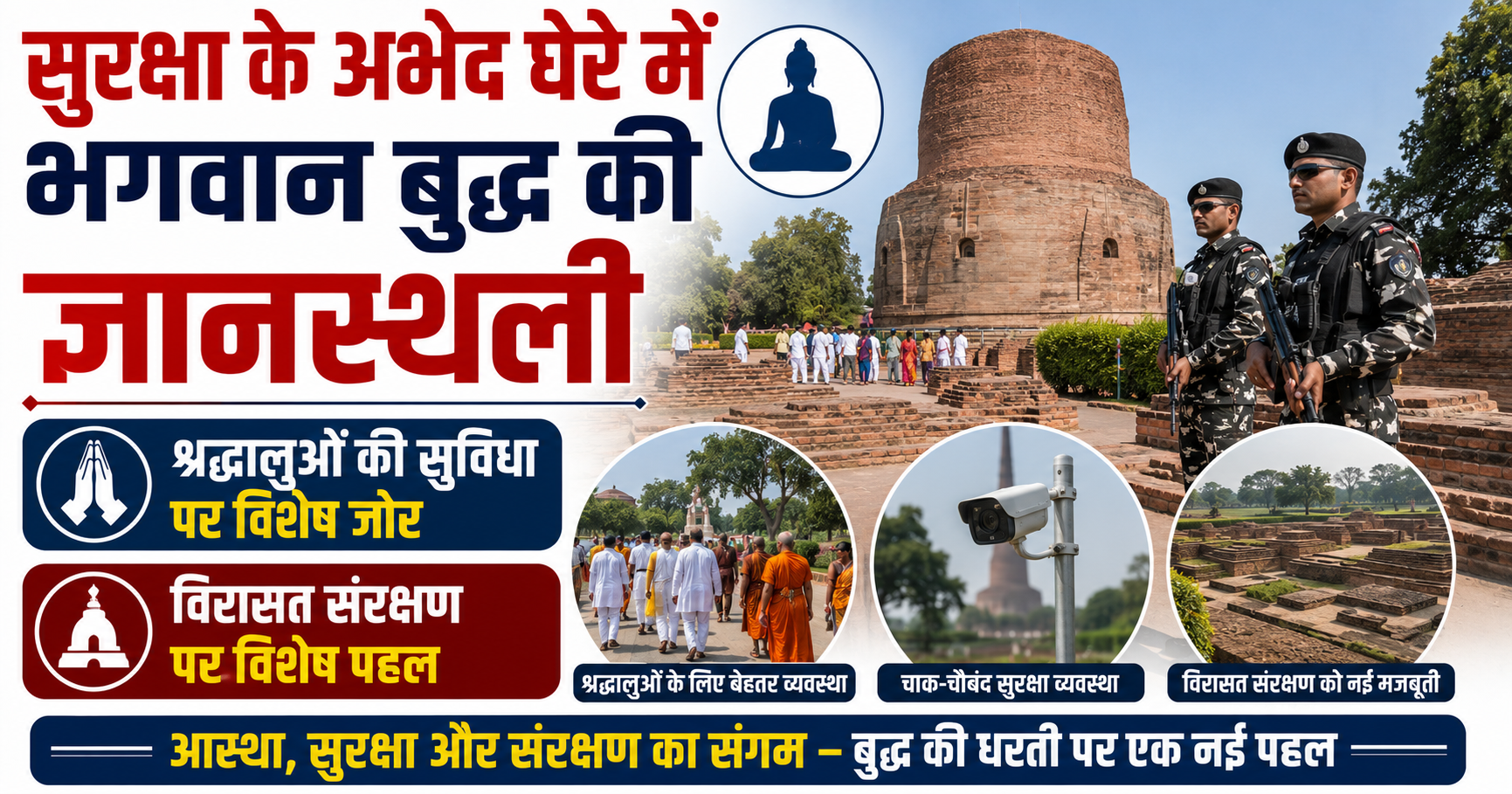
Lord Buddha's Enlightenment Site Now Protected by Robust Security, While Preserving Its World Heritage Legacy
Bodh Gaya: The Mahabodhi Temple, the sacred site where Lord Buddha attained enlightenment and a UNESCO World Heritage Site, has undergone a remarkable transformation over the past decade. Once known for its peaceful atmosphere and easy access, the globally renowned pilgrimage destination is now protected by comprehensive security measures, advanced surveillance systems, and multi-layered safety arrangements.
The changes have been driven by a steady rise in the number of domestic and international pilgrims, growing global security concerns, and the need to preserve one of the world's most significant Buddhist heritage sites. Today, every visitor entering the temple complex is required to undergo strict security screening before being allowed inside.
A Sacred Blend of Faith and History
The Mahabodhi Temple marks the place where Prince Siddhartha attained enlightenment under the sacred Bodhi Tree over 2,500 years ago and became Gautama Buddha. For millions of Buddhists across the world, it remains one of the holiest pilgrimage destinations.
Since being recognized as a UNESCO World Heritage Site, the temple has gained even greater international prominence. Every year, hundreds of thousands of pilgrims and tourists from countries such as Sri Lanka, Thailand, Japan, Myanmar, Bhutan, Vietnam, South Korea, China, Nepal, and many others visit Bodh Gaya for prayer, meditation, and spiritual reflection.
Significant Changes Over the Last Decade
Around a decade ago, access to the Mahabodhi Temple complex was relatively simple. Visitors could enter the premises with minimal security checks and enjoy a peaceful environment. However, changing security challenges and the increasing number of visitors prompted authorities to significantly strengthen the temple's security infrastructure.
Today, every visitor must pass through multiple layers of screening, including metal detectors, baggage scanners, and physical security checks. Security personnel remain deployed throughout the temple complex to ensure the safety of pilgrims and tourists.
Modern Security Infrastructure
The Mahabodhi Temple complex is now equipped with an advanced technology-based security system. Hundreds of CCTV cameras monitor the temple premises and surrounding areas around the clock. The surveillance network is managed through a centralized control room where trained personnel continuously monitor activities.
Bomb disposal squads, sniffer dog units, quick response teams, and local police personnel are also stationed in and around the temple complex. During major religious festivals and international Buddhist gatherings, security arrangements are further intensified.
Pilgrim Convenience Remains a Priority
Despite the enhanced security measures, authorities have also focused on improving visitor convenience. Well-organized entry and exit routes have been created to manage crowds efficiently and reduce waiting times.
The temple complex now offers improved facilities, including drinking water, sanitation services, resting areas, medical assistance centers, and information kiosks. Multilingual signboards have also been installed to assist international visitors.
Strong Focus on Heritage Conservation
The Mahabodhi Temple is not only a major religious destination but also an invaluable historical and cultural monument. The Archaeological Survey of India (ASI), the Bihar government, and the Mahabodhi Temple Management Committee continue to work together to preserve the site's original architecture and historical significance.
Conservation and restoration work is carried out using scientific methods to ensure that the temple's authenticity and heritage value remain intact.
Tourism Receives a Major Boost
The strengthening of security and improvement of visitor facilities have had a positive impact on tourism. The number of domestic and international tourists visiting Bodh Gaya has steadily increased over the years.
Hotels, restaurants, transport operators, handicraft businesses, tour guides, and local traders have all benefited from the growing tourist footfall, contributing significantly to the local economy.
A Global Center for Buddhist Events
The Mahabodhi Temple regularly hosts international Buddhist conferences, meditation retreats, and religious ceremonies. Prominent Buddhist spiritual leaders, including the Dalai Lama, have visited the site on several occasions to deliver teachings and participate in religious events.
Such gatherings attract thousands of pilgrims and delegates from around the world, requiring extensive administrative planning and enhanced security arrangements well in advance.
Digital Surveillance and Crowd Management
With visitor numbers continuing to rise, authorities have increasingly adopted digital technologies for crowd management. In addition to CCTV surveillance, modern monitoring systems help regulate visitor movement during festivals and peak pilgrimage seasons.
The administration also uses digital platforms and social media to share important information, safety guidelines, and travel advisories with visitors.
Public Response
Local residents acknowledge that security arrangements have become much stronger compared to the past. While the screening process takes additional time, most pilgrims consider it a necessary step to ensure the safety of both visitors and the historic monument.
Business owners in Bodh Gaya also believe that improved security and better infrastructure have strengthened the town's global reputation and boosted tourism-related economic activity.
Ongoing Challenges
Despite the extensive security measures, authorities continue to face several challenges. Managing massive crowds during major festivals, ensuring smooth traffic flow, maintaining cleanliness, providing adequate parking facilities, and protecting the World Heritage monument simultaneously require careful planning.
Balancing heritage conservation with modern infrastructure development also remains a complex task.
Future Development Plans
The Bihar government and the concerned authorities are working on several initiatives to further improve the Mahabodhi Temple complex. Future plans include expanding smart surveillance systems, strengthening traffic management, developing additional tourist facilitation centers, promoting environmentally sustainable infrastructure, and enhancing digital information services.
The transformation of the Mahabodhi Temple reflects a careful balance between security, heritage conservation, and visitor convenience. While modern security systems have significantly enhanced the protection of this globally important religious monument, efforts have also been made to improve facilities for pilgrims and tourists.
Today, the Mahabodhi Temple stands not only as the sacred site where Lord Buddha attained enlightenment but also as a symbol of India's commitment to preserving its cultural heritage while embracing modern management and security practices. If this balance between preservation and development continues, Bodh Gaya is expected to further strengthen its position as one of the world's leading centers for spirituality, Buddhism, and cultural tourism.


