
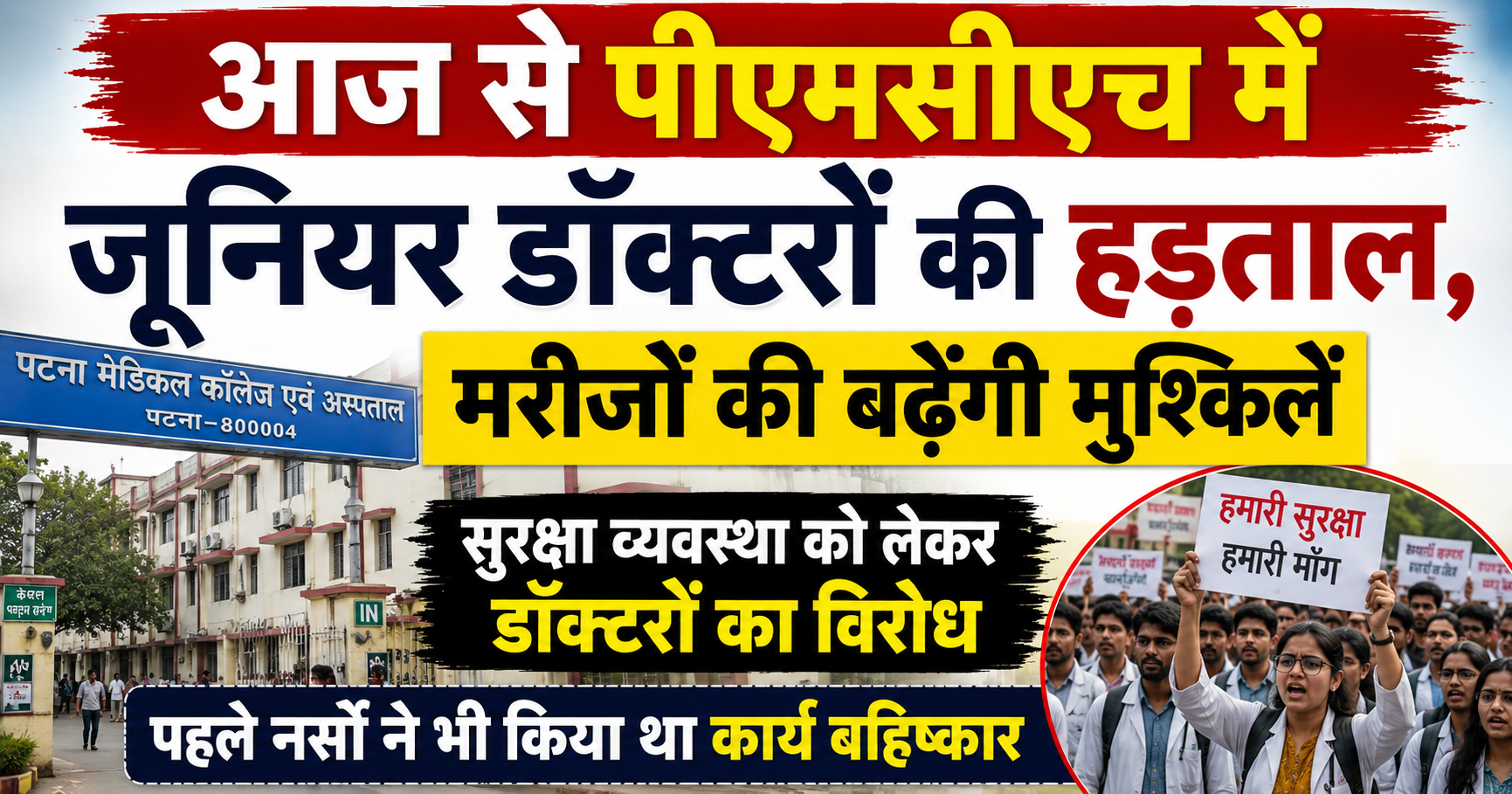
Junior Doctors' Strike Begins at PMCH Today, Patients Likely to Face Major Inconvenience; Doctors Demand Better Security, Following Nurses' Protest
Patna: A strike by junior doctors has begun at Patna Medical College and Hospital (PMCH), one of Bihar's largest government healthcare institutions. The doctors have decided to boycott work, demanding stronger security arrangements within the hospital premises. The strike is expected to significantly affect thousands of patients and their attendants who visit the hospital daily. Outpatient services (OPD), emergency care, and inpatient treatment may all experience disruptions due to the protest.
According to the junior doctors, they have repeatedly faced unsafe working conditions while performing their duties. Overcrowding, disputes with patients' attendants, and inadequate security measures have created a stressful work environment. The protesting doctors say they will continue their agitation until the hospital administration and the concerned authorities take concrete steps to ensure their safety.
Doctors argue that the safety of healthcare professionals should be a top priority in hospitals, where they often deal with emotionally charged situations. In cases involving critically ill patients or unexpected medical outcomes, doctors may face aggressive behavior from patients' relatives. Without sufficient security personnel and prompt administrative intervention, many healthcare workers feel vulnerable while carrying out their responsibilities.
The strike is expected to have a direct impact on patient care. PMCH receives thousands of patients every day through its outpatient department, while its emergency unit handles a large number of critical cases. The absence of junior doctors could affect medical consultations, patient admissions, ward rounds, diagnostic procedures, and other routine healthcare services. Although the hospital administration is expected to rely on senior doctors and available medical staff to maintain essential services, the increased workload may put additional pressure on the healthcare system.
Notably, the junior doctors' strike comes just a day after nursing staff at PMCH staged a work boycott on Tuesday over their own demands and workplace concerns. With healthcare workers protesting on consecutive days, hospital services are expected to remain under considerable strain, raising concerns among patients and their families.
Healthcare experts believe that the concerns of doctors and nurses should be addressed without delay. They emphasize that healthcare professionals can provide quality treatment only when they are able to work in a safe and supportive environment. Strengthening security at hospitals is not only essential for protecting medical staff but also for ensuring uninterrupted healthcare services for the public.
Patients and their attendants have also expressed concern over the situation. They point out that PMCH already faces challenges such as overcrowding, long waiting times, and limited resources. A strike involving both doctors and nurses could further complicate access to medical care, particularly for patients traveling from distant districts who may find it difficult to return for treatment due to additional time and financial costs.
The hospital administration is closely monitoring the situation and is expected to make every effort to keep essential medical services operational. Measures such as deploying senior doctors for additional duties, improving departmental coordination, and ensuring that emergency services continue without interruption may help reduce the impact of the strike. However, if the protest continues for an extended period, it could significantly disrupt normal hospital operations.
Officials in the Health Department are also expected to hold discussions with the protesting doctors in an effort to resolve the issue. Medical experts believe that constructive dialogue and prompt action on security-related concerns could pave the way for an early resolution and the restoration of normal healthcare services.
PMCH is Bihar's largest government medical institution, serving patients not only from across the state but also from neighboring regions. As a result, any disruption in its healthcare services affects a large population. Ensuring the safety of healthcare workers while maintaining uninterrupted patient care remains a key challenge for the authorities.
For now, patients and their families are awaiting further developments from the hospital administration and the state Health Department. If both sides reach an agreement soon, hospital services may return to normal. However, if the deadlock continues, patients are likely to face increasing difficulties in accessing timely medical treatment in the coming days.


