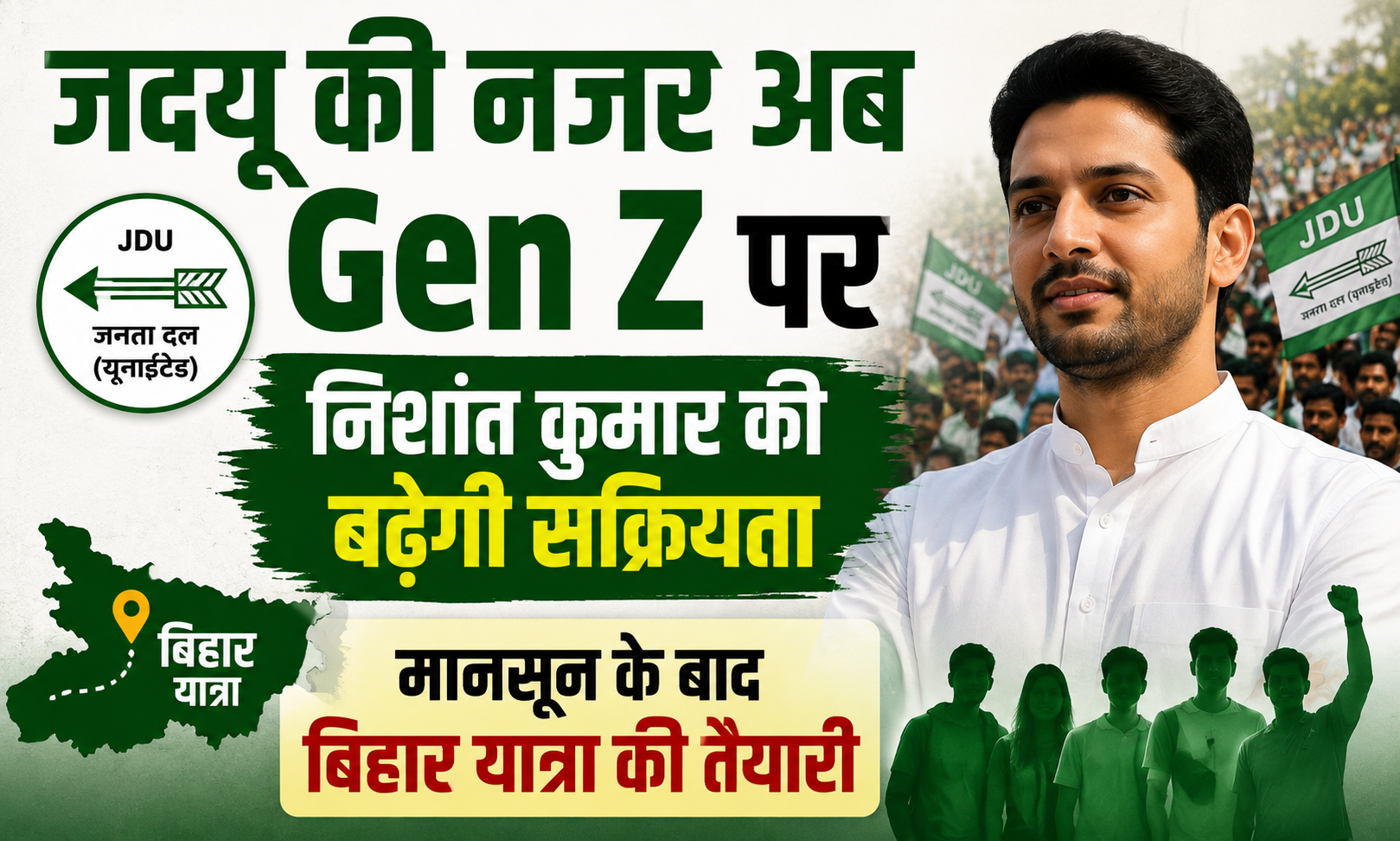
JD(U) Sets Its Sights on Gen Z, Nishant Kumar’s Political Activity Expected to Increase After Monsoon
Patna: Bihar’s political landscape could see a renewed focus on the younger generation, with the Janata Dal (United) [JD(U)] preparing to strengthen its outreach among Gen Z, particularly young people aged between 20 and 25. According to party sources, the political activities of Nishant Kumar, son of Chief Minister Nitish Kumar and the state’s Health Minister, are expected to increase in the coming months.
Party sources indicate that Nishant may embark on another tour of Bihar after the monsoon season. His proposed outreach is expected to focus primarily on young people. Issues such as education, employment, technology, digital opportunities and concerns affecting students and young professionals could receive greater attention during the campaign.
The strategy is considered significant because a large section of Bihar’s young population has no personal experience of the state before Nitish Kumar came to power. According to Nishant’s assessment, young people in the 20-25 age group have largely seen Bihar during the period of Nitish Kumar’s governance. The JD(U) may therefore seek to communicate the changes and development initiatives of the past two decades to this new generation in a different way.
Why Is the JD(U) Focusing on Gen Z?
For decades, Bihar politics has been strongly influenced by caste equations, traditional political organisations and rural voters. However, the growing influence of social media and digital platforms has significantly increased the political importance of young voters.
A large section of Gen Z is highly active on social media. This generation follows political issues not only through traditional media but also through platforms such as Instagram, YouTube, Facebook and other digital channels. As a result, political parties are increasingly changing the way they communicate with younger voters.
The JD(U) appears to be preparing its strategy in response to this changing political environment. The party’s objective may be to build a continuous connection with young people rather than approaching them only during elections.
Nishant’s Proposed Bihar Tour in Focus
According to party sources, Nishant may resume his Bihar tour after the monsoon. The scale of the proposed tour could be broader than his previous outreach activities.
During the tour, interaction with young people, meetings with local residents and discussions on social and developmental issues could receive priority. Special interaction programmes with students at colleges and universities may also be organised.
Young people in Bihar frequently raise concerns related to employment, competitive examinations, education, skill development and digital opportunities. Direct conversations with them could help the party understand their expectations and concerns.
A Different Strategy for the 20-25 Age Group
According to Nishant’s reported assessment, young people between 20 and 25 years of age today have not personally experienced the Bihar that existed before Nitish Kumar came to power. Their political and social experience has largely been shaped by the Bihar of the past one-and-a-half to two decades.
This makes it important for the party to avoid relying solely on older political narratives while communicating with this generation. Issues related to the future may prove more effective in engaging young voters.
Employment, higher education, startups, technical training, healthcare, sports and digital opportunities could become important subjects of political engagement with young people.
Taking the Development Narrative to a New Generation
The JD(U) has consistently highlighted improvements in roads, electricity, education, healthcare and law and order during Nitish Kumar’s tenure as major achievements of its government. The party may now seek to present these achievements to the younger generation in a new format.
The party’s argument is that young people who did not personally witness Bihar’s earlier conditions need a different way of understanding the changes that have taken place over the years.
However, past achievements alone may not be enough to attract young voters. They are also likely to seek clear answers regarding future plans, employment opportunities and economic prospects. This could make outreach to Gen Z both a challenge and an opportunity for the JD(U).
Social Media Could Become a Major Tool
Social media is expected to play an important role in any strategy aimed at reaching Gen Z. Young voters today are influenced not only by speeches and public meetings but also by digital content produced by political leaders.
If Nishant’s political activity increases, his interactions with young people, Bihar tour and public programmes could be promoted extensively through digital platforms.
Short videos, live discussions, question-and-answer sessions and social media campaigns could be used to communicate directly with younger voters. Such initiatives could help the party expand its reach among the digital generation.
Employment and Education Likely to Remain Key Issues
Employment and competitive examinations have been major concerns among Bihar’s youth. A large number of young people prepare for government jobs, while many others migrate to different states in search of employment.
Therefore, employment and education are likely to remain among the most important issues during political engagement with Gen Z. Understanding young people’s expectations and responding to their concerns will be essential for any political party seeking their support.
Skill development, private-sector employment, entrepreneurship and startup opportunities could also become important areas of discussion.
Attempt to Bring Young People into the Organisation
For the JD(U), reaching young voters alone may not be enough. The party could also seek to give young workers a more active role within its organisational structure.
Greater interaction with students at colleges and universities, engagement with local youth groups and an expanded role for digital workers could help the party adapt its organisation to the younger generation.
If more young people become active within the party, it could also help the JD(U) develop a new generation of political leadership for the future.
The Changing Youth Factor in Bihar Politics
The role of young voters in Bihar politics is becoming increasingly important. Social media allows young people to express their reactions to political issues rapidly, while political parties are also modifying their strategies accordingly.
The JD(U)’s focus on Gen Z can therefore be seen as part of this broader change in Bihar’s political landscape. If the party succeeds in establishing sustained communication with young people, the impact could become visible in future elections.
However, winning the support of young voters will require more than political campaigns. Concrete policies and results on issues such as employment, education, migration and future opportunities are likely to be equally important.
A Major Political Test for Nishant
Nishant’s increasing political activity could also represent an important political test for him personally. Establishing an independent identity among young voters will be a major challenge.
As the son of Chief Minister Nitish Kumar, Nishant naturally has significant political visibility. However, gaining acceptance among young voters solely on the basis of family background is unlikely to be enough. He will need to establish his own political style, communication abilities and understanding of youth-related issues.
If he succeeds in developing a direct connection with young people, the JD(U) could also gain politically from his outreach.
The Picture Will Become Clear in the Coming Months
The proposed Bihar tour after the monsoon and Nishant’s increasing political activity could provide a clearer picture of the JD(U)’s long-term strategy for Gen Z.
The party’s biggest challenge will be to understand the changing priorities of young voters and maintain continuous engagement with them. Instead of approaching young people only during elections, remaining actively involved with youth-related issues throughout the political cycle could prove to be a more effective strategy.


