
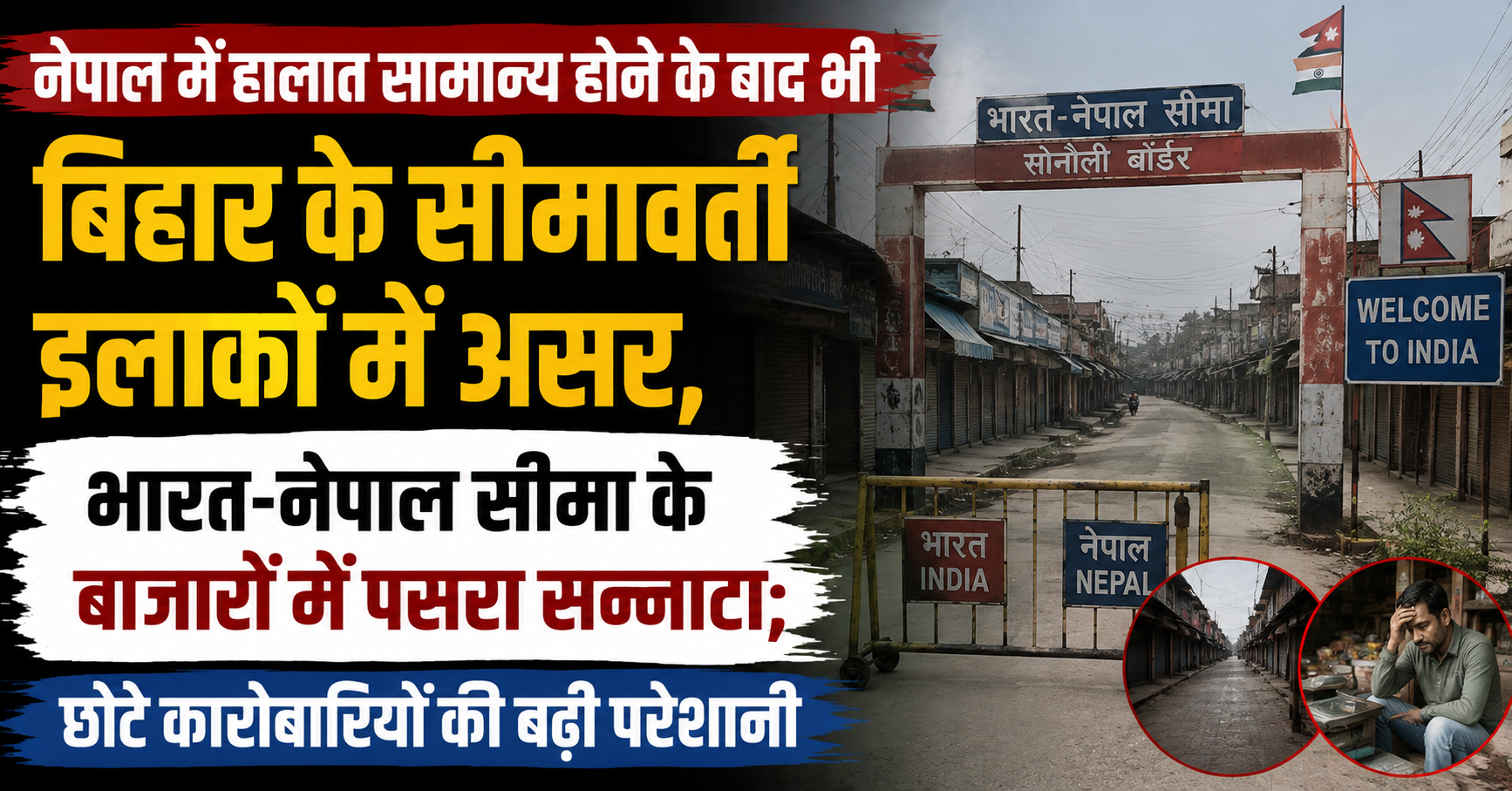
Impact of Nepal Unrest Still Visible in Bihar Border Districts; Markets Along India-Nepal Border Face Business Slowdown
Patna/Border Areas: Despite a decline in violent incidents in Nepal and the removal of curfews from several areas, its impact is still clearly visible in Bihar’s border districts. Markets located along the India-Nepal border have not yet returned to normal, with business activities severely affected due to a shortage of customers and reduced movement of people.
Small traders, vegetable sellers, and e-rickshaw drivers are among those facing the maximum difficulties. In some areas, Nepali customers are not arriving for shopping, while in others, passengers continue to face difficulties while crossing the border.
The border economy of Bihar largely depends on the movement of people and small-scale trade between India and Nepal. Any disruption directly affects the livelihood of thousands of local residents.
Shopkeepers Waiting for Customers in Border Markets
Several border markets in Bihar, including areas of Raxaul, Sitamarhi, Madhubani, Supaul, Araria, Kishanganj, and West Champaran, are witnessing a significant decline in customer numbers compared to normal days.
Traders say that a large portion of their business depends on customers coming from Nepal. Nepali citizens regularly visit Indian markets to purchase clothes, groceries, medicines, household items, and other essential goods.
However, due to the recent situation, the number of Nepali customers has reduced considerably. This decline has affected sales and created financial difficulties for small traders.
Small Traders Facing the Biggest Challenges
Small business owners in border areas are among the worst affected by the situation. Vegetable vendors, fruit sellers, tea stall owners, small hotel operators, and street vendors are struggling due to reduced income.
Many traders said that earlier markets remained crowded throughout the day, but now shopkeepers are often seen waiting for customers.
Several small business owners have reported difficulties in managing shop rent, purchasing goods, and meeting household expenses due to declining sales.
E-Rickshaw and Transport Services Also Affected
The reduction in passenger movement has also impacted the earnings of e-rickshaw drivers and small transport operators in border areas.
Drivers said that earlier they earned a livelihood by transporting Indian and Nepali passengers between border points and nearby markets.
However, due to fewer passengers, many drivers are unable to earn enough income even after working throughout the day.
Passengers Facing Difficulties at the Border
At several locations, passengers are still facing challenges while crossing the border. Some people who need to travel between India and Nepal for work, medical treatment, business, or personal reasons are experiencing delays due to the situation.
Local residents and traders believe that border markets will not regain their previous activity until movement between the two countries becomes completely normal.
Impact on Border Economy
The economy of India-Nepal border regions largely depends on cross-border trade and regular movement of people.
During normal conditions, thousands of customers visit local markets, benefiting shopkeepers, transport services, hotels, restaurants, and other businesses.
However, any disturbance between the two countries directly affects local economic activities.
Traders Seek Government Support
Traders in border areas have requested the administration and government to take steps to restore normal conditions as soon as possible.
They said that maintaining security is important, but normal business activities and public movement should also be restored quickly.
Many traders have demanded financial assistance and relief measures to help small businesses recover from losses.
Administration Monitoring the Situation
District administrations in border areas are closely monitoring the situation. Officials have stated that while security remains the priority, the convenience of ordinary citizens is also being considered.
Security forces deployed along the border and local authorities are keeping a close watch to prevent any unwanted situation.
Hope for Gradual Return to Normalcy
Local residents hope that once conditions in Nepal completely stabilize, activities along the India-Nepal border will gradually return to normal.
Traders say that India and Nepal share long-standing social, cultural, and economic relations. Therefore, restoring regular movement between the two countries is essential for the development of border areas.
Tourism and Shopping Activities Also Hit
Many Nepali citizens visit Bihar border markets for shopping, while several people also travel for religious and tourism-related activities.
Due to the current situation, hotels, vehicle operators, and small businesses connected with tourism and local trade have also suffered losses.
Although violent incidents in Nepal have decreased and curfews have been lifted from several areas, the impact is still being felt in Bihar’s border districts. Markets along the India-Nepal border continue to face a slowdown due to fewer customers and reduced movement. Small traders, vegetable sellers, and e-rickshaw drivers are among the most affected groups. Local residents and business owners hope that normal conditions will soon return between the two countries, allowing border markets to regain their previous activity and economic strength.


