
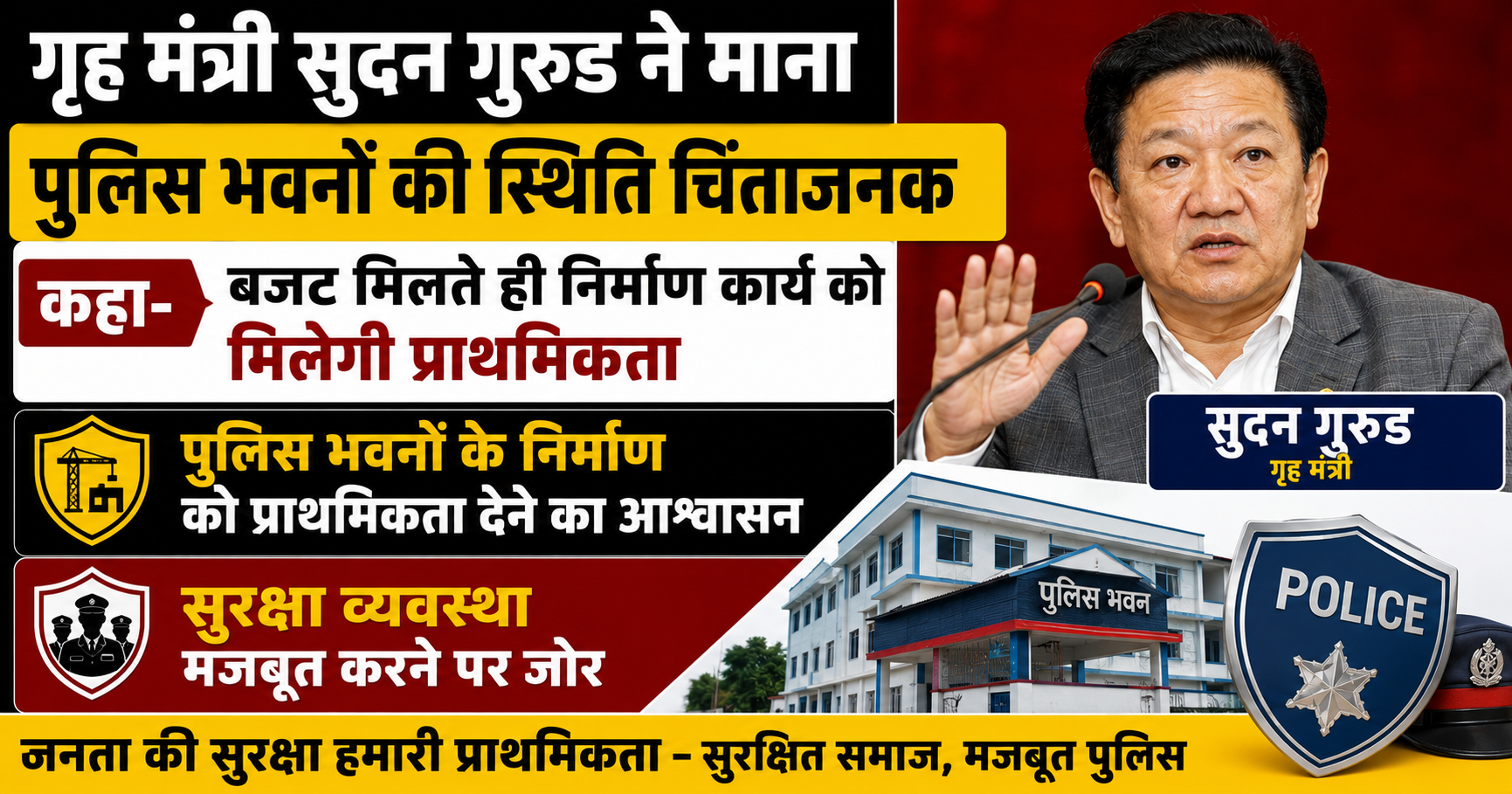
Home Minister Sudan Gurung Acknowledges Poor Condition of Police Buildings, Says Construction Will Be Prioritized Once Funds Are Available
Kathmandu, Nepal | Correspondent
Nepal's Home Minister Sudan Gurung has acknowledged the deteriorating condition of police offices and stations across the country, admitting that construction and renovation work has been delayed due to budget constraints. He assured that strengthening police infrastructure remains a government priority and that the construction and modernization of police buildings will be accelerated as soon as adequate financial resources become available.
The Home Minister emphasized that an effective internal security system depends not only on modern technology and sufficient police personnel but also on safe and well-equipped police facilities. He said the government is committed to rebuilding aging structures and constructing new police offices in phases to provide police personnel with better working conditions and improve public security services.
Government Recognizes the Infrastructure Challenge
Sudan Gurung stated that many police stations and outposts, particularly in rural and remote areas of Nepal, are operating from old and structurally weak buildings.
Many of these facilities have deteriorated over the years due to aging, inadequate maintenance, and the impact of natural disasters, raising concerns about the safety of both police personnel and members of the public visiting these offices.
Budget Constraints Caused the Delay
The Home Minister explained that limited financial resources have prevented the government from undertaking large-scale construction and renovation of police infrastructure.
He said the government must balance spending across several priority sectors, including education, healthcare, infrastructure, and national security. Despite these financial limitations, efforts to strengthen police infrastructure are continuing.
Police Building Construction to Be Prioritized
Gurung assured that the construction and renovation of police offices will receive higher priority in upcoming government budgets and development plans.
He directed the concerned departments to prepare a comprehensive list of dilapidated police buildings and develop a phased action plan for their reconstruction and modernization.
Strengthening the Security System
The Home Minister stressed that modern police infrastructure is essential for addressing Nepal's evolving security challenges.
He noted that efficient law enforcement requires not only trained personnel and advanced communication systems but also safe and functional workplaces that enable officers to perform their duties effectively.
Better Working Conditions for Police Personnel
The government believes that improved police facilities will enhance the efficiency and morale of law enforcement personnel.
Modern office buildings, better accommodation, and adequate infrastructure are expected to help officers deliver public services more effectively and respond more efficiently to emergencies.
Special Focus on Earthquake-Prone Areas
Given Nepal's vulnerability to earthquakes, many police buildings have suffered structural damage over the years.
The Home Minister said future police stations will be constructed according to earthquake-resistant standards, ensuring that essential law enforcement services remain operational during natural disasters.
Improved Services for Citizens
The government's objective extends beyond constructing new buildings; it also aims to improve the quality of policing and public service delivery.
Modern police facilities are expected to make complaint registration, criminal investigations, and emergency response services faster and more efficient.
Phased Implementation Plan
According to the Ministry of Home Affairs, authorities will first identify police offices that are in the most critical condition.
Construction and renovation work will then be carried out in phases based on budget availability, ensuring the most efficient use of public resources.
Experts Support the Initiative
Security experts believe that strong police infrastructure forms the backbone of an effective law enforcement system.
They argue that providing officers with safe, modern, and well-equipped workplaces will improve operational efficiency and enable them to serve the public more effectively.
Nepal Home Minister Sudan Gurung's acknowledgment of the poor condition of police buildings highlights the urgent need to strengthen the country's law enforcement infrastructure. While he admitted that budget shortages have delayed construction and renovation projects, he assured that upgrading police facilities will become a government priority in future development plans. The initiative is expected to enhance police efficiency, strengthen public security, and improve the quality of services provided to citizens across Nepal.


